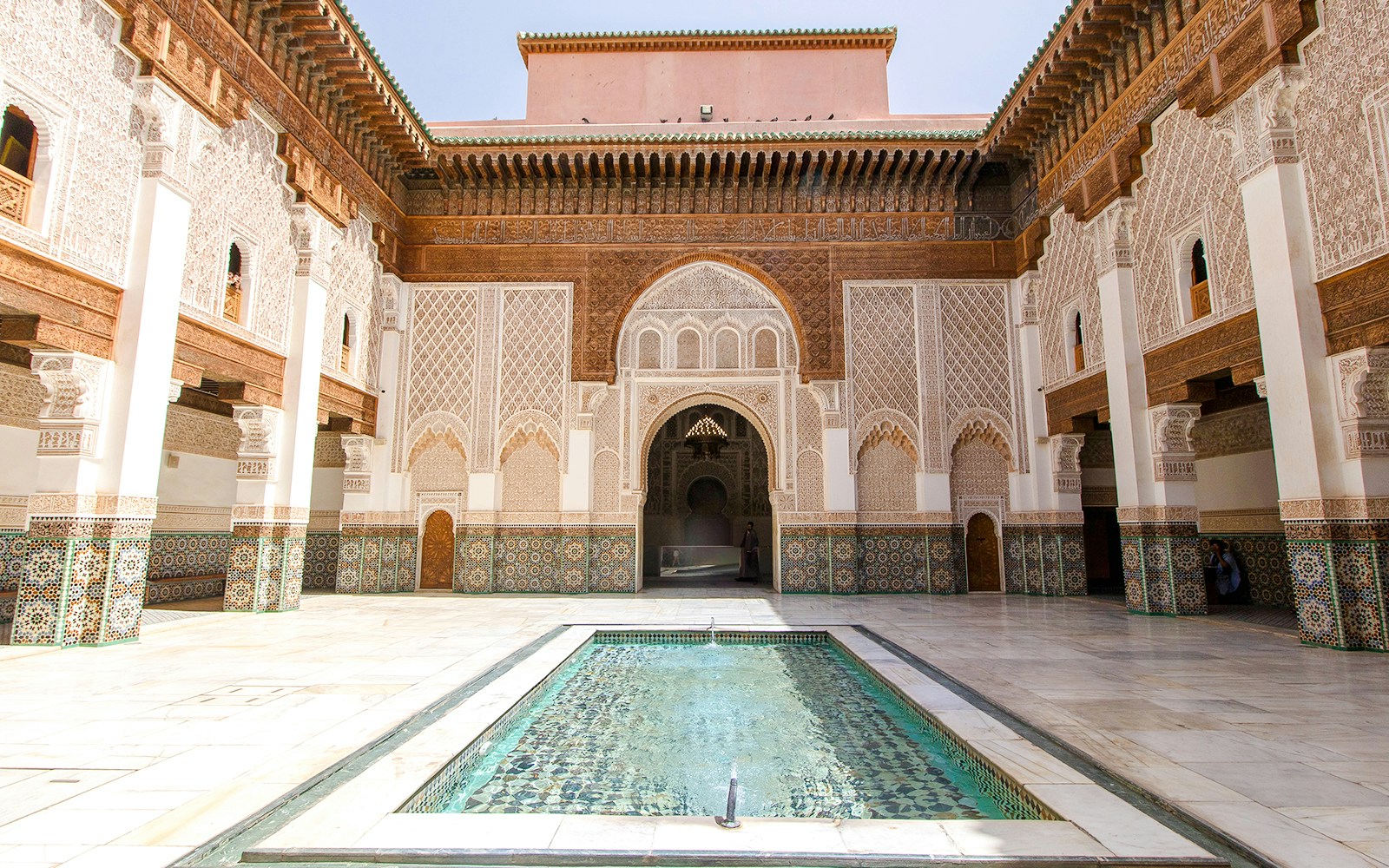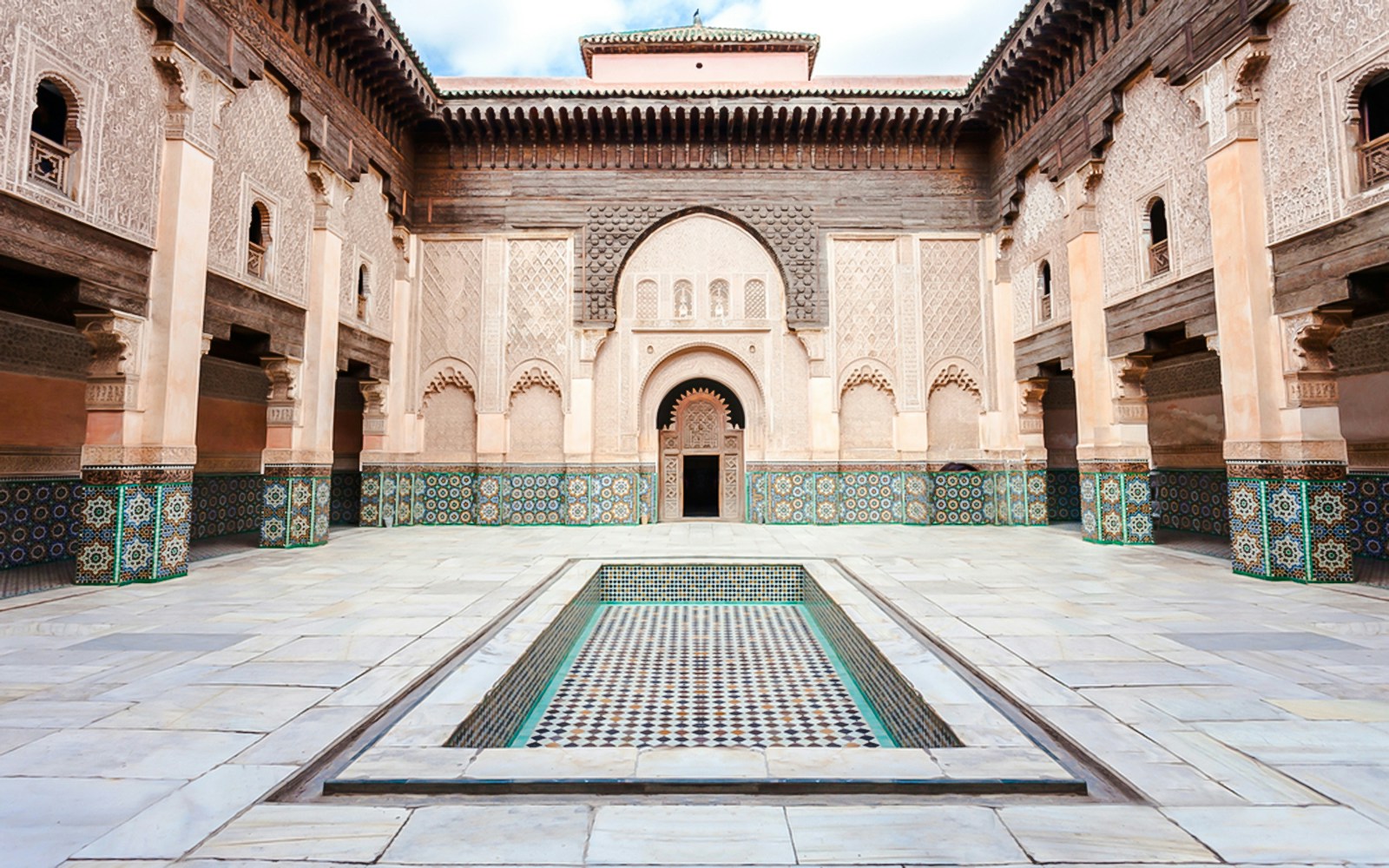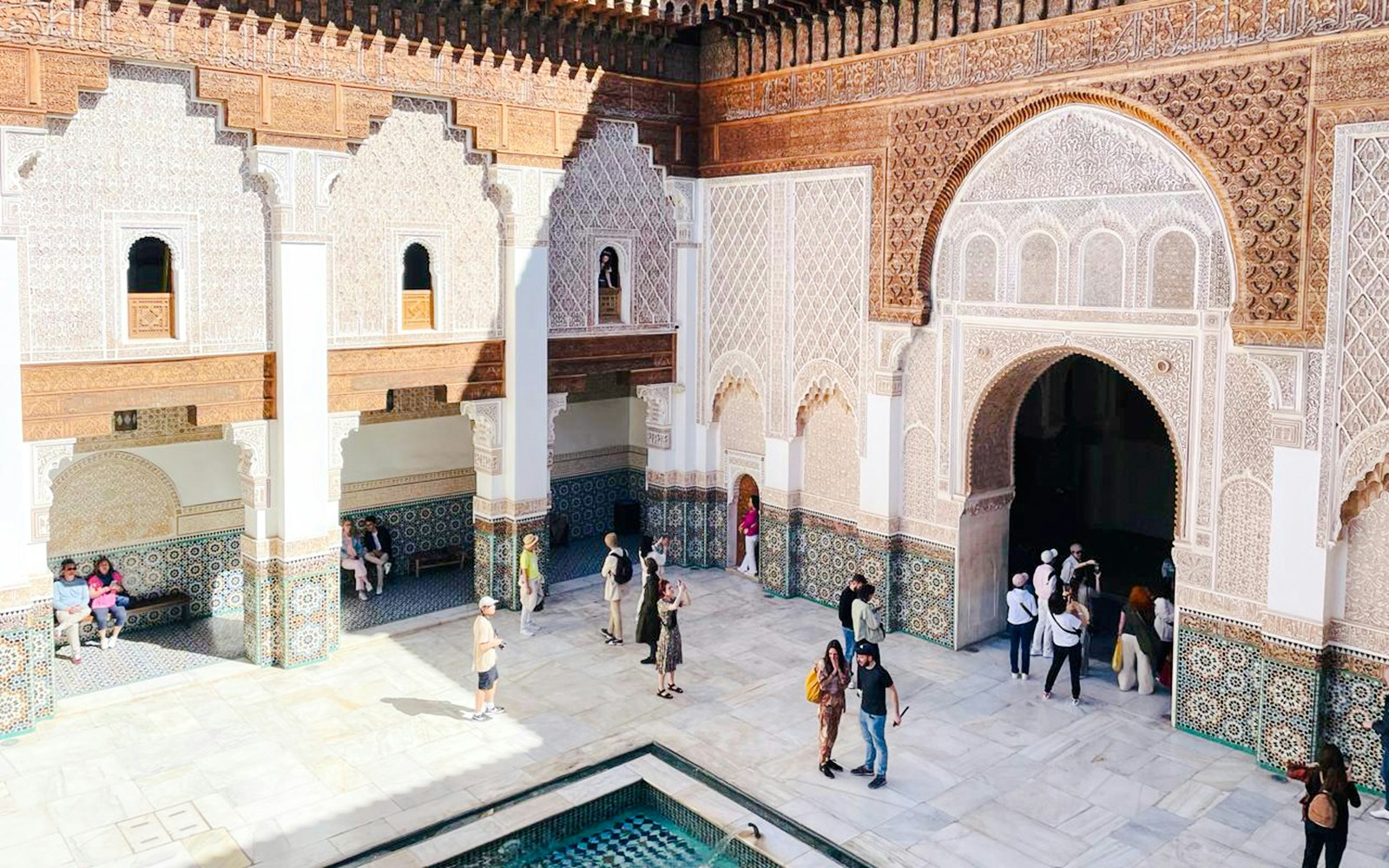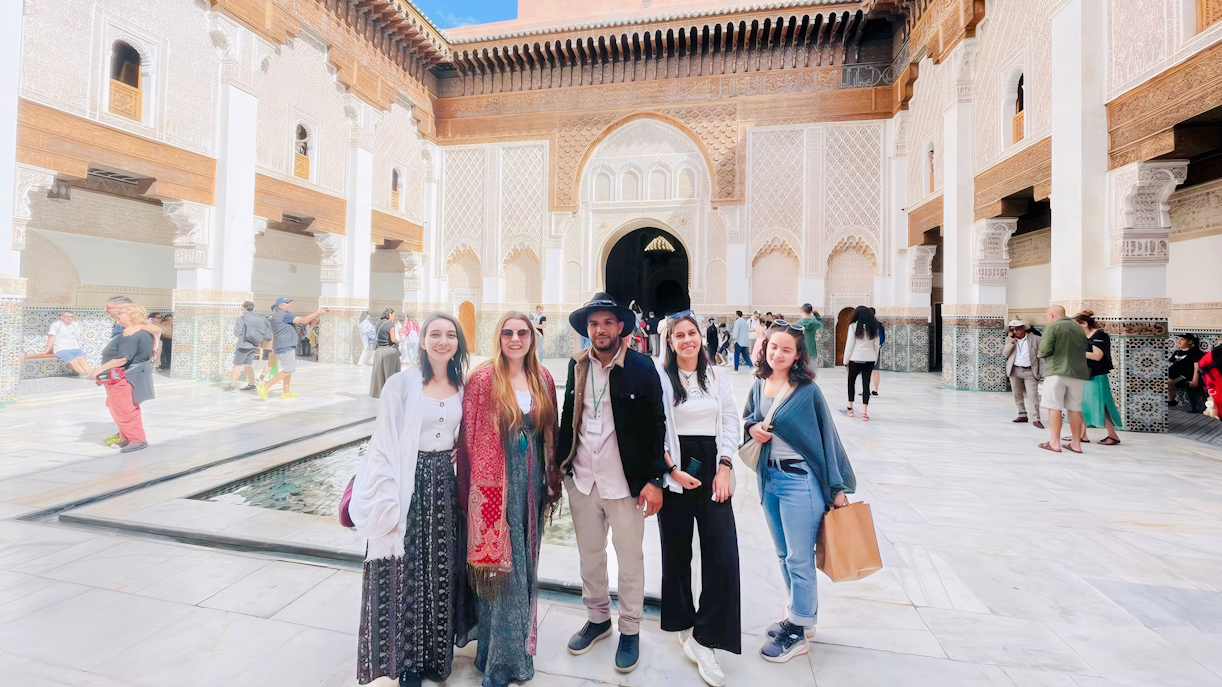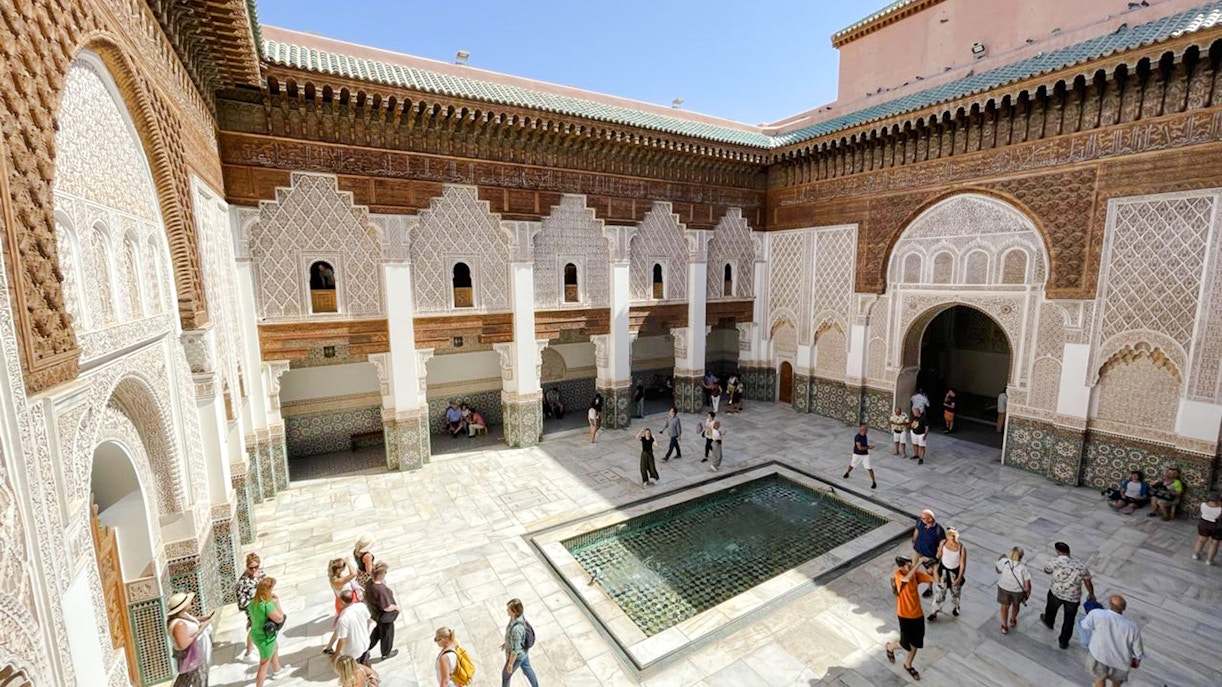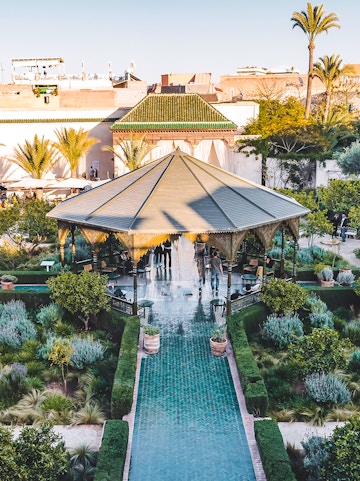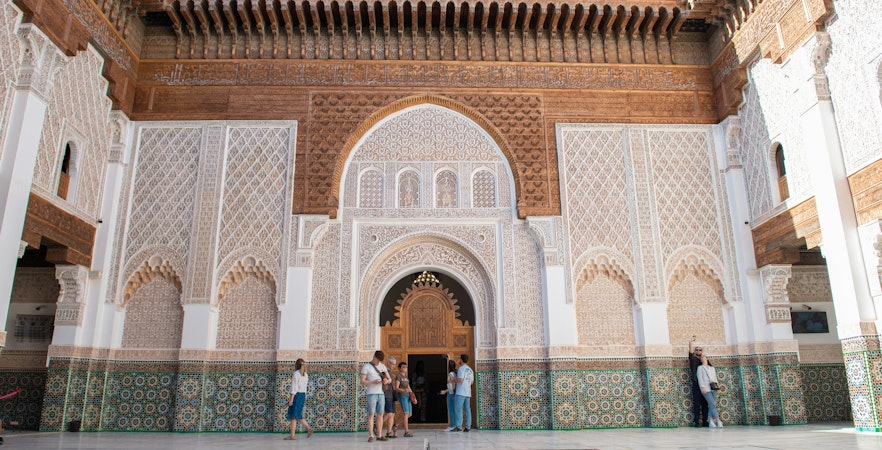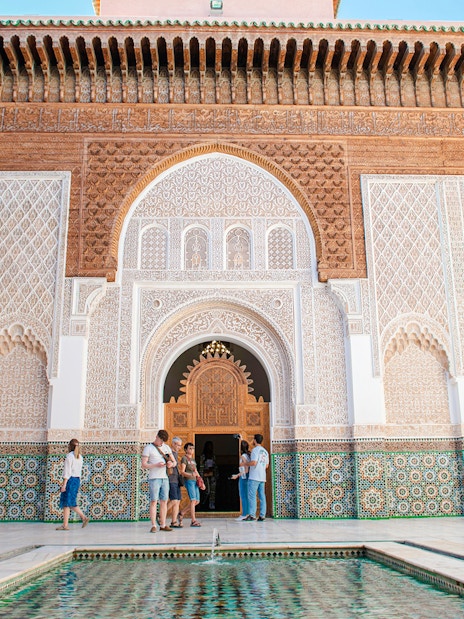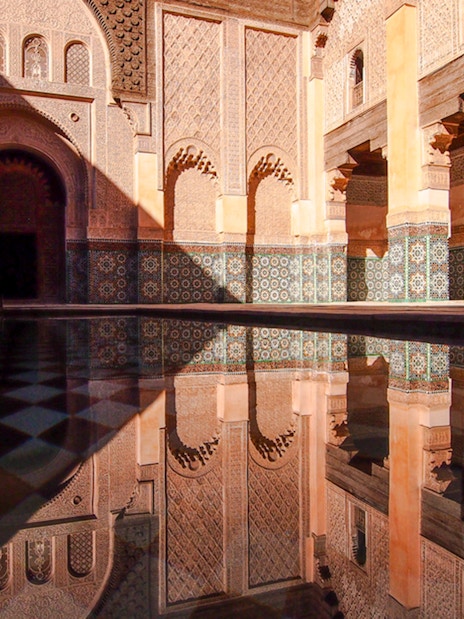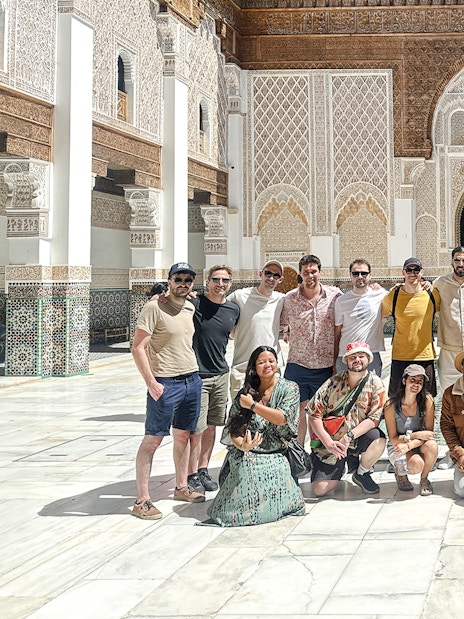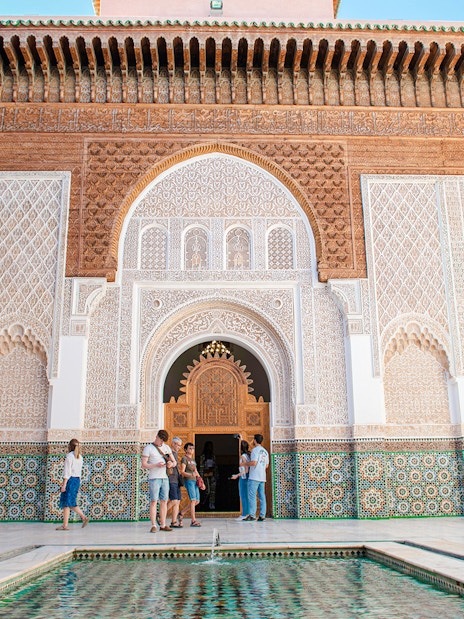
The madrasa as seen today was established in the late 16th century by Sultan Ahmad al-Mansur of the Saadian dynasty, although a religious school had existed on this site even earlier. During its height, it accommodated up to 900 students, earning its reputation as the largest Islamic college in North Africa at the time.
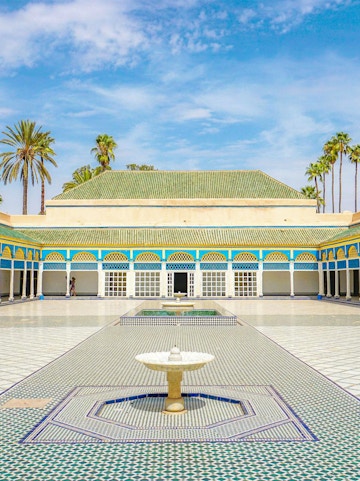
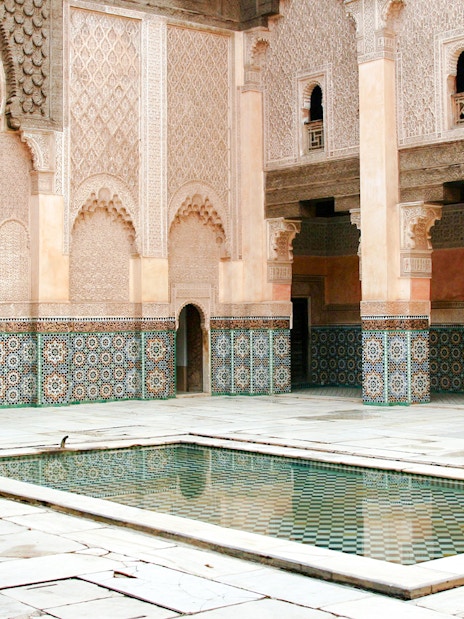
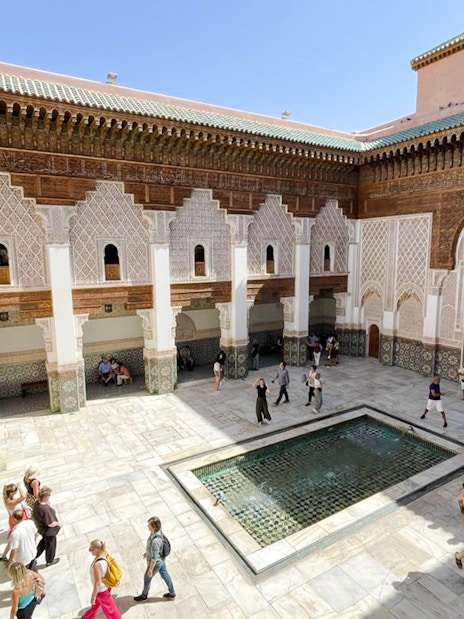
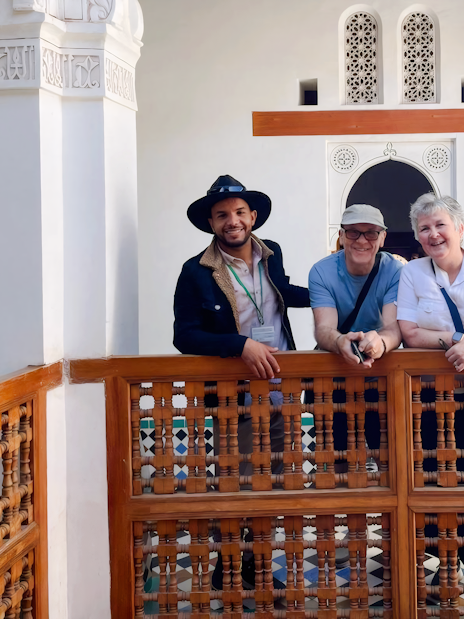
Students from across the region traveled to Marrakesh to study theology, law, and other scholarly disciplines. They lived in modest dormitory cells arranged around the central courtyard, creating a self-contained academic community within the medina.
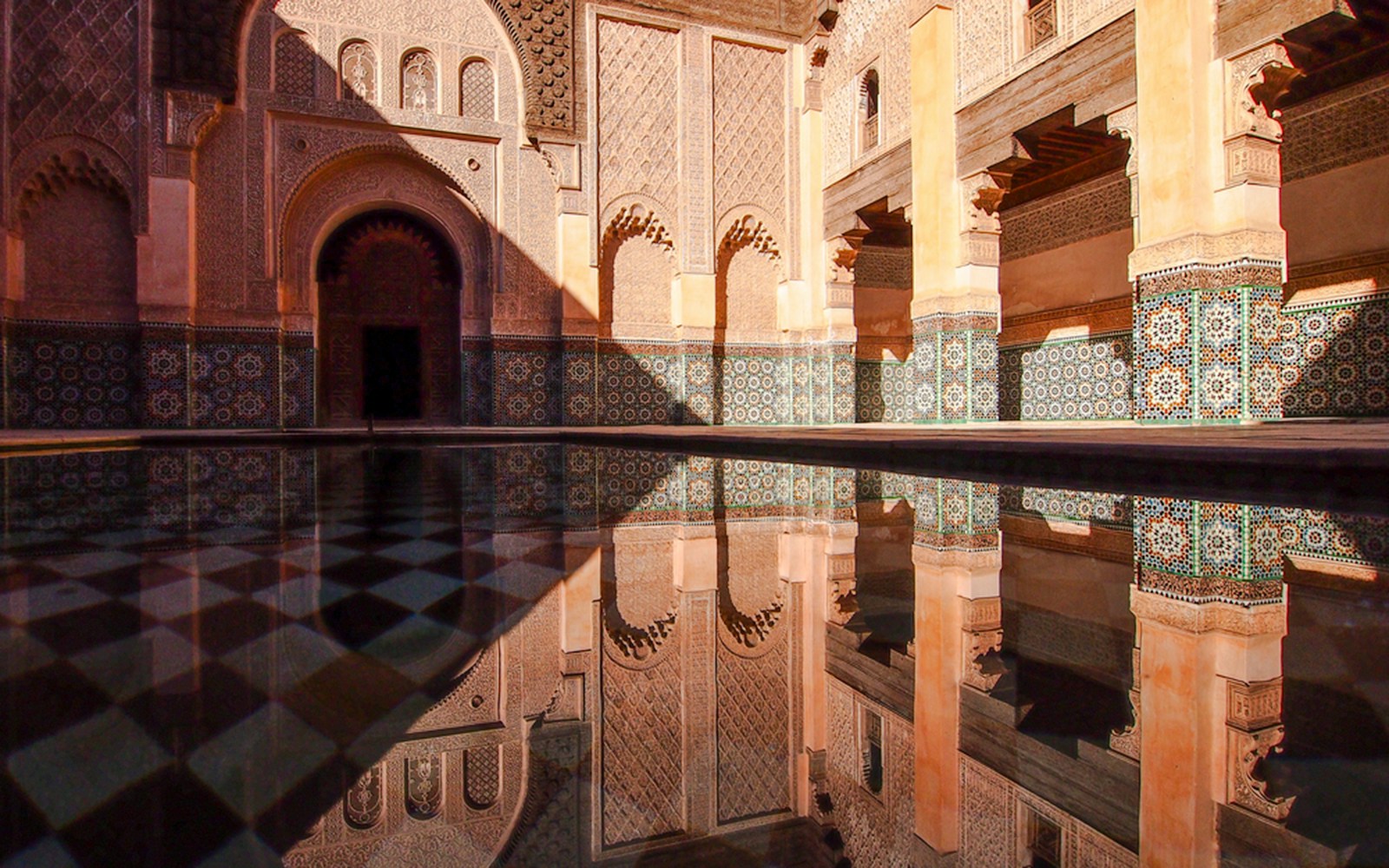
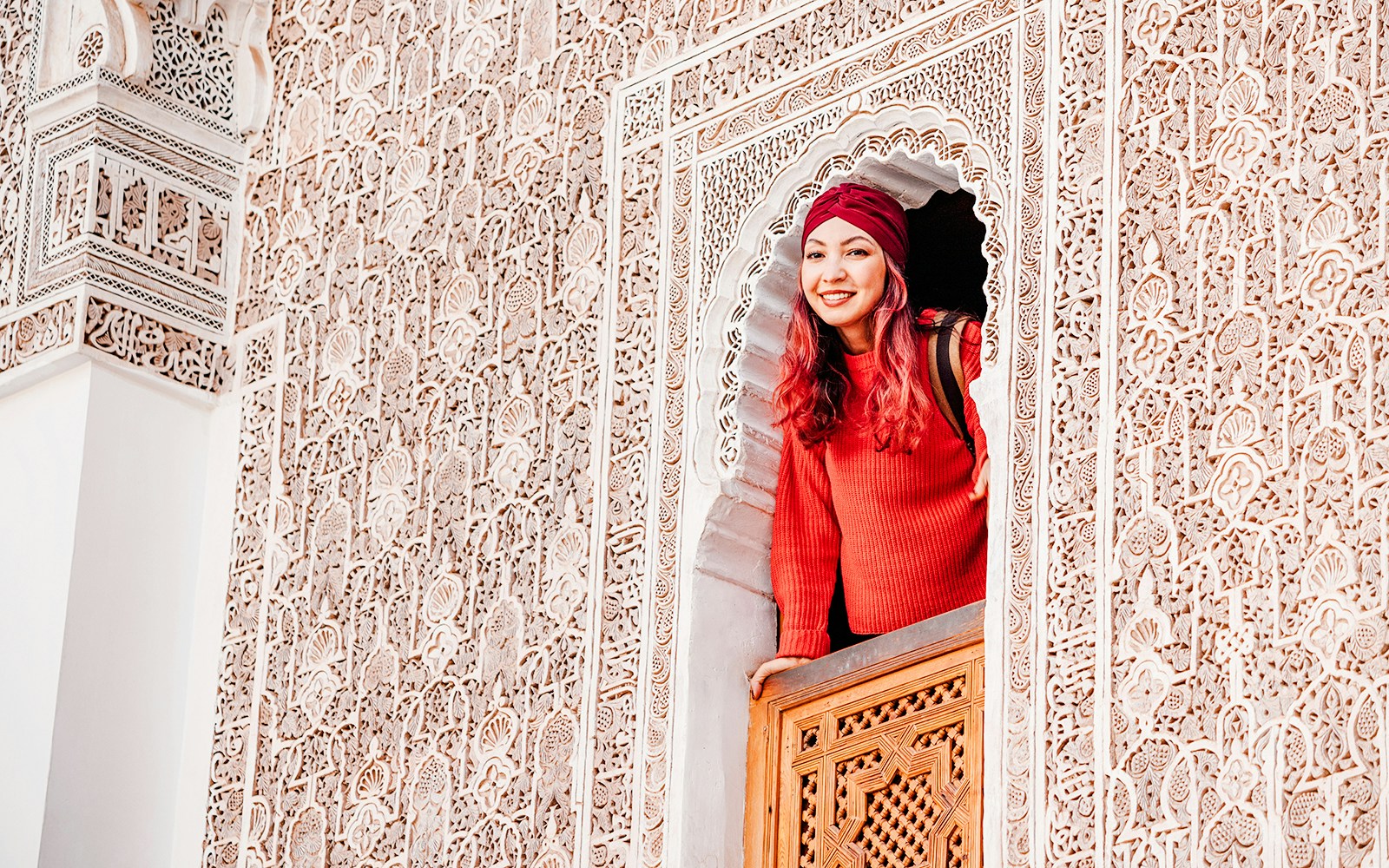
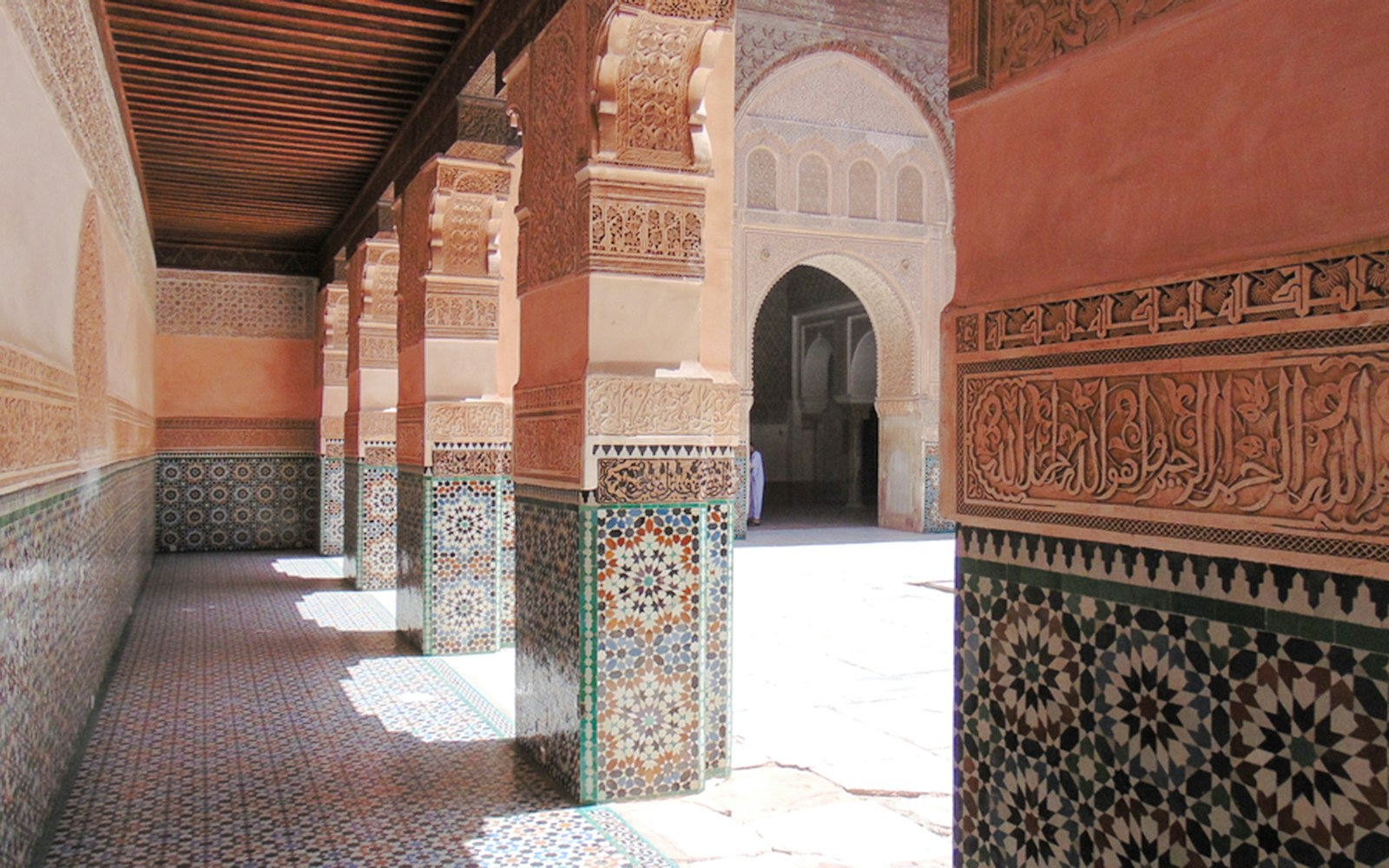
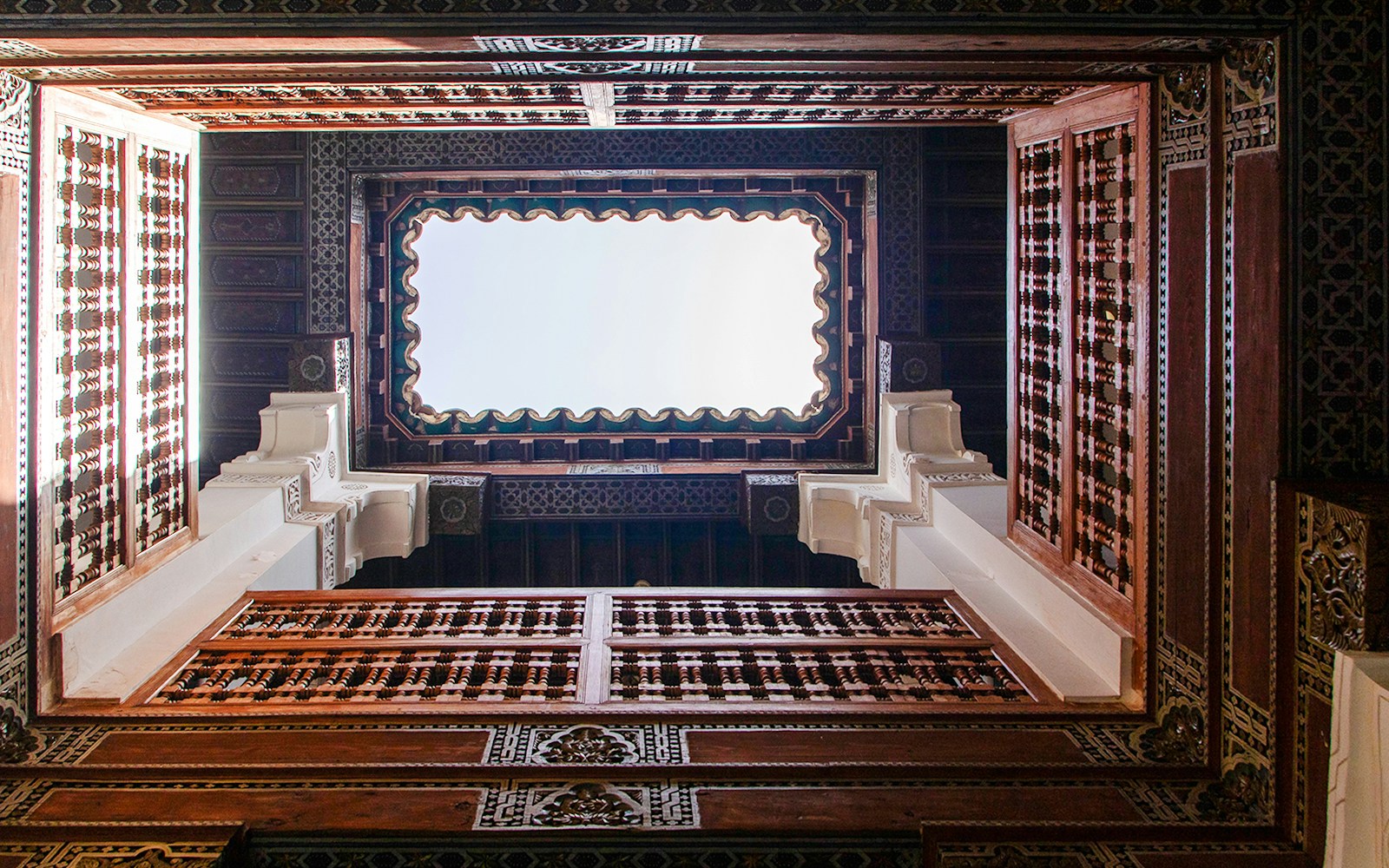
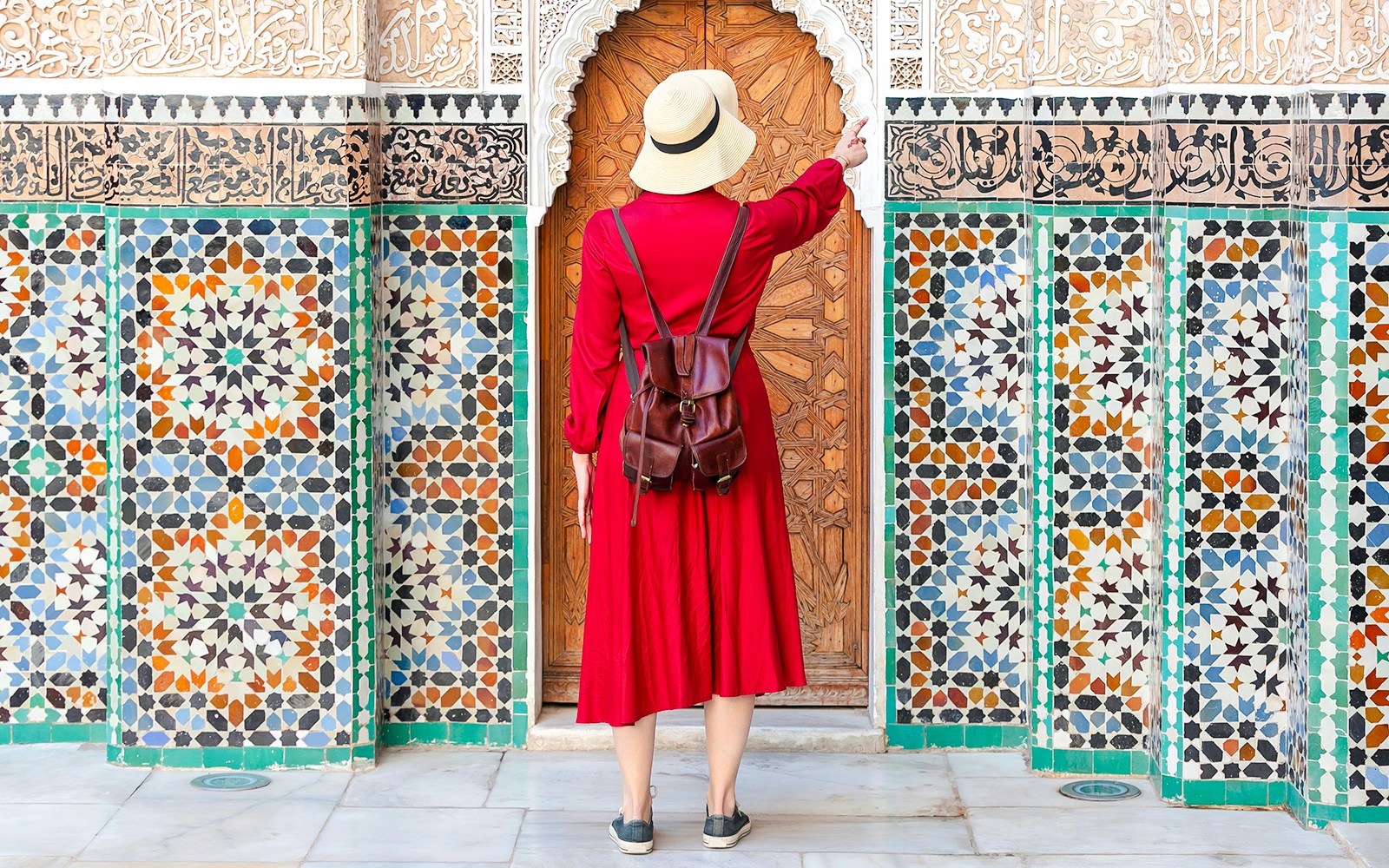
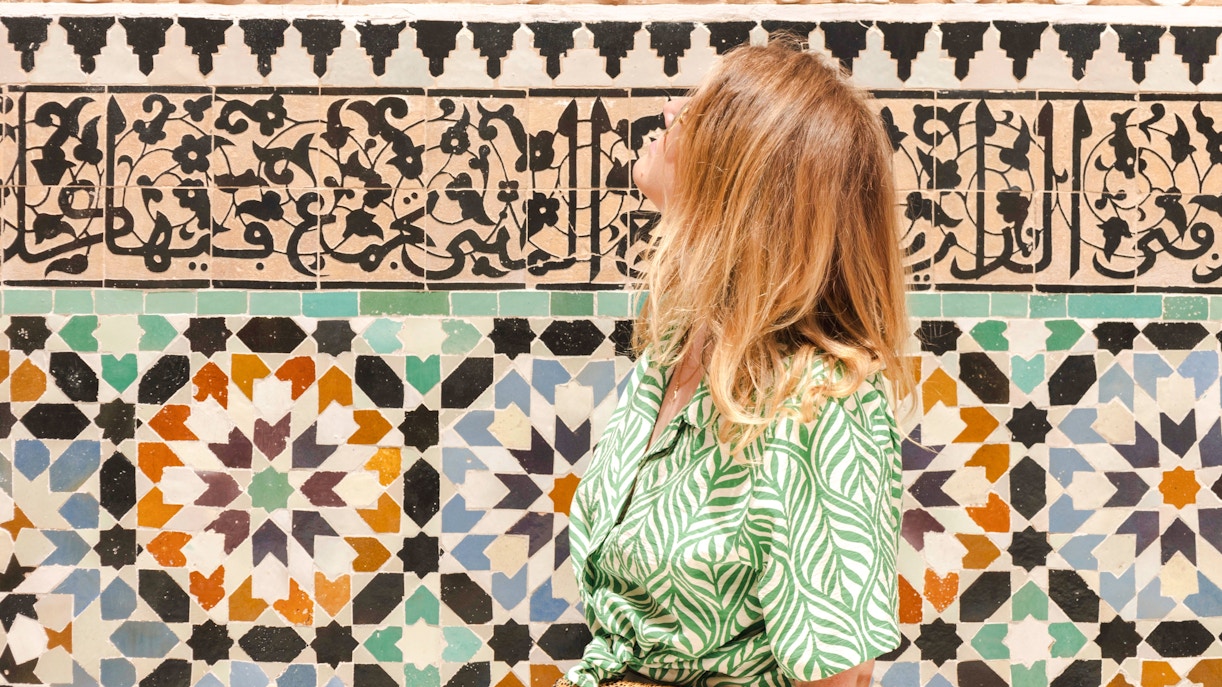
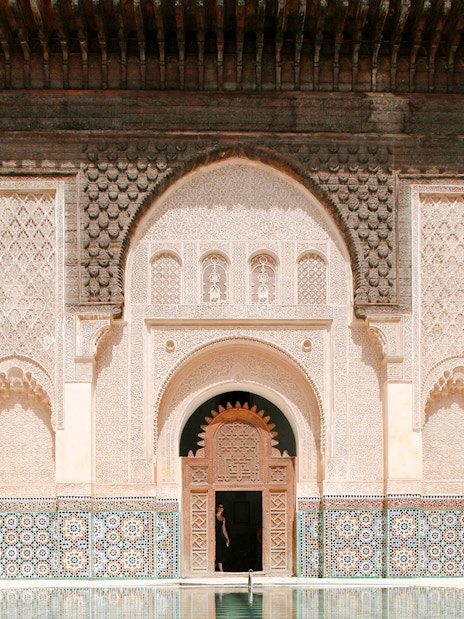
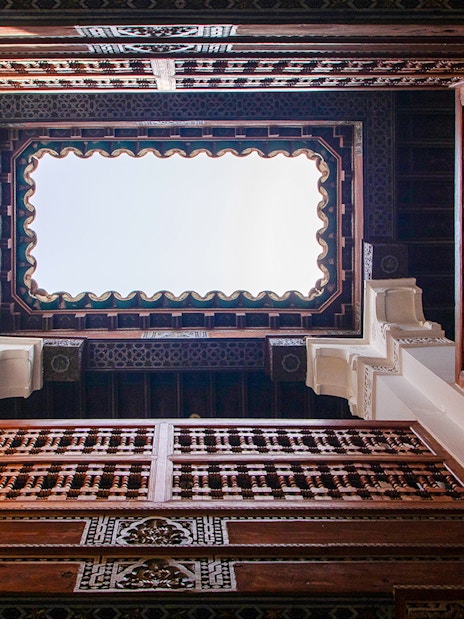
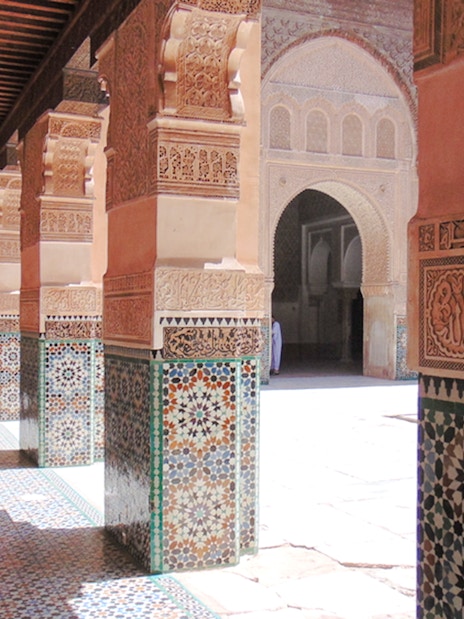
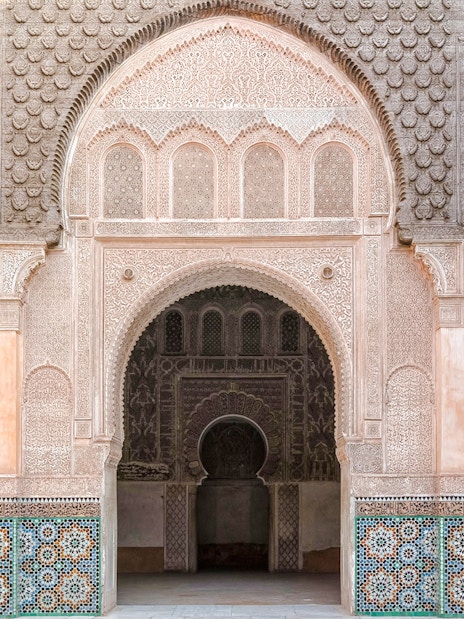
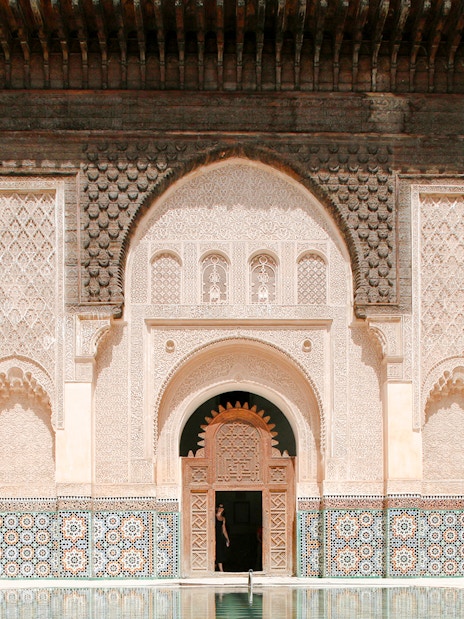
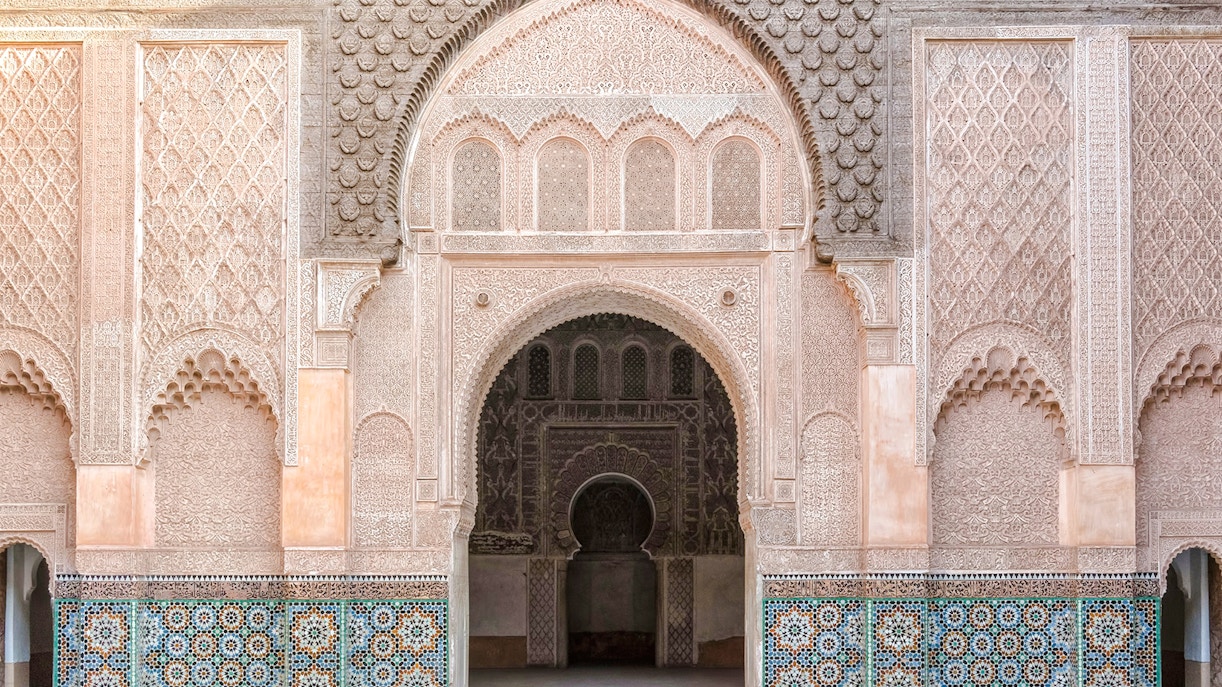
Over time, the madrasa’s role as a teaching institution declined, and it was eventually closed. In the 20th century, major restoration efforts carefully preserved its intricate zellige tilework, carved cedarwood, and stucco decoration. Reopened as a historic monument, it is now regarded as one of Morocco’s finest surviving examples of Saadian architecture and remains an essential part of Marrakesh’s cultural heritage.