Explore Madrasa Ben Youssef in Marrakech | Highlights, Visitor’s Guide & More
What is Madrasa Ben Youssef?
Madrasa Ben Youssef is a historic Islamic college in the heart of Marrakech’s old medina and one of the city’s most striking architectural landmarks. Built in the 16th century during the Saadian era, it once served as the largest madrasa in North Africa, educating hundreds of students in theology, philosophy, grammar, and mathematics.
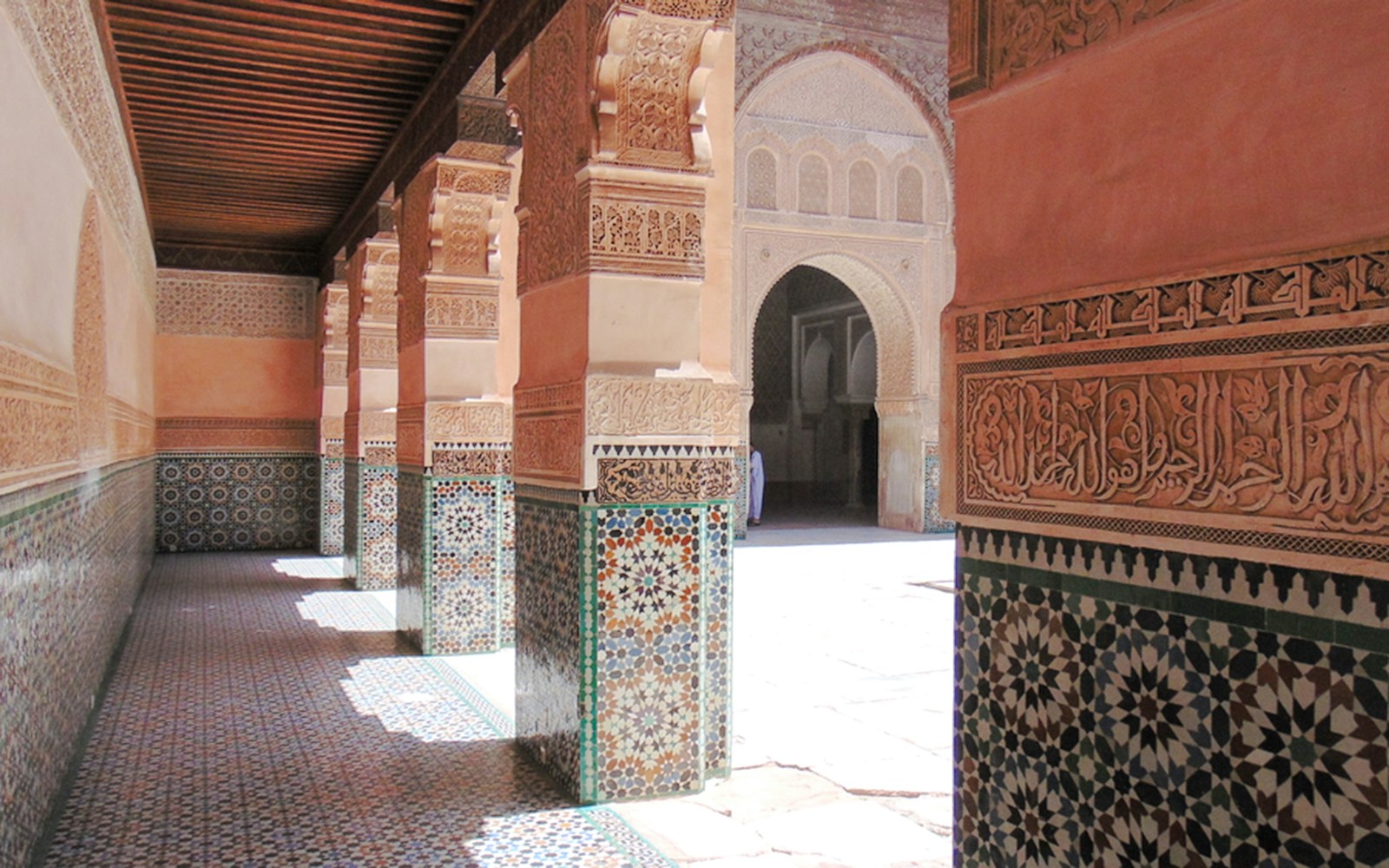
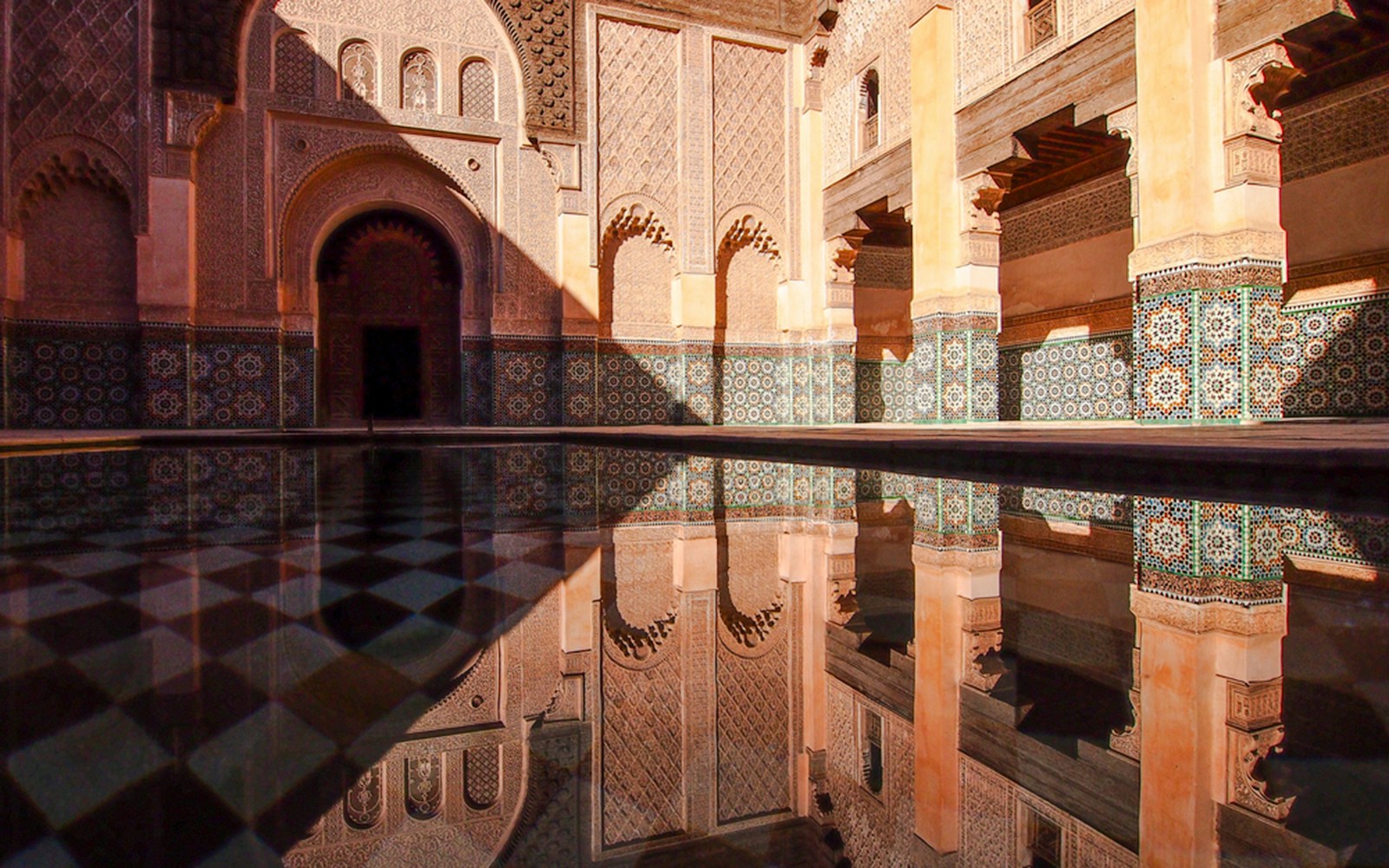
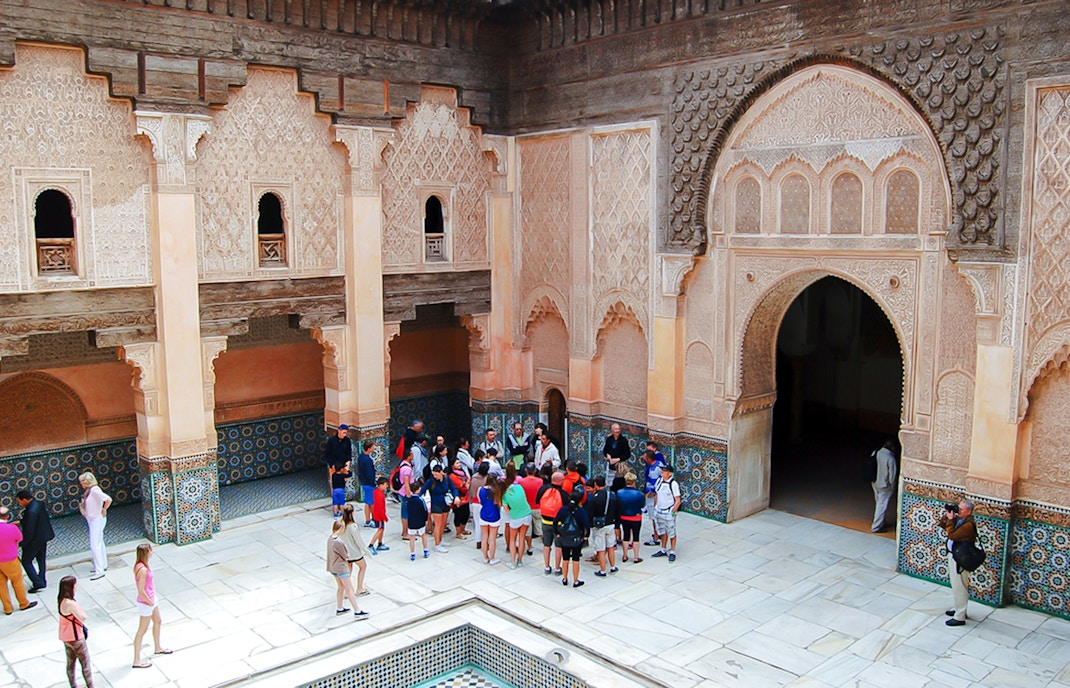
Today, the madrasa functions as a monument rather than a school. Visitors step through an intricately carved cedar doorway into a calm, symmetrical world of marble courtyards, mosaic tilework, stucco carvings, and wooden galleries. Unlike museums filled with objects, the experience here is spatial and immersive—the building itself is the exhibit. Light shifts across hand-cut zellij tiles, footsteps echo softly under carved ceilings, and the atmosphere feels worlds away from the bustle of the surrounding souks.
Plan your visit to Madrasa Ben Youssef
Madrasa Ben Youssef is generally open daily from 9am to 7pm, with shorter hours during Ramadan (usually closing around 6pm). Last entry is typically 30 minutes before closing. Opening hours can change on religious holidays, so it’s best to double-check before visiting.
Spring (March–April) and autumn (September–October) offer the most comfortable weather, but they’re also the busiest. For fewer crowds and better photos, aim for early morning or late afternoon visits, especially on weekdays.
Madrasa Ben Youssef is located in Marrakech’s historic medina, just north of Jemaa el-Fna and opposite the Almoravid Koubba. The narrow streets around it are pedestrian-only, so expect a short walk through the souks. Taxis can drop you near Rue Assouel or Bab Doukkala, followed by a 5–10 minute walk.
What to do at Madrasa Ben Youssef
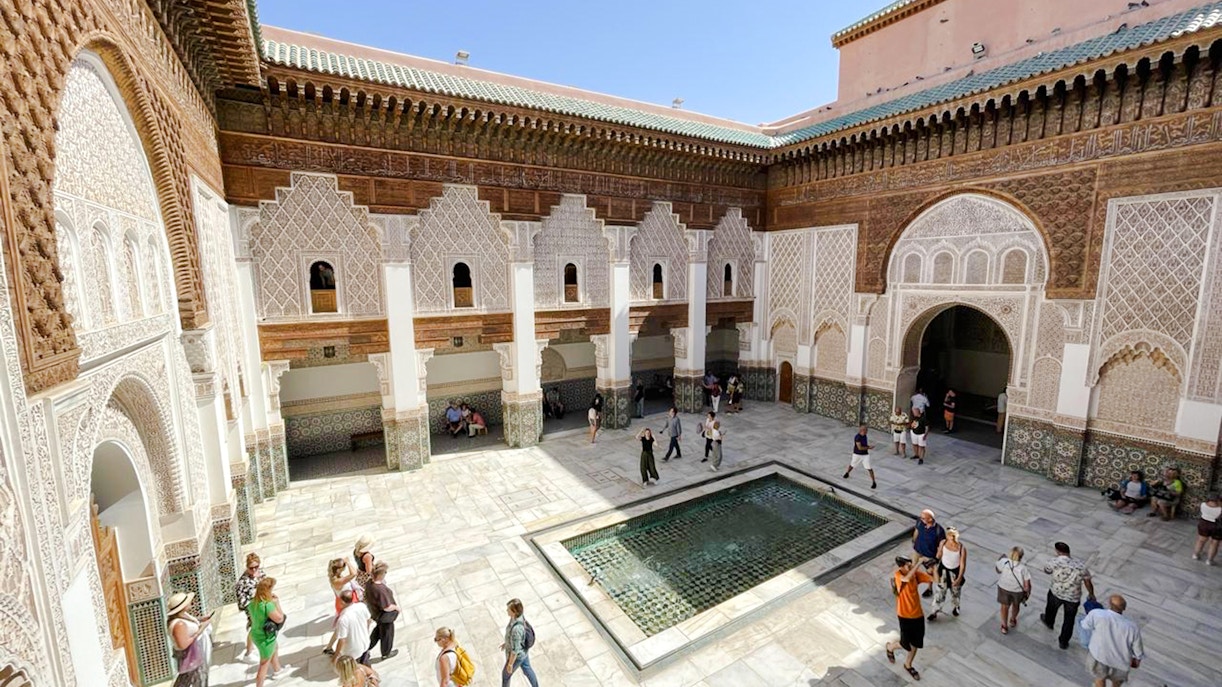
Wander the central courtyard
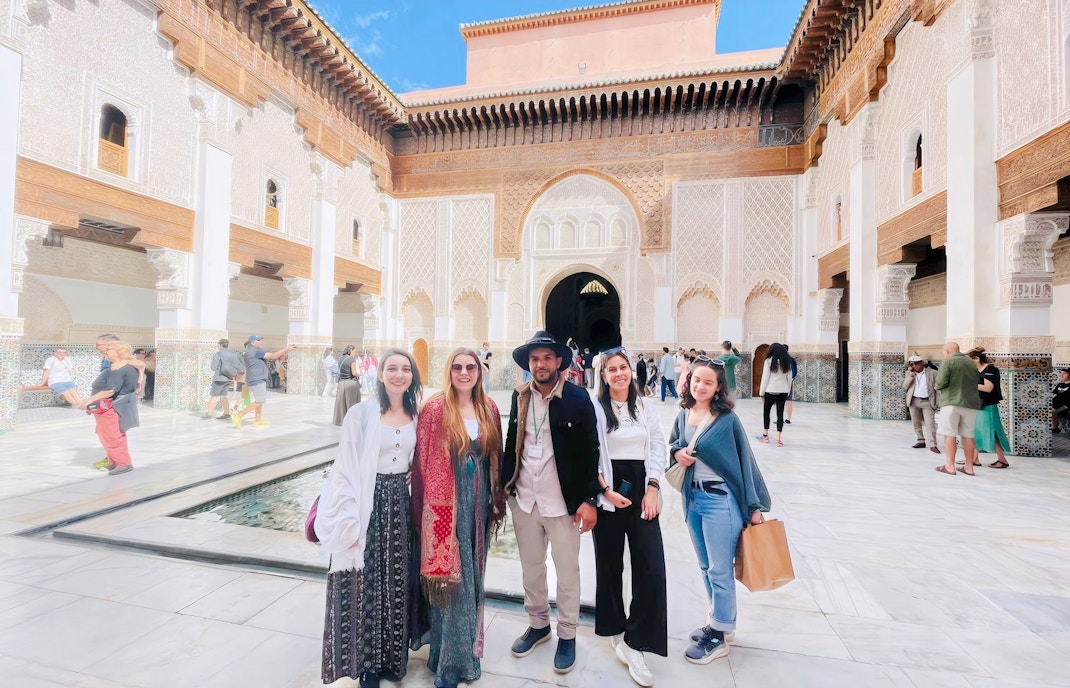
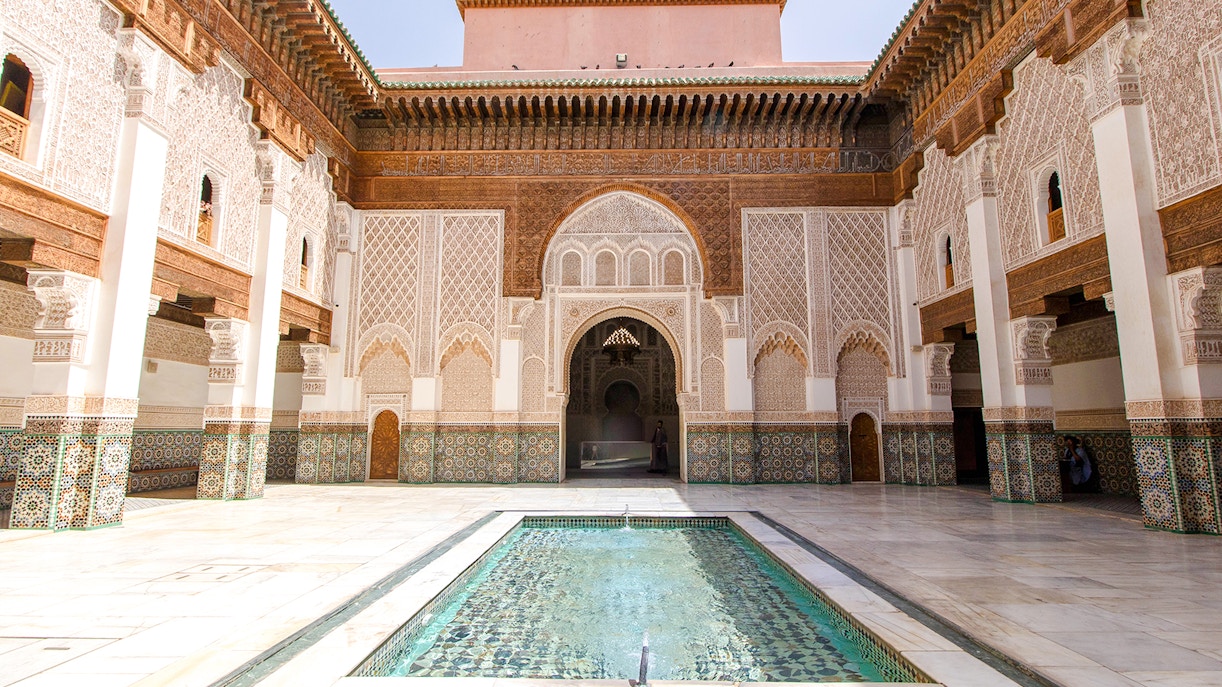
This is the heart of the madrasa. Walk slowly around the white-marble courtyard, pause by the long reflecting pool, and look up at the cedar galleries and student rooms above. It’s an easy, unhurried experience and perfect for first-time visitors.
Explore the prayer hall
Step into the former prayer chamber to see finely carved stucco walls and the ornate mihrab. The atmosphere here is quieter and more contemplative. Allow 5–10 minutes to take in the details and symmetry.
Discover student life
Climb the narrow staircases to the upper levels, where small student dormitories line the courtyard. These simple rooms offer insight into daily life at the madrasa centuries ago. The climb is short but involves steps and tight passages.
Use an audio guide or join a guided tour
An optional smartphone audio guide provides historical context at your own pace, while guided tours add deeper explanation and often smoother entry during busy hours. Both options suit visitors who want more than a visual walkthrough.
What to see at Madrasa Ben Youssef
1/4
Ornate entrance & vestibule
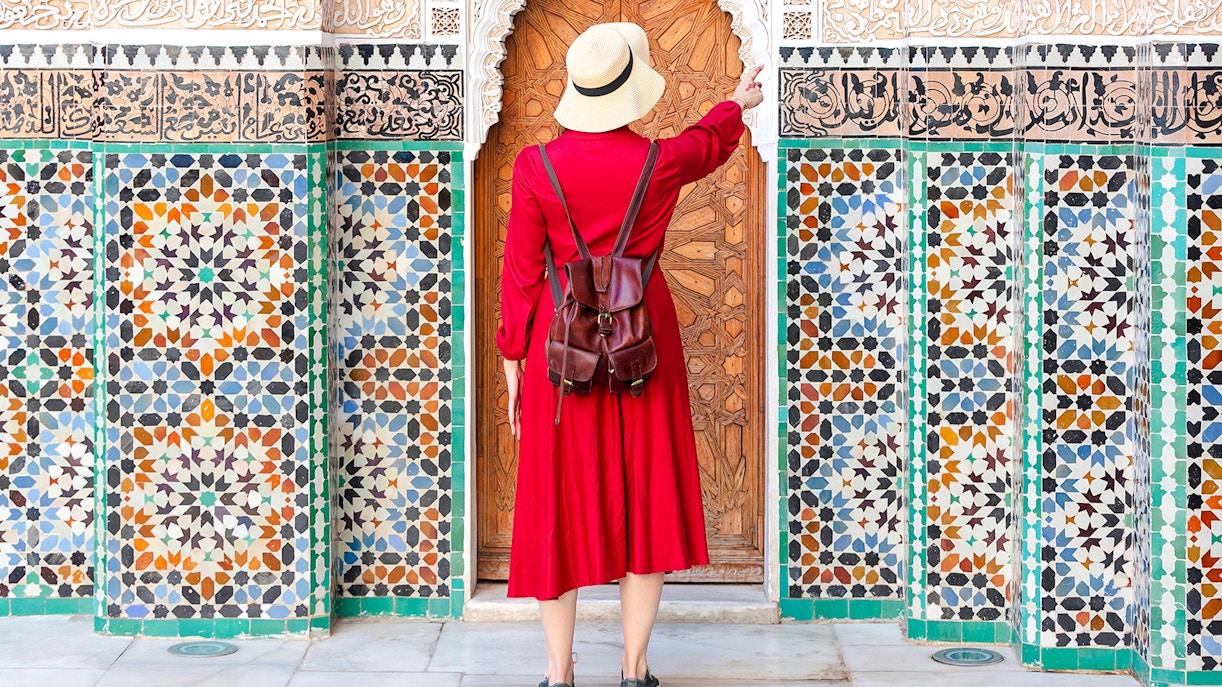
The visit starts with a tall cedar-wood doorway carved with geometric patterns. Step inside the vestibule to see tiled floors and a decorated ceiling. This space acts as a calm pause before the main courtyard opens up.
Zellij tilework
Colorful mosaic tiles cover the floors, fountains, and lower walls. Look closely to spot star and polygon patterns made from hand-cut pieces. The tiles are thick and durable, and their colors stand out beautifully in natural light.
Cedar wood carvings
Cedar wood appears throughout the madrasa, especially on ceilings, doors, and balcony railings. The carved floral designs and calligraphy add warmth and balance to the stone and tile around them. Don’t forget to look up.
Stucco carvings & calligraphy
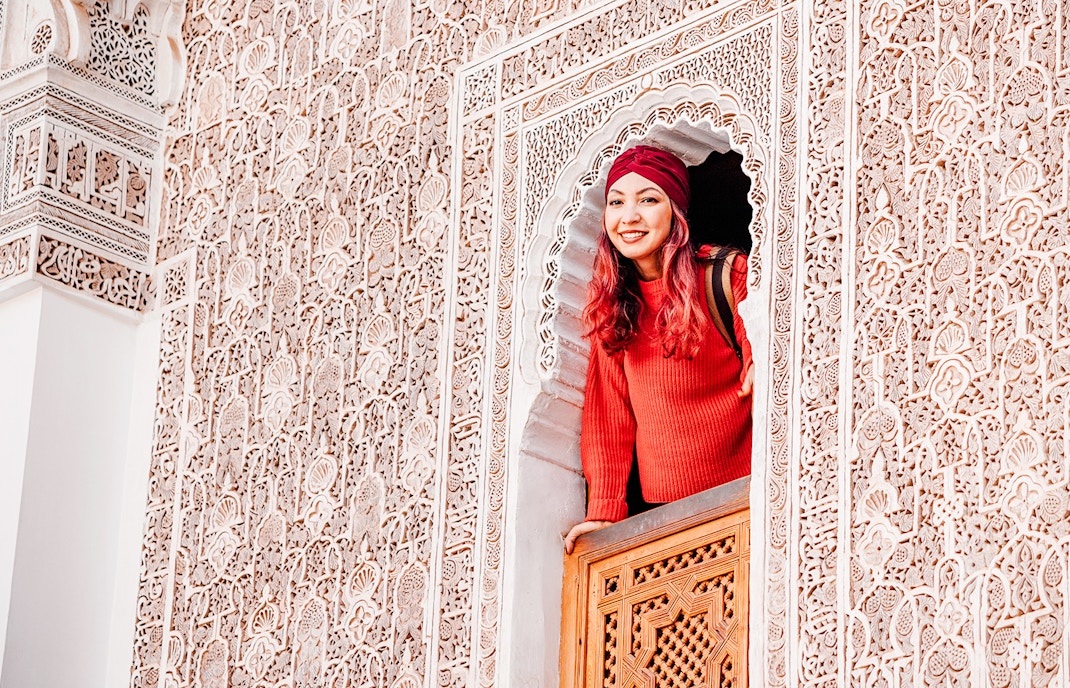
Fine plaster carvings decorate the arches and upper walls. These include repeating patterns and Qur’anic inscriptions. The details are subtle but impressive, and they tie the whole space together visually.
History of Madrasa Ben Youssef in a nutshell
Madrasa Ben Youssef was founded in the late 16th century under Sultan Ahmad al-Mansur, though earlier versions of the school existed on the site. At its peak, it housed up to 900 students, making it the largest Islamic college in North Africa. Scholars from across the region came here to study religious and secular subjects, living in small dormitory cells arranged around the central courtyard.
After centuries of use, the madrasa fell into decline and was eventually closed as an educational institution. Extensive restoration work in the 20th century preserved its architectural details and reopened it as a historic monument. Today, it stands as one of the finest surviving examples of Saadian architecture in Morocco and a key part of Marrakech’s cultural heritage.
Architecture & craftsmanship
What sets Madrasa Ben Youssef apart is the harmony between its materials. Zellij tiles cover lower walls and fountains with mathematical precision, while carved stucco fills upper surfaces with flowing patterns and inscriptions. Above it all, cedar wood ceilings add warmth and depth. Together, these elements reflect Islamic design principles that emphasize balance, symmetry, and contemplation rather than figurative imagery.
Tips for visiting Madrasa Ben Youssef
Arrive early to enjoy the courtyard before tour groups arrive.
Dress modestly out of respect for the site’s religious origins.
Photography is allowed, but avoid flash and expect tripod restrictions when busy.
Wear comfortable shoes—stone floors and stairs can be slippery.
Combine your visit with Almoravid Koubba or a medina walking tour to add context.
Frequently asked questions about Madrasa Ben Youssef
Madrasa Ben Youssef is known for its exquisite Saadian-era architecture, including intricate zellij tilework, carved cedar wood ceilings, and stucco calligraphy. It was once the largest Islamic college in North Africa.
Yes, especially if you’re interested in architecture and history. Unlike palaces or gardens, the madrasa offers a calm, immersive experience where the building itself is the highlight, making it a strong complement to busier sites like Bahia Palace.
Most visitors spend 45–60 minutes exploring the courtyard, prayer hall, and student rooms. If you enjoy photography or use an audio guide, plan for up to 90 minutes for a more unhurried visit.
Yes. Guided tours are offered through local operators and often include medina walks. An optional smartphone audio guide is also available on-site for visitors who prefer a self-paced visit with historical context.
General entry tickets are usually purchased on-site at the entrance. However, guided tours and combo experiences that include Madrasa Ben Youssef can be booked online in advance and may help avoid queues during peak hours.
Yes. Families often enjoy the open courtyard and visual details. That said, there are stairs, stone floors, and no interactive exhibits, so it’s best suited for older children who enjoy history and architecture.
Accessibility is limited. The ground floor is mostly level, but the entrance has steps and upper dormitory levels are only reachable via narrow staircases, making full access difficult for wheelchair users.
Yes, photography for personal use is allowed. Flash photography is discouraged to protect delicate surfaces, and tripods may be restricted during busy periods to manage crowd flow.
Modest clothing is recommended out of respect for the site’s religious and cultural significance. Lightweight, comfortable clothing and good walking shoes are ideal, especially during warmer months.
Yes. The madrasa is well-located for combining with Almoravid Koubba, Marrakech Museum, or a medina walking tour. Many guided experiences bundle these stops into a half-day itinerary.