Plan your visit to Jardin Majorelle
Jardin Majorelle is a compact botanical garden and museum complex best known for its electric-blue villa, rare plant collection, and Yves Saint Laurent connection. The surprise is how small it feels once you’re inside: most people can walk the garden in under an hour, but crowding changes the experience fast. The difference between a calm visit and a frustrating one usually comes down to slot timing, not stamina. This guide helps you choose the right entry time, route, and ticket before you go.
Quick overview: Jardin Majorelle at a glance
This is a short visit that rewards precise timing more than loose planning.
- When to visit: Daily from the first morning slots onward; the 8am–8:30am window is noticeably calmer than 10am–12pm, because photo-seekers, city tours, and late starters all converge once the light improves.
- Getting in: From 150 MAD for standard garden entry, with the full garden + Berber Museum + Yves Saint Laurent Museum combo from 300 MAD; booking ahead matters most in spring and fall, when the best morning slots often disappear 1–3 days early.
- How long to allow: 45 minutes–1 hour works for the garden alone, while adding the Berber Museum, Villa Oasis area, a café stop, or the YSL Museum pushes most visits closer to 1.5–2 hours.
- What most people miss: The Berber Museum inside Majorelle’s former studio adds real context, and the quieter Villa Oasis garden area is easy to skip if you treat the blue façade as the finish line.
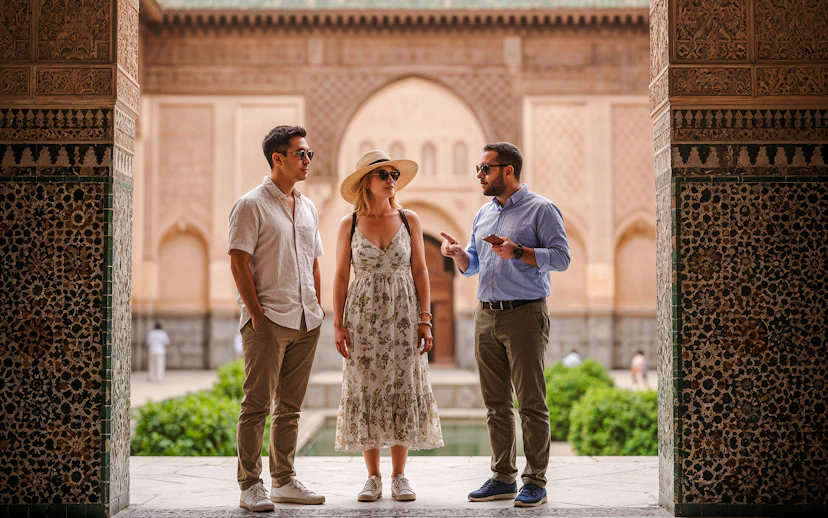
- Is a guide worth it? A guide adds value if you want the Jacques Majorelle and YSL story tied together, but for a short self-paced visit, a combo ticket plus museum interpretation usually does the job.
🎟️ Time slots for Jardin Majorelle sell out 1–3 days in advance during spring and fall. Lock in your visit before the time you want is gone. See ticket options
Jump to what you need
🕒 Where and when to go
🗓️ How much time do you need?
🎟️ Which ticket is right for you?
🗺️ Getting around
🌿 What to see
♿ Facilities and accessibility
Where and when to go
How do you get to Jardin Majorelle?
Jardin Majorelle sits in Guéliz, Marrakech’s modern district, about 2km from the medina walls and roughly 3km from Jemaa el-Fna, so it’s easy to reach without turning it into a half-day transfer.
Rue Yves Saint Laurent, Guéliz, Marrakech, Morocco
- Taxi / rideshare: Ask for Jardin Majorelle or Rue Yves Saint Laurent → about 10 minutes from central Marrakech → easiest option if you want a fixed arrival slot.
- Hop-On Hop-Off bus: Use the Majorelle stop → short walk to the entrance → useful if you’re pairing the garden with other city sights the same day.
- Walking: From Jemaa el-Fna → about 30 minutes on foot → best only in cooler months or for an early start before the heat builds.
Which entrance should you use?
The setup is simple: there is one main entrance, but the real mistake is arriving without a valid timed ticket and assuming you can sort it out at the gate.
- Main entrance: Located on Rue Yves Saint Laurent. Best for all visitors with online tickets. Expect 5–15 minutes at 10am–12pm when multiple timed slots overlap.
When is Jardin Majorelle open?
- Daily: Timed entry begins from 8am.
- Villa Oasis garden: Open daily except Wednesday, with more limited access hours than the main garden.
- Last entry: Later-day slots are available, but the most desirable morning windows go first.
When is it busiest? Spring and fall, especially 10am–12pm, are the most crowded because tour groups, independent visitors, and photographers all arrive once the morning light settles.
When should you actually go? Book the first slot around 8am–8:30am if you want cooler paths, softer light on the blue villa, and fewer people blocking the narrow garden lanes.
How much time do you need?
| Visit type | Route | Duration | Walking distance | What you get |
|---|---|---|---|---|
Highlights only | Main garden paths → lily ponds → cobalt-blue villa exterior → exit | 45–60 mins | ~1 km | Enough time to see the signature botanical gardens and iconic blue architecture, but you’ll likely skip the museums and linger less at quieter corners. |
Balanced visit | Garden → Berber Museum → temporary exhibitions → boutique | 1.5–2 hrs | ~1.5 km | The best option for most visitors. You get the full garden experience plus time for the Berber Museum, which adds cultural context beyond the photography spots. |
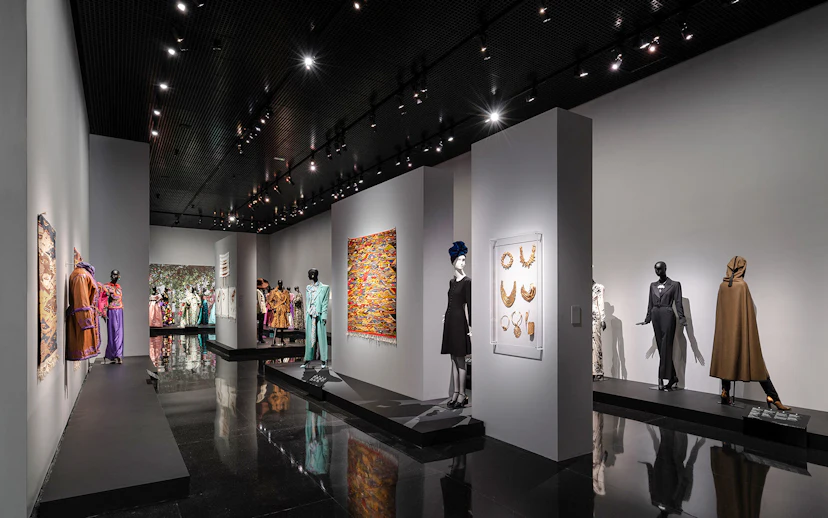
Full exploration | Garden → Berber Museum → Yves Saint Laurent Museum → bookshop/café area | 2.5–3.5 hrs | ~2 km | Ideal if you’re visiting both Jardin Majorelle and the adjacent museums. This gives enough time to slow down, read exhibits, and avoid rushing through the less-crowded sections. |
Which Jardin Majorelle ticket is best for you?
| Ticket type | What's included | Best for | Price range |
|---|---|---|---|
Jardin Majorelle entry | Timed entry to Jardin Majorelle; self-guided visit through the gardens and villa exterior | A short, flexible visit where you only want to see the garden at your own pace | From 268 MAD |
Yves Saint Laurent Museum entry | Entry to the Musée Yves Saint Laurent Marrakesh | Visitors interested in fashion, design, and the YSL legacy without visiting the garden | From 204 MAD |
Combined ticket: Jardin Majorelle + Berber Museum + Musée Yves Saint Laurent Marrakech | Entry to the garden, Yves Saint Laurent Museum, and Berber Museum, plus round-trip hotel transfers | The most complete cultural visit without arranging transport separately | From 696.50 MAD |
Combined ticket: Jardin Majorelle + Bahia Palace + Medrasa Ben Youssef & Medina Private Tour | Private guided city tour including Jardin Majorelle, Bahia Palace, Ben Youssef Madrasa, and guided medina exploration | Seeing Marrakesh’s headline sights in one day with a structured route | From 624 MAD |
Combined ticket: Jardin Majorelle + Musée Yves Saint Laurent | Entry to the garden and YSL Museum, with round-trip transfers | A half-day cultural outing with fewer stops but easier logistics | From 461 MAD |
Jardin Majorelle Guided Tour | Timed entry plus a guided walk inside the garden with historical context | Visitors who want the backstory of Jacques Majorelle and Yves Saint Laurent rather than a photo-focused visit | From 536 |
How do you get around Jardin Majorelle?
Garden layout
Jardin Majorelle works as a compact 3-zone visit: you can cover the highlights in 45–60 minutes, or stretch it to 1.5 hours with the museums and café.
The crowd-flow issue here is predictable: too many people stop at the blue villa first, so the central photo area clogs up before the outer paths do.
- Main garden paths: Cactus beds, bamboo groves, palms, ponds, and fountains → budget 20–30 minutes.
- Blue villa and Berber Museum: The most photographed building and the cultural core of the site → budget 20–30 minutes.
- Villa Oasis and café area: Quieter extension and refreshment stop → budget 15–20 minutes.
Suggested route: Start with the outer garden loop while the paths are still open, then move into the blue villa area, and save the café or Villa Oasis side for last; most visitors do the reverse and get stuck in the busiest bottleneck first.
Maps and navigation tools
- Map: This is a compact on-site route rather than a complex estate → the main circulation is easy to follow once you’re through the gate.
- Signage: Wayfinding is generally enough for the garden itself, but the museum spaces are easier to appreciate if you slow down rather than treating them as a photo backdrop.
- Audio guide / app: The Berber Museum audio guide adds the most value here → use it if you want context on the objects rather than just a quick visual pass.
💡 Pro tip: Do the cactus and bamboo edges before stopping at the blue villa — that central photo zone fills first, while the outer paths stay calm for longer.
Get the Jardin Majorelle map / audio guide
What is Jardin Majorelle worth visiting for?

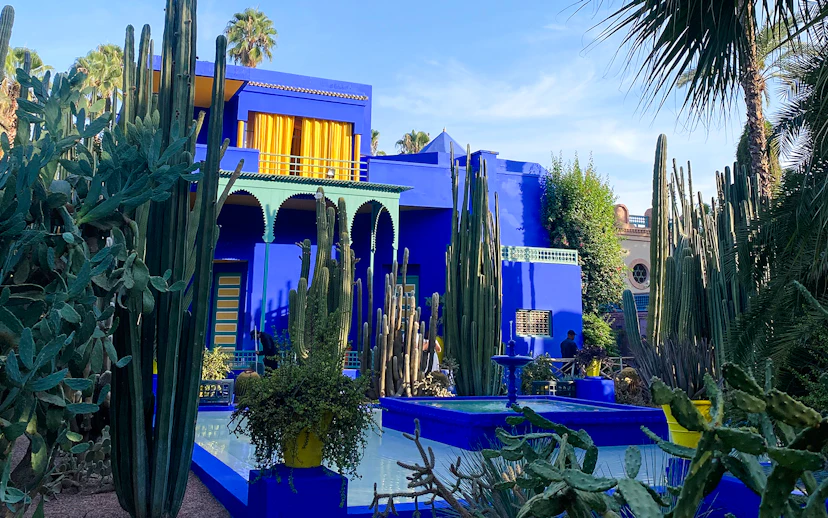
Majorelle Blue villa
Creator / era: Jacques Majorelle, 1930s Art Deco studio
The cobalt-blue studio is the image most people come for, but it’s more than a photogenic façade. The color contrast between the blue walls, yellow accents, and dense green planting is what makes the site feel so unlike anywhere else in Marrakech. What many visitors miss is that the building now houses the Berber Museum, so stepping inside turns a photo stop into a cultural one.
Where to find it: At the center of the garden, beside the main pond and courtyard areas.
Berber Museum
Collection: More than 600 artifacts from Morocco’s Berber cultures
Inside Majorelle’s former studio, this museum adds the context the garden alone can’t. Jewelry, textiles, tools, and ceremonial objects give the visit more weight, especially if you want more than a visual stroll. Most people either skip it or rush through after taking exterior photos, but it’s one of the clearest ways to understand why this site matters beyond design.
Where to find it: Inside the blue villa at the heart of the garden.
Cactus and succulent collection
Collection type: Exotic species gathered from multiple continents
The cactus displays are part of what makes the garden feel like a living artwork rather than a park. Towering shapes, unusual silhouettes, and carefully staged spacing create some of the strongest visual rhythm in the whole site. Many visitors focus only on the blue walls and miss how much of the garden’s drama comes from the plant architecture itself.
Where to find it: Along the outer paths and planting beds away from the central villa bottleneck.
Lily pond and fountains
Garden feature: Reflecting water, lotus flowers, and courtyard scenery
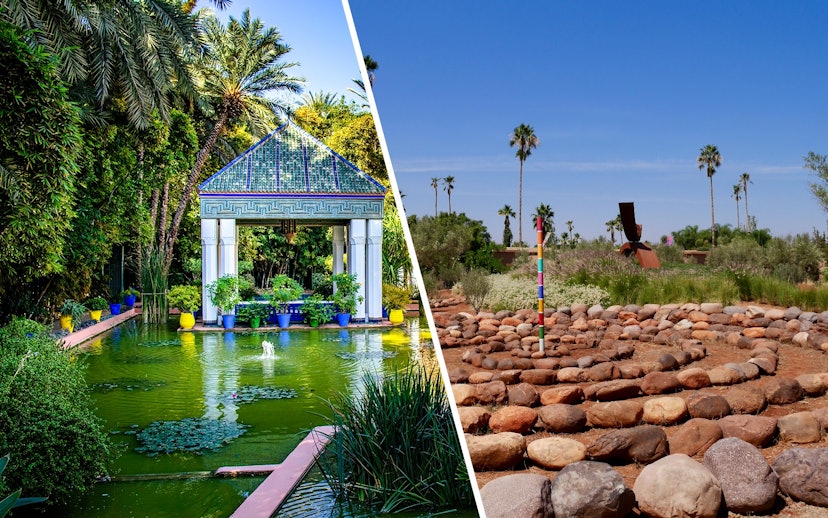
The water features soften the visit and slow your pace in the best way. Reflections of the blue walls in the ponds are especially striking in the morning, and the sound of fountains changes the feel of the garden from busy attraction to quiet retreat. What people often miss is how much this section rewards waiting a minute for the crowd to move instead of taking a quick pass-through shot.
Where to find it: Around the villa courtyard and central pond zones.
Yves Saint Laurent memorial
Cultural link: Memorial to Yves Saint Laurent and Pierre Bergé’s restoration legacy
This is one of the most meaningful stops if you care about the story behind the garden’s survival. It turns the site from a beautiful place into a place with a second life, tied directly to Saint Laurent’s attachment to Marrakech. Many visitors walk past it because it is quieter and less theatrical than the blue villa, but it gives the whole visit emotional context.
Where to find it: In a quieter corner of the garden away from the main central photo loop.
Villa Oasis area
Access area: Private-garden extension linked to Yves Saint Laurent’s former residence
The Villa Oasis section feels more intimate than the main circuit and helps balance the visit after the busiest photo spots. It’s a good reminder that Majorelle is not only about one famous façade, but about layered garden design and private retreat spaces. This is easy to miss because visitors often assume the main pond and villa are the end of the experience.
Where to find it: Beyond the core garden circuit, in the extension area linked to Villa Oasis access.
Facilities and accessibility
- 🎒 Storage: Large-bag storage details are not a defining part of the visit, so plan to travel light and keep what you bring easy to carry through a short outdoor route.
- 🚻 Restrooms: Restrooms are available on-site, and an accessible toilet is available at ground level.
- 🍽️ Café: Café Bousafsaf offers drinks, pastries, and light bites in a shaded courtyard, making it a good end-of-visit stop rather than a reason to arrive early.
- 🛍️ Gift shop / merchandise: The on-site boutique is one of the better souvenir stops in Marrakech for design-led items, books, posters, and Majorelle-inspired pieces.
- 🪑 Seating / rest areas: Benches and shaded pauses are built into the garden, especially around ponds and courtyard areas.
- 🅿️ Parking: There is a small parking area, but it fills quickly, so a taxi or rideshare is usually easier than driving yourself.
- ♿ Mobility: Most garden paths are flat, paved, and wheelchair-friendly, wheelchairs can be borrowed on-site, and the main amenities stay at ground level, though the Berber Museum has a few steps where staff may need to assist.
- 👁️ Visual impairments: The site is highly visual and spatially straightforward, but the most interpretive help comes from museum materials and staff rather than tactile infrastructure.
- 🧠 Cognitive and sensory needs: The first morning slots are the calmest option if you want a lower-stimulus visit, because the narrow paths and photo zones become more crowded by mid-morning.
- 👨👩👧 Families and strollers: The main route is generally stroller-friendly across the garden itself, but the museum component is tighter and slower-moving than the outdoor paths.
Jardin Majorelle works best with children as a short, color-filled outdoor stop rather than a long museum visit, and the fish ponds, bright architecture, and unusual plants usually hold attention better than the object displays.
- 🕐 Time: Around 45 minutes is realistic with younger children if you focus on the garden paths, ponds, and central blue villa.
- 🏠 Facilities: On-site restrooms, shaded seating, and the café make this easier than many older-city attractions.
- 💡 Engagement: Treat the visit like a visual scavenger hunt by having children spot the bluest wall, tallest cactus, and quietest fountain rather than trying to force a museum pace.
- 🎒 Logistics: Book an early slot, carry water, and keep bags light, because narrow paths and heat make a slow late-morning visit harder than the short route suggests.
- 📍 After your visit: The Yves Saint Laurent Museum next door is the easiest add-on if your group still has energy, while the café courtyard is the easiest reset if they do not.
Rules and restrictions
What you need to know before you go
- Entry requirement: All tickets are reserved online in timed 30-minute entry slots, and you should arrive within your booked window.
- Children: Children under 12 enter free with an adult, while resident and student discounts must be booked online and backed up with ID.
- Dress note: There is no enforced dress code, but light clothing, sun protection, and comfortable shoes make the outdoor paths far easier in warm weather.
Not allowed
- 🚫 Invalid tickets: Screenshots, resold tickets, or unofficial bookings can be refused at the gate if they do not match the official system.
- 🖐️ Rushing planted areas: Stay on the marked garden paths and avoid treating the beds and water features as photo props.
Photography
Photography is one of the main reasons people come, and the garden is built for it, but the narrow paths mean you’ll get a better experience if you keep shoots brief and avoid blocking the blue villa and pond viewpoints for long stretches. The real distinction here is not room by room, but crowd flow: the busiest central photo spots are also the areas most likely to feel congested by late morning.
Good to know
- Online-only sales: There is no dependable last-minute fallback at the entrance, so turning up without a booked slot can mean missing the site entirely.
- Visit length: The garden is smaller than many first-time visitors expect, so the value comes from timing and pacing, not from treating it like a half-day attraction.
Practical tips
- Booking and arrival: Book 1–3 days ahead in spring and fall if you want a morning slot, because timed entry is now online-only and late arrivals can be refused once your 30-minute window passes.
- Pacing: Walk the outer garden paths first and save the blue villa for second, because most people rush straight to the iconic façade and create the day’s first bottleneck there.
- Crowd management: The first slot around 8am–8:30am is the best trade-off at this venue, since you get cooler temperatures, cleaner reflections on the ponds, and fewer people in your photos.
- What to bring or leave behind: Bring only a small day bag, because this is a short, stop-and-photograph visit rather than a place where extra layers or shopping haul feel worth carrying.
- Food and drink: Eat after your visit unless you’re doing the full combo with both museums; the garden itself is short enough that stopping midway breaks the flow more than it helps.
- Heat planning: In summer, treat anything after late morning as a compromise, because the garden’s shade helps, but the narrow outdoor route still feels much harder once the day heats up.
- Value check: If you care about more than photos, add the Berber Museum or the full combo ticket, because the garden alone is beautiful but brief.
What else is worth visiting nearby?
Commonly Paired: Musée Yves Saint Laurent Marrakesh
Distance: Next door — 1-minute walk
Why people combine them: It is the most natural pairing in Marrakech because the stories overlap directly, and the combined ticket saves you from booking two separate cultural stops.
✨ Jardin Majorelle and Musée Yves Saint Laurent Marrakech are most commonly visited together — and simplest to do on a combo ticket. The combo covers the garden, Berber Museum, and YSL Museum in one flow, and saves money versus buying the pieces separately.
Commonly Paired: Jemaa el-Fnaa
Distance: About 3km — 10-minute taxi or 30-minute walk
Why people combine them: Majorelle gives you a calm, curated start or reset, while Jemaa el-Fnaa delivers the opposite side of Marrakech — noise, food, movement, and medina energy.
Also nearby
Guéliz district
Distance: Around the garden itself — walkable
Worth knowing: If you want a softer landing after the medina, Guéliz gives you modern cafés, wider streets, and a calmer neighborhood around your visit.
MACMA museum area
Distance: Short taxi ride or longer walk from the garden
Worth knowing: This is the better nearby add-on if you want to keep a modern-art thread running rather than doubling down on historic medina sights.
Eat, shop and stay near Jardin Majorelle
- On-site: Café Bousafsaf is the most convenient option for mint tea, pastries, and light plates, and it works best as a shaded post-visit pause rather than a destination meal.
- Nearby options: Guéliz is the easiest district for a proper coffee, lunch, or dinner after your slot, because you are already outside the medina and close to modern cafés and restaurants.
- Best timing: If you book the first morning slot, plan breakfast before arrival and save café time for later, because the quietest part of the garden is too valuable to spend seated.
- 💡 Pro tip: Don’t schedule a long meal before an early ticket — Jardin Majorelle is short enough that it’s smarter to see it first, then eat once the late-morning crowds build.
- Jardin Majorelle boutique: This is the most worthwhile place to shop immediately after your visit if you want books, posters, design objects, and Majorelle-inspired souvenirs rather than generic medina gifts.
- Guéliz shops: The surrounding district is a better second stop if you want contemporary fashion, homeware, or a less souvenir-heavy browse after the garden.
Yes, if you want a calmer, more modern base than the medina and you like being able to reach Jardin Majorelle without crossing the old city first. Guéliz feels more spacious, is easier for taxis and rideshares, and suits travelers who prefer cafés and convenience over riad atmosphere. If your trip is built around the medina’s character, though, this is better as a day visit than your base.
- Price point: Guéliz usually skews mid-range to upper-mid-range, with more hotel-style stays and fewer traditional riads.
- Best for: Travelers on a shorter trip who want simple logistics, modern streets, and easy access to the garden and newer parts of Marrakech.
- Consider instead: Stay in the medina if you want classic riad character and walkable old-city atmosphere, then take a short taxi to the garden when you’re ready for a calmer morning.
Frequently asked questions about visiting Jardin Majorelle
Most visits take 45 minutes to 1 hour for the garden alone. If you add the Berber Museum, Villa Oasis access, a café stop, or the Yves Saint Laurent Museum next door, the visit usually stretches to 1.5–2 hours without feeling rushed.
Yes, you should book in advance because entry is sold through timed online slots rather than dependable on-site ticket sales. In spring and fall, the most desirable morning times can sell out 1–3 days ahead, especially between 8am and 11am.
Arrive about 10–15 minutes before your slot so you can clear the entrance calmly without risking a missed window. The garden uses 30-minute entry intervals, and late arrivals may be refused once capacity has shifted to the next batch of visitors.
Yes, a small day bag is the easiest choice for this visit. The route is short and photo-heavy, so traveling light makes the narrow paths, museum rooms, and café stop much easier than carrying a large backpack through the garden.
Yes, photography is one of the main draws here. The practical limitation is crowd flow rather than a blanket ban: the blue villa, ponds, and central paths get congested by late morning, so short stops and early slots make the biggest difference.
Yes, groups visit regularly, but smaller groups work better here than large, slow-moving ones. Because the garden is compact, a big group can feel crowded very quickly around the central photo points unless your timing is early and your route is efficient.
Yes, it works well for families if you treat it as a short outdoor stop rather than a museum-heavy outing. Most children stay engaged by the vivid colors, fish ponds, and unusual plants, while the on-site café and restrooms help keep the visit manageable.
Yes, most of the garden is wheelchair accessible because the paths are flat and paved, and wheelchairs can be borrowed on-site. The main caveat is the Berber Museum, which includes a few steps and may require staff help for smoother access.
Yes, food is available on-site at Café Bousafsaf, and Guéliz gives you plenty of nearby café and restaurant options afterward. Because the garden itself is short, many visitors find it more efficient to eat after the visit rather than interrupting the route halfway through.
The best time to visit is the first morning slot, around 8am–8:30am. That window gives you cooler temperatures, softer light on the blue villa, and noticeably fewer people on the narrow paths than the 10am–12pm rush.
Buy through the official site or a verified partner only. The garden has warned about fraudulent or invalid tickets from unofficial sellers, and a bad ticket can still leave you outside the entrance with your preferred slot gone.