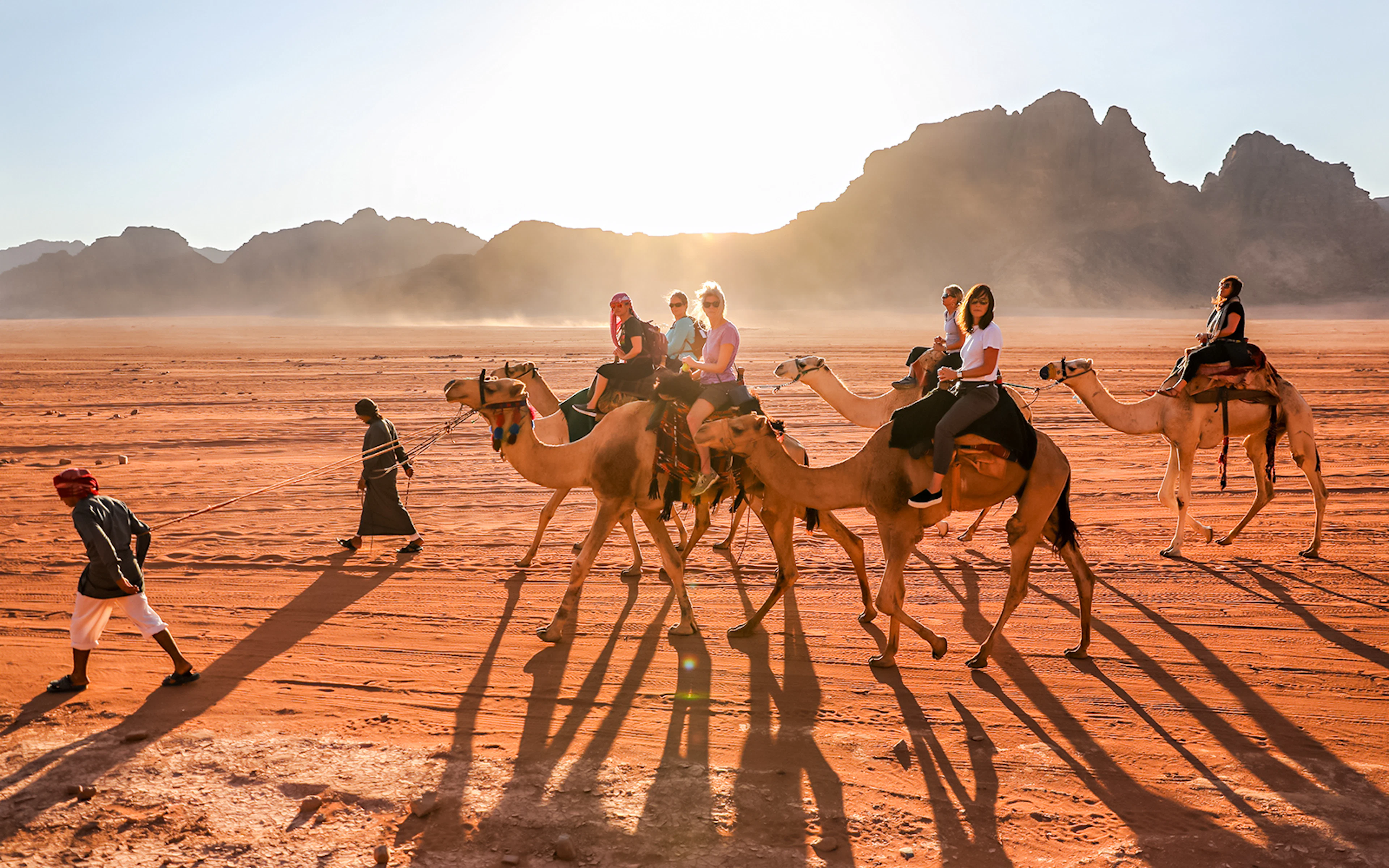
Oasis landscape rather than monumental architecture. Wide skies, rows of palms, sandy tracks, and low walls create a feeling of space that central Marrakesh rarely gives you.
What is Palmeraie?
Nothing about the Palmeraie feels like central Marrakesh. The traffic noise drops, the roads open out, and suddenly you’re moving through long rows of palms, sandy tracks, and low villas with the Atlas foothills faint in the distance. It feels airy, dry, and noticeably calmer than the Medina.
The Palmeraie exists as Marrakech’s palm oasis: a cultivated green belt at the city’s edge that now doubles as a leisure district. That mix is what gives it weight: you’re not just booking an activity, you’re stepping into the landscape that softens the city around it.
The payoff is contrast. In a single outing, you get open space, slower light, and the feeling of having briefly left Marrakesh without spending a whole day getting there.
Skip it if: you want dramatic Sahara-style dunes or a fully walkable attraction. The Palmeraie is spread out, transfer-dependent, and best experienced as an activity zone.
What to see and do in the Palmeraie?

1/8
Palm grove trails
The broad tracks between date palms are the Palmeraie’s defining scene. Even a short ride here gives you the open, sandy landscape people come for, with low villas and distant mountains replacing the Medina’s tight lanes.
Camel routes
Most camel outings last about 1 hour and move at a gentle pace through the grove. They’re less about distance than atmosphere, with enough time to settle into the rhythm before a tea stop.
Quad biking tracks
Quad routes cut deeper into dusty trails and feel far more remote than the district’s roads suggest. Guided sessions usually include helmets, goggles, and a mint-tea break, making them the area’s clearest adrenaline pick.
Buggy trails
If you want more speed and stability than a quad, buggy routes cover more off-road ground in about 2 hours. They work especially well for pairs, since 2 people share each buggy.
Berber house and tea break
Some camel experiences include a stop at a Berber house for mint tea and pancakes. It’s a simple pause, but it adds context and gives the outing a cultural rhythm beyond the ride itself.
Musée de la Palmeraie
This quiet art space swaps engines for stillness: contemporary works, cactus gardens, and courtyards tucked inside the oasis. It’s best after an active morning, when you want shade, slower pacing, and a different side of the district.
Golf and resort edge
The Palmeraie’s resort side shows up in manicured fairways, spa terraces, and long lunch views over palms. Even if you’re not staying overnight, this is where the district feels most polished and least dusty.
Chez Ali at night
If you stay into evening, Chez Ali turns the district theatrical with dinner, live performances, and the Fantasia show. Hotel transfers help here, since the experience works best as a full night out.
Architecture of the Palmeraie
Landscape style
Materials
Sand, packed earth, date palms, irrigation-fed greenery, and adobe-toned resort walls dominate what you actually see on the ground.
Structure
The Palmeraie works as a vast palm belt around the city, so movement matters as much as buildings; camel, quad, and buggy routes reveal its scale best.
Experiential detail
Once you leave the main road, sound softens quickly. The design effect is contrast — dusty openness, filtered shade, and long sightlines instead of dense alleyways.
Designer
No single architect defines the Palmeraie. Its form comes from cultivated oasis land later overlaid with resorts, golf courses, and cultural spaces such as the museum.
How to explore the Palmeraie
Planning your route
Budget 2–3 hours if you want 1 signature activity and tea; 4–6 hours if you’re pairing a camel or quad ride with the museum, a spa stop, or dinner at Chez Ali. The big variable is transport: the Palmeraie is spread out, and moving between venues takes planning if you’re not using a hotel transfer.
Best way to pace the visit
Start early, before the heat flattens the landscape and dust gets harsher. A smart first route is active-to-slow: begin with a quad, buggy, or camel ride while the light is soft, pause for mint tea, then move to the Musée de la Palmeraie or a resort lunch. Finish with the Chez Ali Dinner & Fantasia Show with Hotel Transfers & optional Camel Ride if you want the day to run into evening. Must-see: 1 ride through the palm grove, a tea stop, and at least 1 quiet viewpoint away from the road. Optional: the museum adds art and cactus gardens in about 1–2 hours; a spa adds half a day. Guided experiences work better here because trails branch easily, signage is limited, and hotel transfers remove the hardest part, getting in and out smoothly.
What's so special about Palmeraie Marrakesh?
Eight kilometres from the Medina, the noise stops. La Palmeraie covers 140 sq km of date palms, sandy tracks, and open desert fringe.
The grove has been here since the 11th century. It was built on khettara, a network of underground irrigation channels that carried snowmelt from the Atlas Mountains to the roots of the palms. Some still work. You're walking over them without knowing it.
Most people come for the camel ride: an hour along shaded palm tracks, finishing at a Berber tent with mint tea. Others head straight to the quad bikes, which take you out past the treeline to the Jbilat Desert where the Atlas Mountains sit enormous on the horizon. Hot air balloon flights leave at dawn; the grove looks completely different from 300 metres up, and you see how close the Medina actually is.
Slower options exist too. The Palmeraie Golf Palace runs 27 holes among the palms, and several resorts sell day access to their pools and hammams.
Come in the late afternoon. Shade is scarce and midday heat in summer is punishing. After 4pm the temperature drops, the light changes, and the palms at sunset look nothing like they do in the guide photos.
What to know before you visit Palmeraie
- It's not a park; there's no entrance: The Palmeraie is an open area, not a ticketed attraction. You don't "enter" it. You come here for a specific activity and the operator's base is your actual destination. Know which one you're heading to before you leave your riad.
- Getting here: Taxis from Jemaa el-Fnaa take 15–20 minutes and cost roughly 50–80 MAD one way. Agree the fare before you get in, or use a ride-hailing app to avoid negotiation. Horse-drawn carriages also run directly from Place Jemaa el-Fnaa and stop at camel and quad operators along the way. Most activity operators include hotel pickup; worth confirming when you book since the grove stretches 22 km and meeting points are far apart.
- Timing matters more here than most places: Midday temperatures in summer regularly exceed 40°C, and shade inside the grove is sparse. Come before 10am or after 4pm. The late afternoon light is also when the palms look their best, the morning is flat by comparison.
- What to wear Long trousers and closed-toe shoes for camel rides or quad biking. Sunscreen and a hat are non-negotiable. Carry water as vendors are scarce outside the resort areas.
- Vendors will approach you: Particularly around the camel ride zones. If you've already booked, say so and keep moving. Pre-booking any activity removes most of the friction.
- It's spread out: The Circuit de la Palmeraie is a 22 km loop road through the grove. Don't assume two things are walkable from each other, they almost certainly aren't. Plan one anchor activity and build around it rather than trying to cover the whole area.
- Combine it with something nearby: The Palmeraie sits on the road toward the Ourika Valley and the Atlas Mountains, so a morning here pairs well with an afternoon in the foothills. Majorelle Garden is also a 10-minute taxi ride from the grove's southern edge if you want a full day out of the Medina.
Frequently asked questions about the Palmeraie
Yes, if you want open space and a signature Marrakech activity without committing to a full desert trip.
Most visits take 2–3 hours. Plan 4–6 if you’re combining a ride with the museum, a resort spa, or dinner at Chez Ali. Transfers matter here, because the Palmeraie is spread out rather than walkable.
Don’t skip the palm-grove ride itself. For most first-timers, the best pairing is a 1-hour camel or quad session, a mint-tea stop, and either the cactus gardens at the museum or sunset light over the tracks.
Yes, especially for first-timers and families who pick camel rides over motorized options. Quad, buggy, and long off-road routes suit older children and adults better. Travelers with back problems may find motorized rides too rough.
Early morning and late afternoon are best. You’ll get softer light, cooler temperatures, and a calmer ride.
Yes, ideally 3–7 days ahead, especially for sunset slots and bundled transfers. On-site arrangements are possible, but they add transport hassle.
Yes. The Palmeraie is easy to reach by road, but awkward to navigate between venues without a car.