Is El Badi Palace worth visiting?

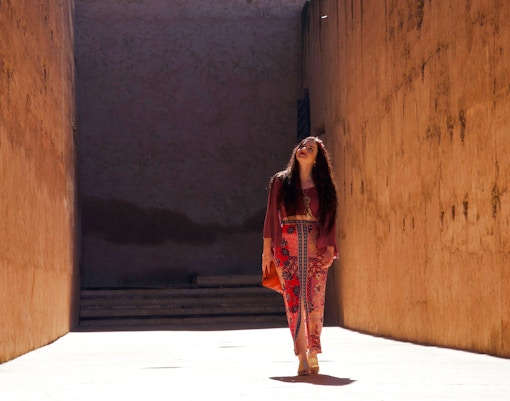
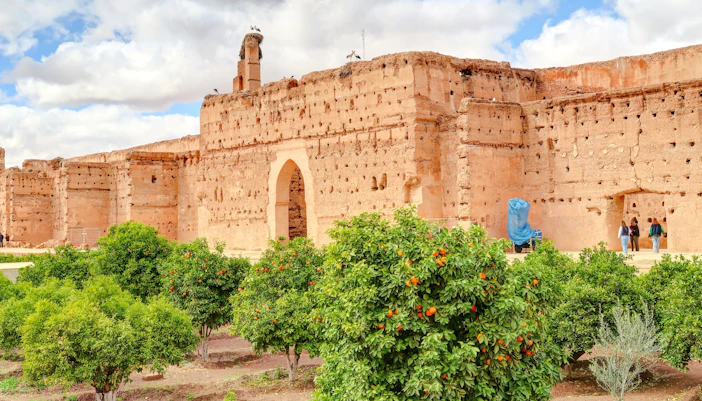
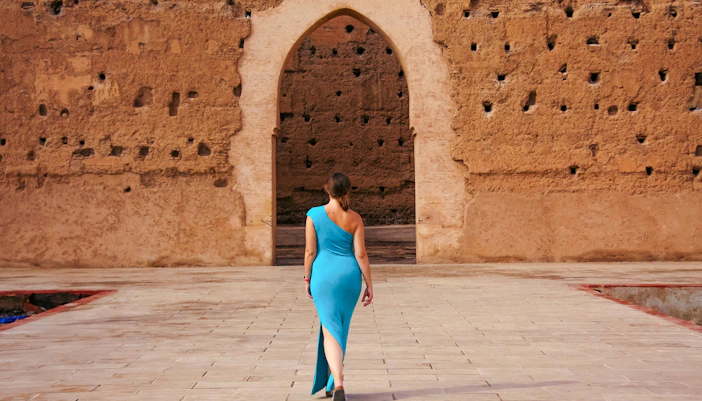
Step through the gate and the medina noise falls away. Suddenly you’re in a vast open court of red walls, citrus-scented gardens, long still water, and storks clattering above the ramparts. El Badi feels less like a museum than a grand absence you can walk through.

Sultan Ahmad al-Mansur built it after his 1578 victory at the Battle of the Three Kings, using war wealth to stage Saadian power at an imperial scale. Even stripped of marble, gold, and cedar, the palace plan still reads clearly in its courtyards, pavilions, and underground passages.

What stays with most visitors is the contrast: ruin and precision, silence and former spectacle, empty walls and one extraordinary surviving treasure in the Koutoubia Minbar. You leave feeling you’ve seen how an empire announced itself — and how quickly that confidence could be dismantled.

Skip it if: you dislike open-air sites with minimal shade or want lavishly preserved interiors rather than ruins.

What to see inside El Badi Palace?

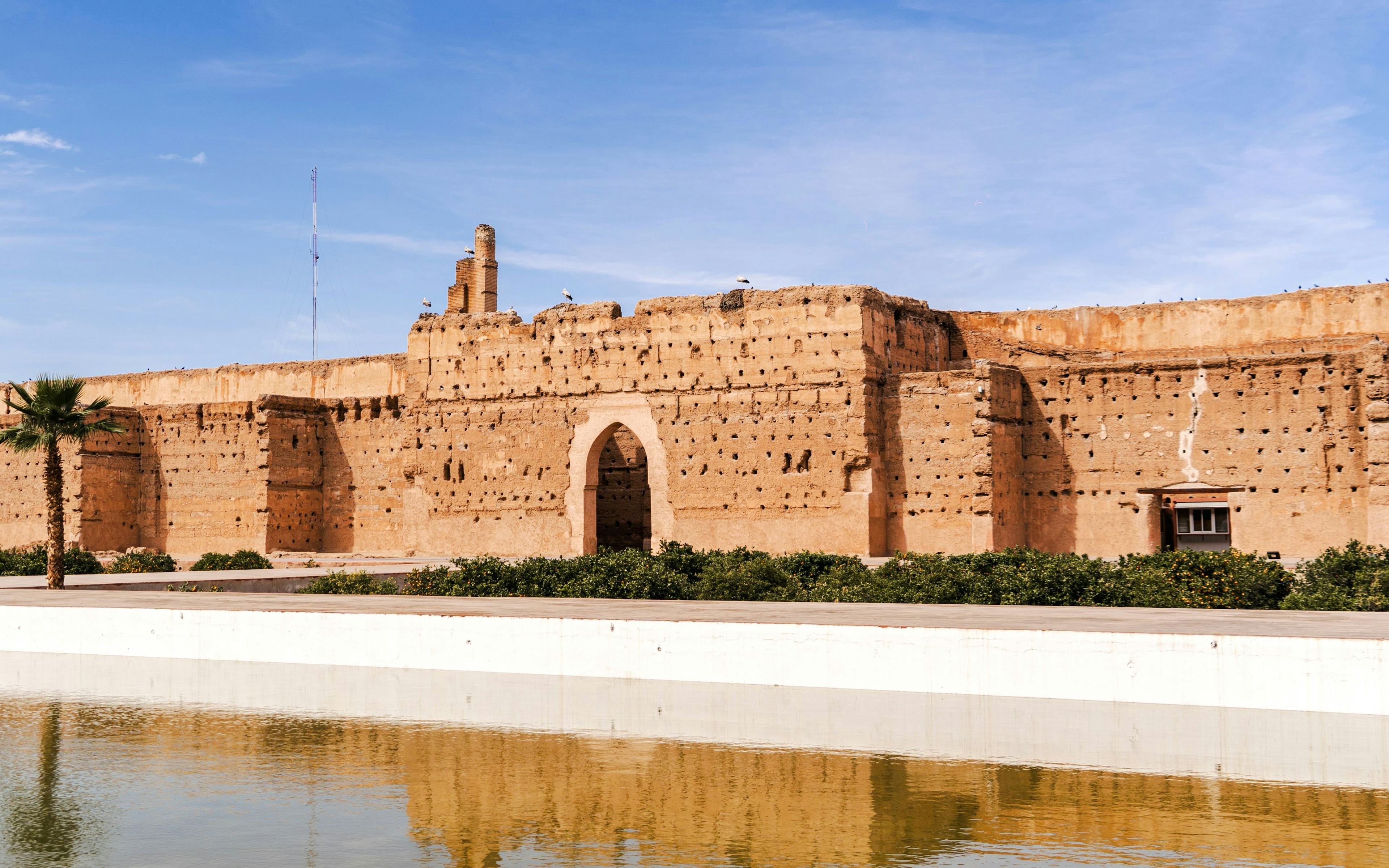
Grand courtyard and reflecting pool at El Badi Palace
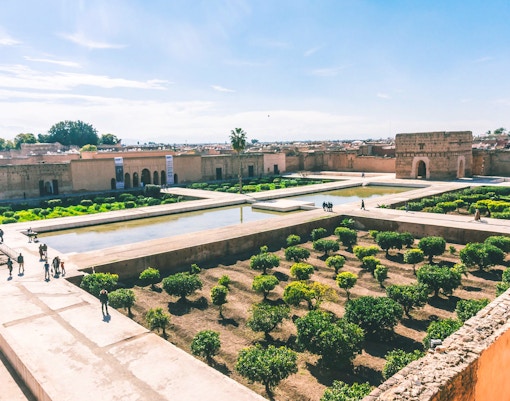
Sunken gardens inside El Badi Palace
Koutoubia Minbar exhibition at El Badi Palace
Subterranean passages beneath El Badi Palace
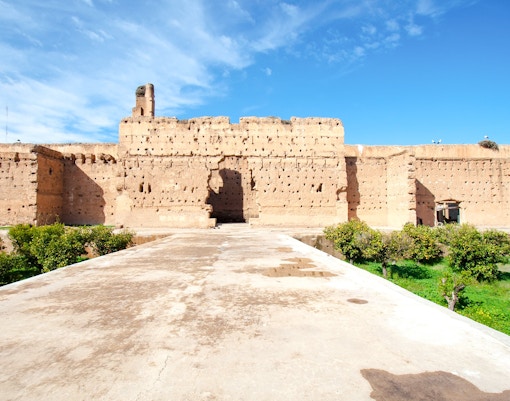
Ruins of Qubba al-Khamsiniya at El Badi Palace
Upper ramparts of El Badi Palace with city views
1/6

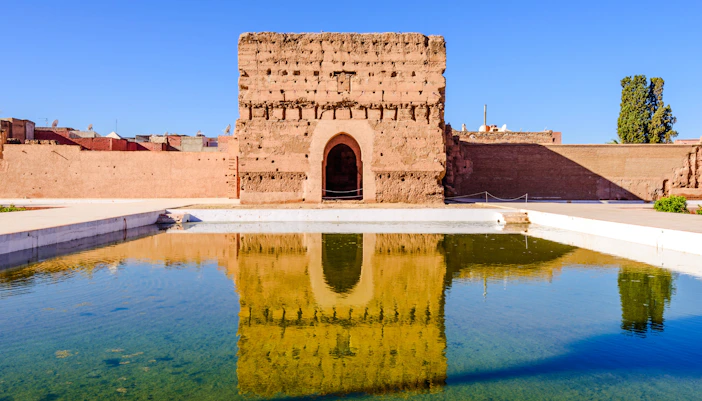
The grand courtyard and reflecting pool

The palace opens onto an enormous central court built to impress foreign envoys on sight. The long reflecting pool gives the ruins their visual center and is one of the best early-morning photography spots.

The sunken gardens

Four vast gardens sink below courtyard level, softening the red walls with orange and olive trees. They’re easy to overlook at first, but they reveal the scale of Saadian planning better than any surviving decoration.

The Koutoubia Minbar exhibition

Housed in a protected exhibition room, this 12th-century wooden pulpit is the palace’s most important surviving treasure. Give it time: the marquetry and inlay are astonishing, and many visitors spend longer here than expected.

The subterranean passages

Below the palace are cool vaulted corridors once tied to storage, service, and imprisonment. They offer relief from midday heat and add a darker, more human layer to the splendor you see above ground.

Qubba al-Khamsiniya

This ruined audience pavilion once held the famous fifty columns. Most of the luxury materials are gone, but the footprint still conveys how formal receptions and imperial display were staged here.

The upper ramparts

Climb up for the palace’s best payoff: views across the Kasbah, the Koutoubia minaret, and the Atlas Mountains. The high walls also host the palace’s resident white storks, a detail photographers consistently linger on.

Guided visit

Without context, the palace can feel like beautiful empty walls. A guided visit turns the ruins legible, linking the courtyard, tunnels, and Minbar to Saadian politics, diplomacy, and spectacle while helping you navigate the vast site with confidence and ease.

How to explore El Badi Palace

Budget 1.5 to 2 hours for a full visit, or about 1 hour if you want only the courtyard, Minbar exhibition, and one rooftop viewpoint. The difference comes down to whether you explore the underground passages slowly and spend time photographing the ramparts.

Suggested route: Start in the grand courtyard while the light is still soft and the open space feels coolest, then move into the Koutoubia Minbar exhibition before the smaller rooms get busier. After that, head underground to the vaulted passages for shade and context, and finish on the western ramparts for skyline views and stork nests. This sequence saves the most exposed climb for later, when you already understand the palace layout.

Must-see: the central reflecting pool and sunken gardens, the Koutoubia Minbar, and the terrace views over the Kasbah to the Atlas Mountains. Optional: the full loop of the subterranean corridors and secondary exhibition rooms adds 20–30 minutes and gives useful context on palace logistics and excavation.

Guided vs self-paced: a guide adds real value here because the palace’s meaning is carried by vanished rooms, missing decoration, and political backstory that the sparse signage doesn’t fully explain.

Brief history of El Badi Palace

  • 1578: Sultan Ahmad al-Mansur commissions El Badi after the Battle of the Three Kings, using war spoils to build a palace worthy of Saadian power.
  • Late 16th century: Construction continues for roughly 25 years, drawing on master craftsmen, imported marble, Atlas cedar, and luxury materials from across trade networks.
  • 1603: Al-Mansur dies, and Saadian succession struggles push the palace into decline.
  • Late 17th century: Alaouite ruler Moulay Ismail orders the palace systematically stripped, sending its finest materials to his new imperial capital at Meknes.
  • 20th century: Archaeological work and restoration begin to recover the courtyard layout, gardens, and underground spaces visitors can now explore.
  • Today: El Badi stands as one of Marrakech’s most atmospheric historic sites, with panoramic ramparts, nesting storks, and the Koutoubia Minbar preserved on-site.

Who built it?

El Badi Palace was commissioned by Sultan Ahmad al-Mansur of the Saadian dynasty after his 1578 victory at the Battle of the Three Kings. The project was political theater in built form: a palace meant to turn military triumph and ransom wealth into lasting proof of legitimacy, grandeur, and imperial reach.

No single architect is firmly credited. Instead, El Badi Palace emerged from Saadian patronage and the labor of master artisans from Morocco, al-Andalus, and beyond, working with imported marble, cedar, and fine inlay to realize al-Mansur’s vision of an incomparable imperial court.

Architecture of El Badi Palace

Style

Saadian palace architecture shaped by Moorish-Andalusian geometry. Standing in the courtyard, you feel scale first: long axes, strict symmetry, and open sky used as part of the design.

Materials

Rammed-earth walls dominate today, but the palace once paired them with Carrara marble, Atlas cedar, stucco, and zellij that would have flashed across the pavilions.

Hydraulics

The reflecting pool and sunken gardens were fed by a sophisticated water system, a feat you can still grasp from the courtyard’s disciplined layout and channels.

On the ground

The palace shifts between blazing open courts and cool vaulted tunnels, letting you experience how ceremony above depended on hidden service spaces below.

Why the Koutoubia Minbar matters here

One reason El Badi carries more weight than its ruined walls suggest is that it safeguards the Koutoubia Minbar, one of the great surviving works of medieval Islamic woodwork. Made in Córdoba in 1137, it predates the palace by centuries and bridges multiple Moroccan dynasties in a single room. For non-Muslim visitors, that matters doubly: Marrakech’s Koutoubia Mosque remains closed to non-Muslims, so this exhibition becomes the closest accessible encounter with the artistic world of the city’s most important religious monument.

Frequently asked questions about El Badi Palace

Yes, especially if you want a quieter counterpoint to the souks and preserved palaces. El Badi rewards imagination more than decoration, and the Minbar alone gives the visit real depth. See current ticket options.

More reads