Visiting El Badi Palace: Your Complete Guide
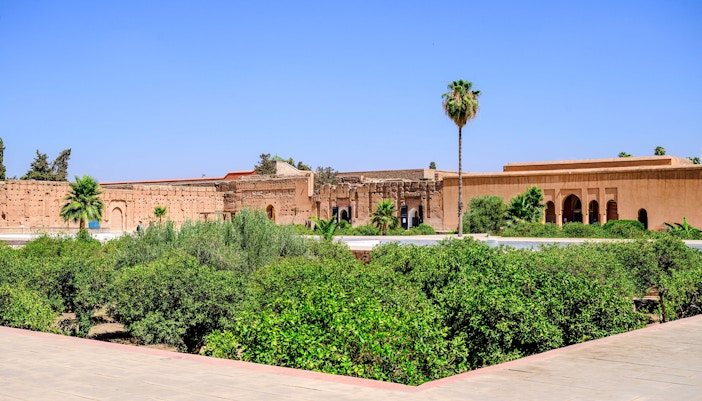
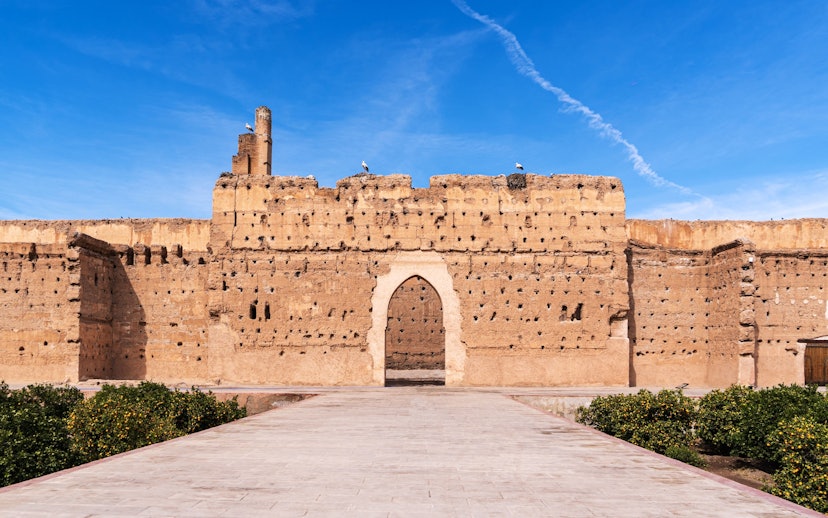
El Badi Palace is a 16th-century ruined palace in Marrakech's Kasbah district, built by Sultan Ahmad al-Mansur using ransom wealth from the Battle of the Three Kings and systematically stripped bare by a successor sultan over 12 years. The site is large and open-air, with a 135-metre grand courtyard, ramparts, underground passages, and a pavilion housing the 12th-century Koutoubia Minbar. Most visits take 60 to 90 minutes; what catches visitors off-guard is the absence of English signage and how much context is needed to read the ruins well without it. This guide covers everything you need, from getting there to choosing the right ticket to knowing what not to miss once you are inside.
Quick overview: El Badi Palace at a glance
This is the section to read if you want the short version before choosing your timing or ticket.
- When to visit: Daily, typically 9am–5pm. The first hour after opening and the last hour before closing are noticeably calmer than late morning, because most Medina walking routes and taxi drop-offs converge here between 10:30am and 2pm.
- Getting in: From 100 MAD for standard entry. Guided tours cost more but make a real difference here, and booking ahead matters most in spring and fall when last-minute demand is strongest.
- How long to allow: 1.5–2 hours for most visitors. It pushes toward the longer end if you linger on the ramparts, explore the underground passages fully, and spend time in the Minbar exhibition.
- What most people miss: The underground corridors and the Koutoubia Minbar museum room are easy to rush past, even though they add the historical context the open ruins themselves don’t explain.
- Is a guide worth it? Yes, more than at many palaces, because the main site is largely stripped back and a guide helps you reconstruct what the ruins once were; if you mainly want photos and quiet wandering, self-guided is enough.
Jump to what you need
Where and when to go
How much time do you need?
| Visit type | Route | Duration | What you get |
|---|---|---|---|
Highlights only | Entrance, courtyard perimeter, Minbar pavilion | 45 to 60 minutes | Covers the main spatial experience and the Minbar; skips ramparts and underground passages |
Balanced visit | Entrance, ramparts first, courtyard, Minbar pavilion, underground passages | 60 to 90 minutes | Full site coverage at a comfortable pace; the recommended route |
Full exploration | All of the above plus sunken garden, full rampart circuit, extended time in underground passages | 90 to 120 minutes | Complete experience; useful for architectural or historical researchers and photographers |
Which El Badi Palace ticket is best for you
| Ticket type | What's included | Best for | Price range |
|---|---|---|---|
Online Entry + Postcard | Full site (courtyard, sunken garden, ramparts, underground passages, Koutoubia Minbar pavilion) + a physical souvenir postcard mailed after your visit | Self-guided visits where you want to explore at your own pace. Skips the ticket counter queue | US$17 |
Bahia Palace, Saadian Tombs, Koutoubia and Souks Guided Tour | Bahia Palace + Saadian Tombs + Koutoubia Mosque + Souks, with a live licensed guide. Ticket-inclusive option available. El Badi is not currently a named stop on this tour. | Visitors who want a guided morning in the Kasbah and plan to add El Badi independently before or after | US$33 |
Marrakech Highlights Guided Tour | Bahia Palace + Saadian Tombs + Koutoubia Mosque + Souks + Medina, with a licensed guide, max 15 people. Monument fees paid separately (~100 MAD per site). El Badi is not a named stop on this tour. | First-time visitors to Marrakech who want a structured half-day covering the Medina's main monuments | US$23 |
How do you get around El Badi Palace?
What can you see from El Badi Palace?
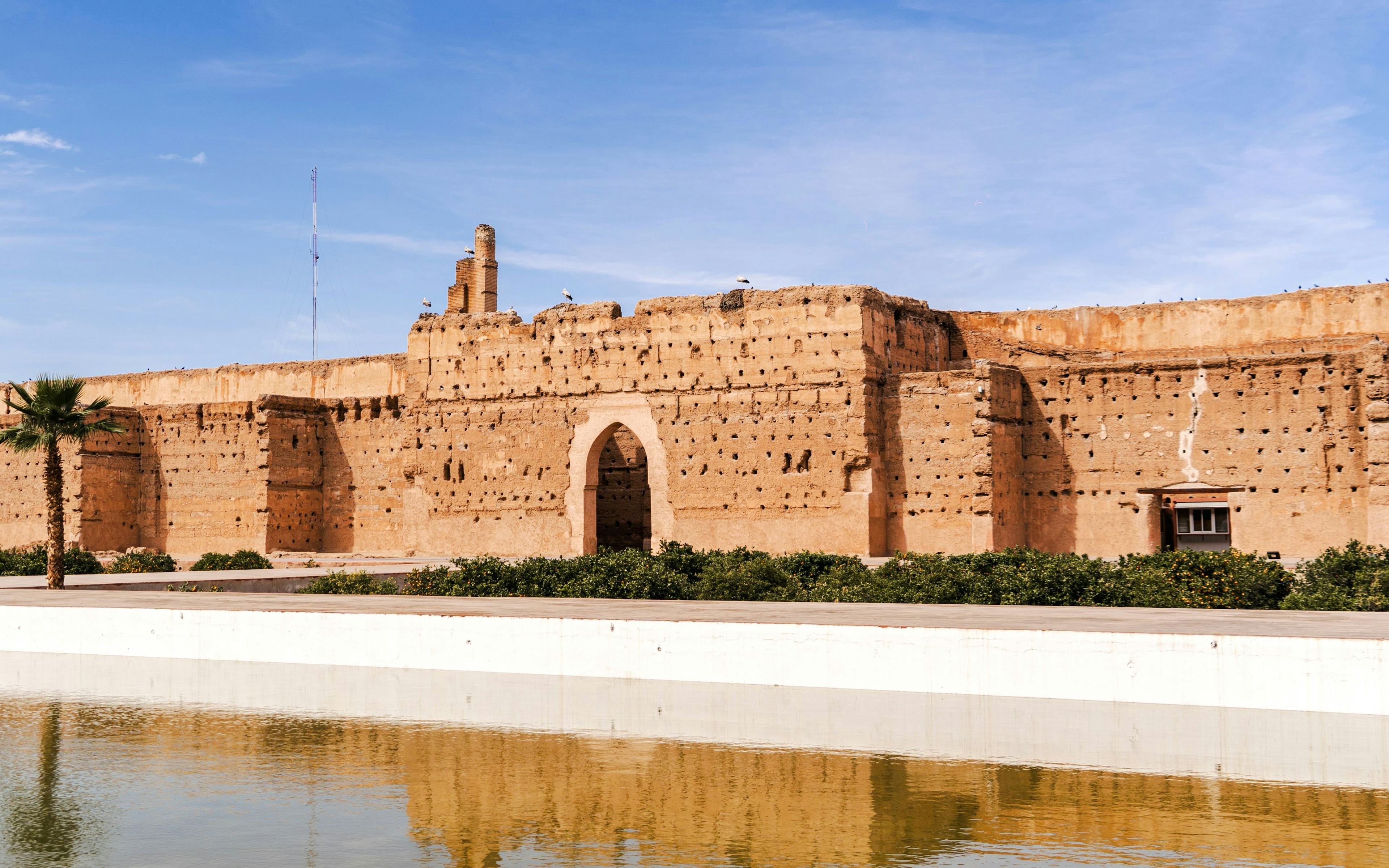
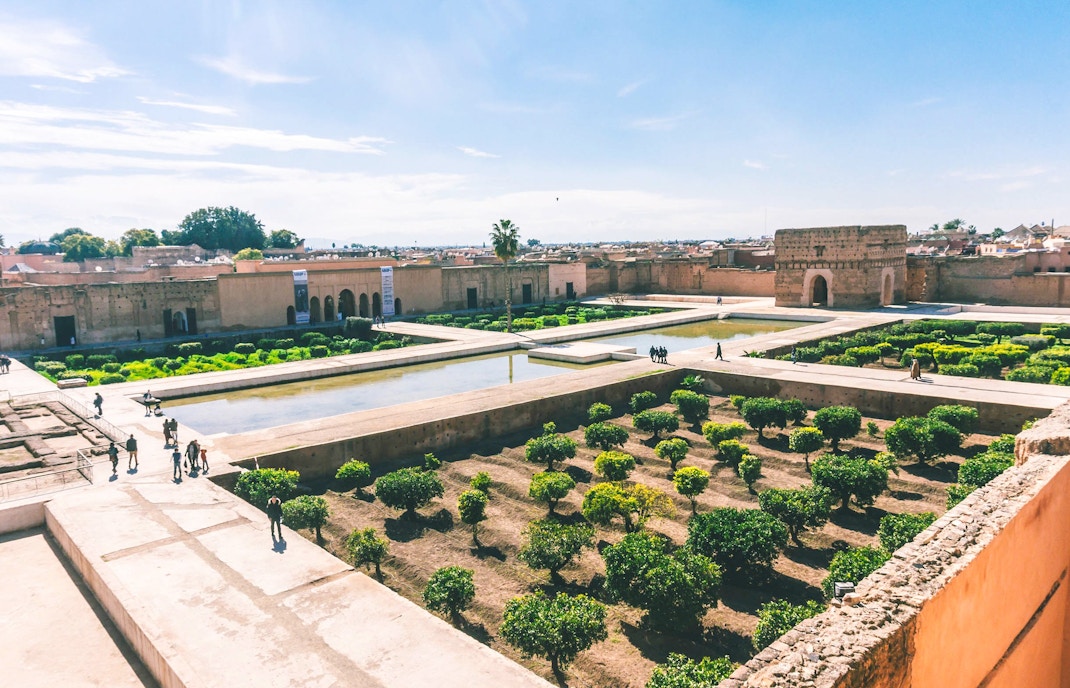
Grand courtyard and reflecting pool
Era: Late 16th century
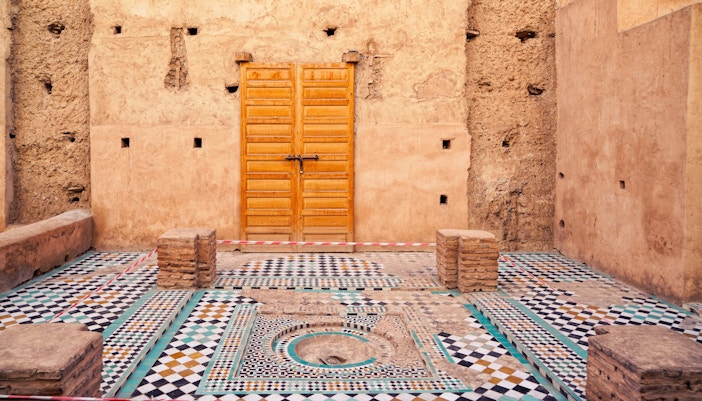
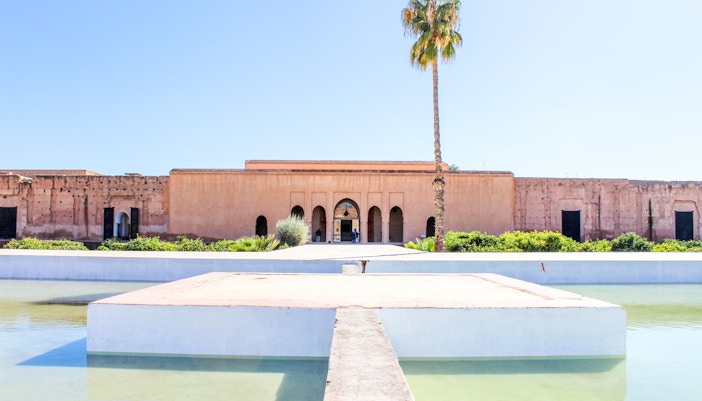
This is the monumental heart of the palace, built to overwhelm visiting ambassadors with scale rather than intimacy. The long central pool and four sunken gardens show how much of the palace’s design relied on geometry, water, and controlled symmetry. What most visitors miss is how empty space is the point here — the stripped walls make the courtyard feel even larger than an intact palace would.
Where to find it: Directly ahead of the entrance, stretching across the center of the site.
Koutoubia Minbar
Era: 12th century
This is the most valuable object on-site, a masterpiece of Islamic woodwork originally made in Córdoba and later used in the Koutoubia Mosque. The detail is so fine that visitors often spend less time than they should because they treat it as a side room rather than the palace’s historical core. Slow down and look at the inlay work before moving on.
Where to find it: Inside the climate-controlled exhibition rooms within the palace complex.
Underground passages and dungeons
Type: Subterranean service corridors and exhibition spaces
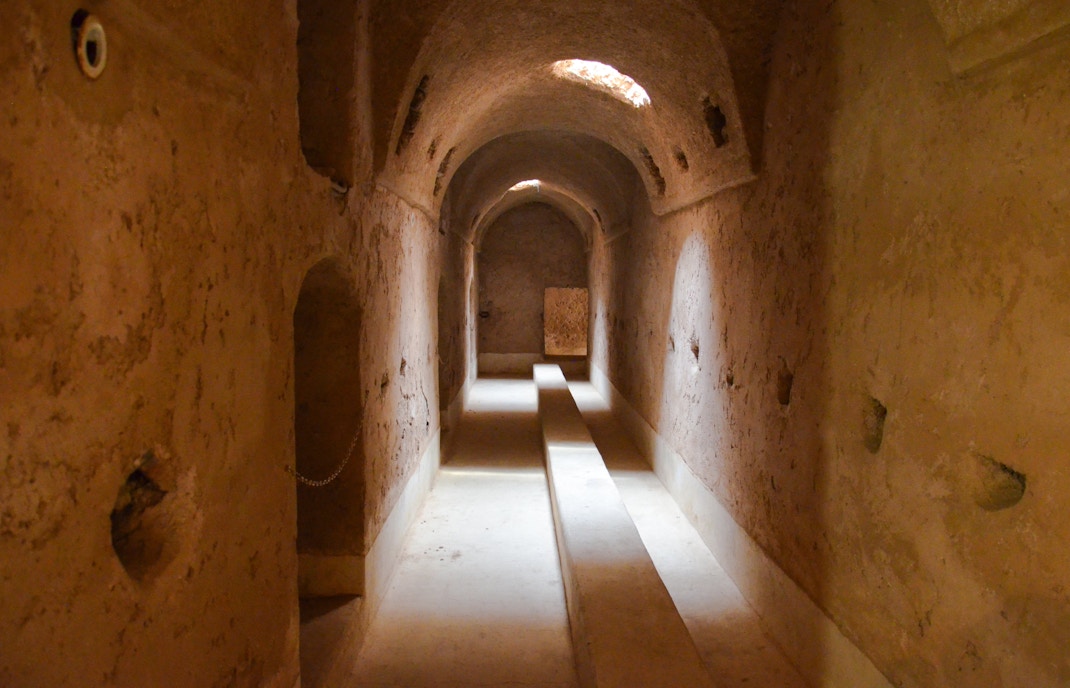
These vaulted brick corridors completely change the mood of the visit, swapping bright open ruins for cool, shadowy tunnels. They help explain how the palace actually functioned, not just how it looked from above. Many people cut through quickly for the temperature break and miss the displays on palace life and excavation.
Where to find it: Down the stair access points leading below the main courtyard level.
Ramparts and terrace viewpoints
Type: Elevated viewing terraces
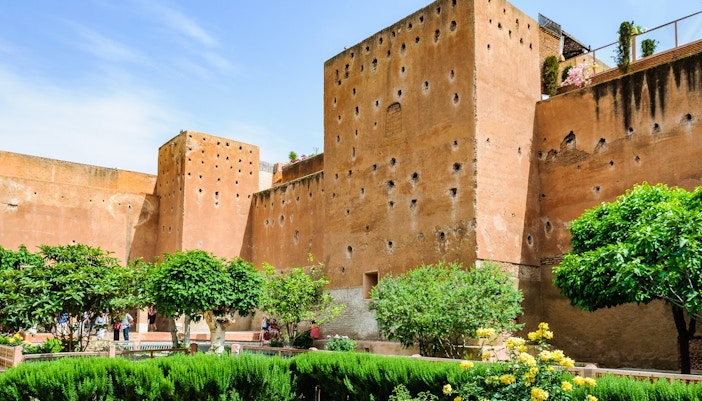
The upper walls give you the best sense of the site’s original footprint and some of the best views in southern Marrakech. From up here, you can see the Medina rooftops, the Koutoubia minaret, and, on clear days, the High Atlas Mountains. Many visitors focus only on the skyline and miss the view back into the courtyard, which is what reveals the palace’s scale.
Where to find it: Up the restored staircases on the western and upper perimeter sections.
Stork nests on the walls
Species: White stork
The storks have become one of the palace’s most memorable living features, perched on the ruined towers and high walls above the courtyards. They soften the site’s severity and make the terraces especially rewarding for photographers. Most people notice them only from far away, but the higher ramparts give you the clearest vantage points.
Where to find it: On the upper walls and towers, especially visible from the ramparts and western side.
Facilities and accessibility
- 🚻 Restrooms: Restrooms are available on-site, and it’s smarter to use them before heading into the underground passages or up to the ramparts.
- 🍽️ Food and drink: There isn’t a full on-site dining experience to plan around, so most visitors eat before or after the palace around Place des Ferblantiers.
- 💧 Water: Bring your own bottle, because this is an exposed open-air site and shade is limited across the main courtyard.
- 🪑 Seating: You’ll find places to pause around the courtyard edges, but don’t expect frequent shaded seating once you start climbing.
- 🩺 First aid: For anything more than a minor issue, you’ll need to step back out toward the Kasbah side streets rather than relying on extensive on-site services.
- 🛍️ Nearby services: The area outside the palace entrance is better for quick essentials than the interior, so sort water, cash, and snacks before you enter.
- ♿ Mobility: The main courtyard level is relatively flat and easier than many Medina sites, but the underground passages and upper ramparts require steep, uneven stairs and are not fully accessible.
- 👁️ Visual impairments: The palace relies heavily on open sightlines and limited on-site interpretation, so a companion or guide is more useful here than at a heavily labeled museum.
- 🧠 Cognitive and sensory needs: This is one of the calmer major sites in Marrakech because of its open layout, and the first hour after opening is the least overwhelming time to visit.
- 👨👩👧 Families and strollers: Strollers work best on the main courtyard level, but carrying them into the tunnels or onto the ramparts is impractical because of the stair access.
El Badi Palace works well for children who enjoy space to roam, towers, tunnels, and big visual contrasts more than room-by-room museum visits.
- 🕐 Time: Around 1–1.5 hours is realistic with younger children if you focus on the courtyard, storks, and underground passages rather than trying to read every exhibit.
- 🏠 Facilities: The open central layout makes it easier to manage breaks than in tighter Medina museums, but there isn’t a large family-service setup inside.
- 💡 Engagement: Tell children to look for stork nests before you climb — it turns the upper terraces into a simple scavenger hunt instead of just another set of stairs.
- 🎒 Logistics: Bring water, sun protection, and a light layer in cooler months, and avoid the late-morning heat window if you’re visiting with small children.
- 📍 After your visit: The Saadian Tombs are the easiest next stop because they’re next door and short enough not to feel like a second big commitment.
Rules and restrictions
Practical tips
- Booking and arrival: You can often decide on this visit the same day, but in spring and fall it’s still worth locking in entry 1–3 days ahead if you want a specific morning slot without dealing with the cash line.
- Pacing: Don’t treat the Minbar room as a quick indoor stop between photo points; it’s the one place that explains why this site matters beyond its scale.
- Crowd management: The smartest timing here is right at opening or in the last hour, because the palace handles crowding well spatially but not thermally; late morning feels hotter and busier at once.
- What to bring or leave behind: Bring water, sunglasses, and a hat, and keep your bag small because the underground passages and rampart stairs feel awkward with anything bulky.
- Food and drink: Eat before you enter or wait until after, because the site is better for a focused 1.5–2-hour loop than for stop-start breaks in the middle.
- Photography: If photos matter to you, save the ramparts for the end of the visit; you’ll get better courtyard angles and softer light than you do in the harsher early midday sun.
- Route planning: Pair the palace with the Saadian Tombs or Bahia Palace on the same day, but not before you’ve done the ramparts here, or you’ll arrive already tired and less likely to climb.
- For visitors on guided tours starting at Café de France: Note that El Badi Palace is not a named stop on the current guided tours. If you want to visit El Badi alongside Bahia Palace and the Saadian Tombs, book El Badi separately and build it into your morning before or after the guided circuit.
What else is worth visiting nearby?
Eat, shop and stay near El Badi Palace
- On-site: There’s no full sit-down meal worth planning around inside the palace, so treat nearby cafés and terraces as the better option.
- DarDar Rooftop (2-min walk, Place des Ferblantiers): Moroccan and Mediterranean dishes with a terrace view, and it works well as a post-visit lunch once you’ve finished the ramparts.
- Kosybar (2-min walk, Place des Ferblantiers): A reliable terrace option for a longer break, especially if you want a drink and a slower meal after the heat of the ruins.
- Café Clock Kasbah (8-min walk, Kasbah): Better for coffee, a lighter lunch, or a break before your next Medina stop than for a rushed in-between snack.
- 💡 Pro tip: If you’re visiting in warmer months, eat after the palace rather than before noon — the first or last hour inside matters more than a leisurely pre-visit lunch here.
- Place des Ferblantiers stalls: Metalwork, lamps, and small Medina souvenirs are the most convenient buys immediately after your visit.
- Mellah market lanes: Better for a quick wander if you want spices, everyday goods, and less polished neighborhood shopping than the central souks.
- Palace-adjacent souvenir kiosks: Good for postcards and low-commitment keepsakes, but compare prices before buying from the first stand you see.
The Kasbah is a good base if you want to walk to major southern Medina sights and avoid crossing the old city repeatedly. It’s quieter than the areas right around Jemaa el-Fnaa, but still close enough to stay practical. For a short cultural trip, it works very well; for a longer stay centered on dining and nightlife, other areas are easier.
- Price point: Mid-range riads dominate, with a few higher-end stays and fewer true budget bargains than in some northern Medina pockets.
- Best for: Visitors on a short stay who want El Badi Palace, Saadian Tombs, Bahia Palace, and the Mellah within easy walking distance.
- Consider instead: Stay closer to Jemaa el-Fnaa for maximum centrality, or choose Hivernage if you want a calmer hotel district with easier car access and less Medina navigation.
Frequently asked questions about visiting El Badi Palace
Most visits take 1.5–2 hours. That’s enough time for the main courtyard, the underground passages, the Koutoubia Minbar exhibition, and the ramparts. If you’re visiting with a guide or taking a lot of photos from the terraces, allow closer to 2.5 hours.
No, you don’t always need to book far ahead, but pre-booking is still useful in spring and fall. El Badi Palace gets a high share of last-minute visitors, so same-day or next-day planning is common. Booking ahead mostly helps you avoid the on-site ticket line and cash payment friction.
Yes, but mainly during late-morning peak periods rather than at all times of day. The biggest time saver is bypassing the ticket purchase step when tour groups and independent visitors arrive together. If you go right at opening, standard entry is usually enough.
Arrive 10–15 minutes early. That gives you enough time to clear the entrance calmly, orient yourself, and start before the courtyard begins filling with late-morning arrivals. It also matters more in warmer months, when every extra minute before midday sun helps.
Yes, a small backpack or day bag is fine and is the easiest option. Large or heavy bags quickly become inconvenient once you head into the underground passages or climb the ramparts. Bring only what you need, especially water, sun protection, and your camera.
Yes, photography is one of the main draws of the visit. The best shots are from the courtyard and the upper terraces, where you can frame the ruins, skyline, storks, and, on clear days, the Atlas Mountains. Be more restrained in enclosed exhibition areas, especially around fragile displays.
Yes, and it works particularly well as part of a small-group or private heritage walk. The site’s open layout handles groups better than many tighter Medina monuments, but the historical meaning is not obvious on its own, which is why guided groups often get more from the visit.
Yes, especially for children who like open space, towers, and tunnels more than formal museum rooms. The wide courtyard is much easier to manage than Marrakech’s busier streets, and the stork nests plus underground passages give younger visitors clear focal points. Avoid the hottest late-morning window with very young children.
Partly. The main courtyard level is relatively flat and more accessible than many heritage sites in the Medina, but the underground passages and upper ramparts involve steep stairs and uneven surfaces. Visitors who need step-free access should plan around the ground-level portions only.
Food is easy to find near the palace, but not something to plan inside the site itself. Place des Ferblantiers has several practical post-visit options within 2–5 minutes on foot, which is why most people eat before entering or right after they finish the ramparts.
The best times are right at opening or in the last hour before closing. Early visits are cooler and quieter, while late-afternoon visits give you softer light on the red walls and better terrace photos. Late morning is the least rewarding window because it combines peak arrivals with the harshest sun.
Buy from the official source, on-site ticket office, or a verified booking partner. Around the entrance, unofficial guides sometimes approach visitors before they reach the real ticket process. If you want the easiest arrival, pre-booking is better than deciding at the gate under pressure.