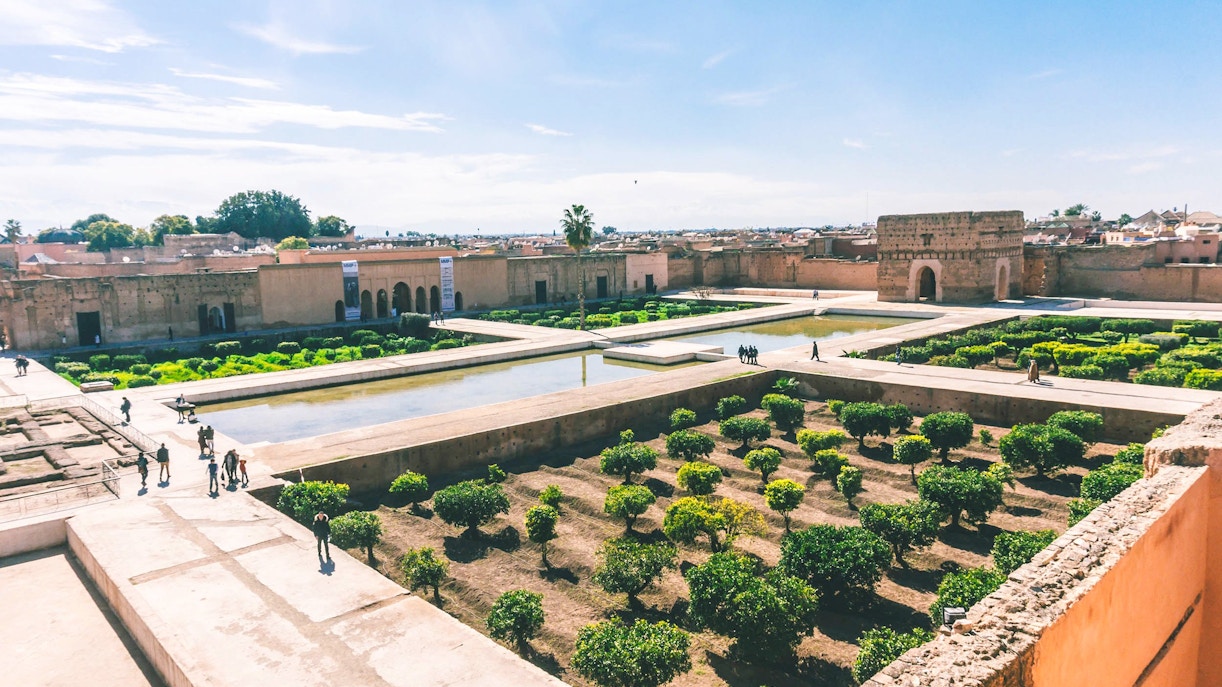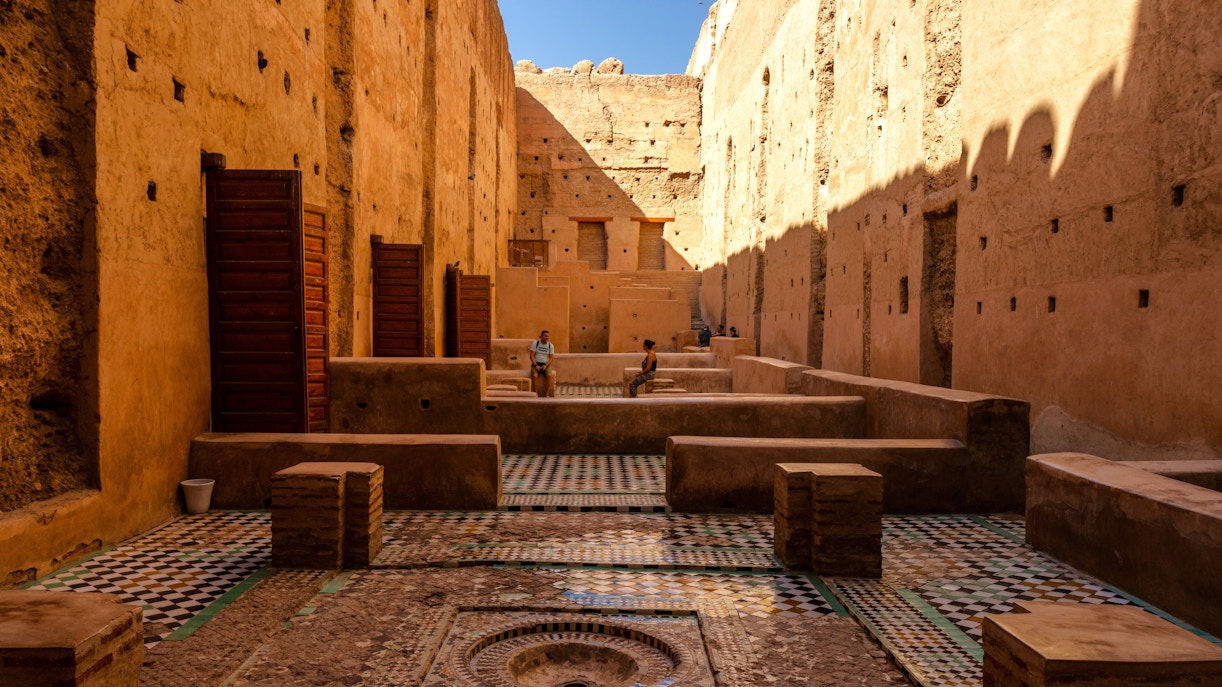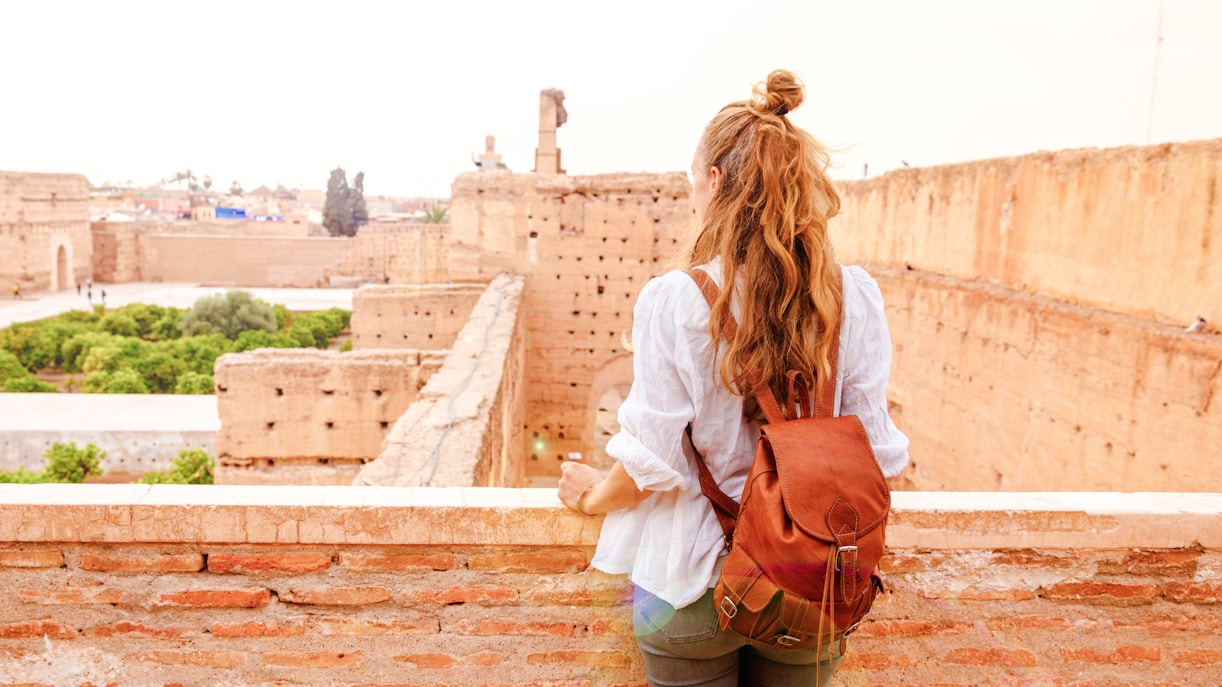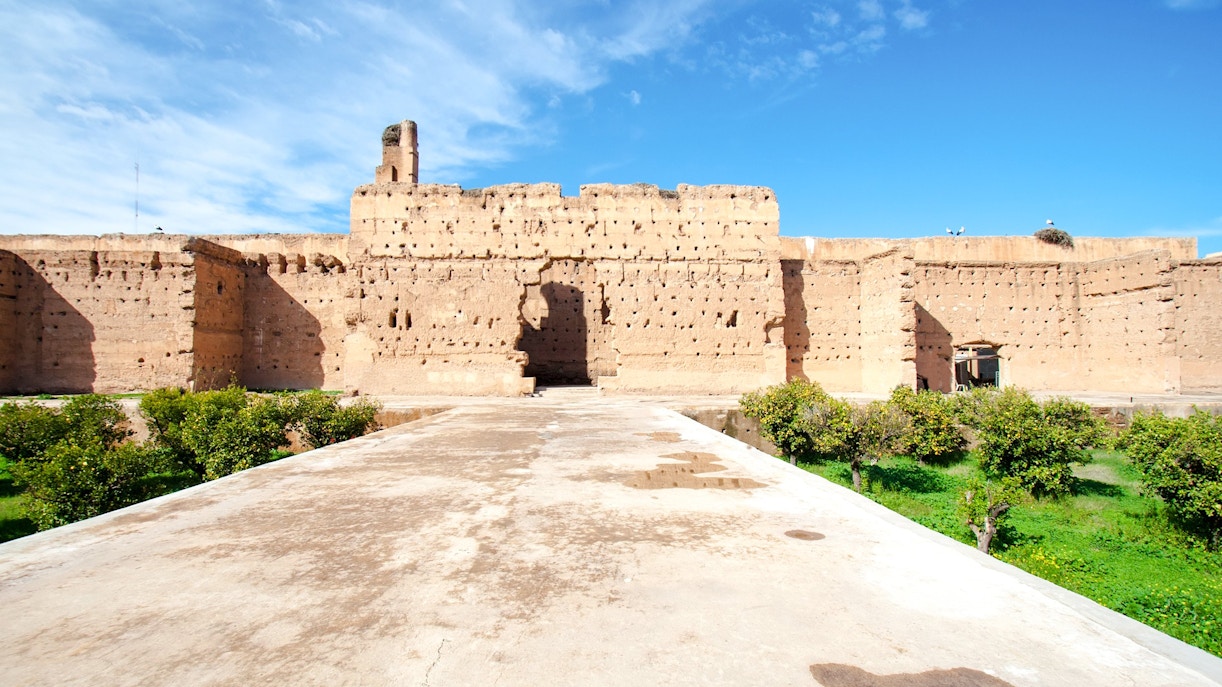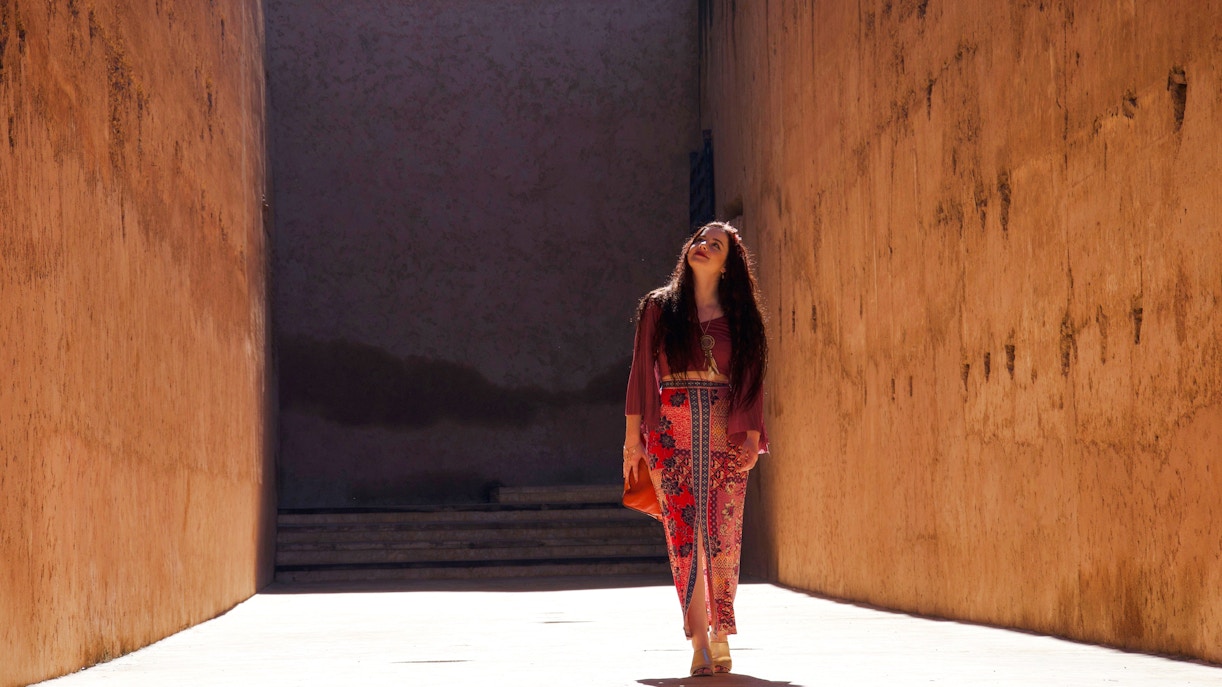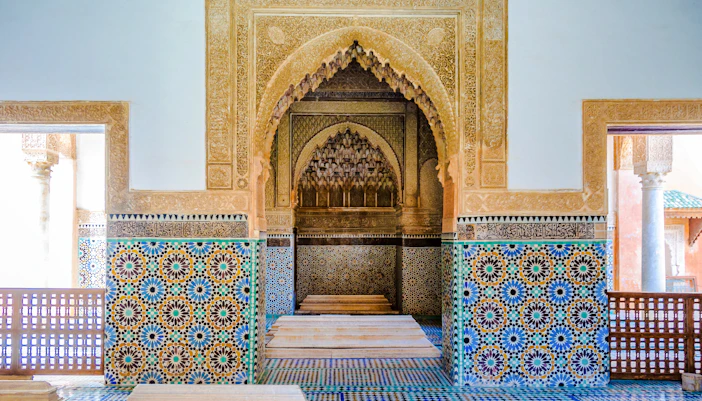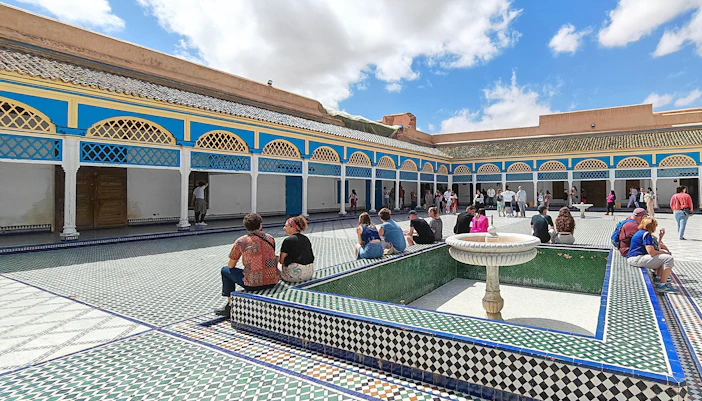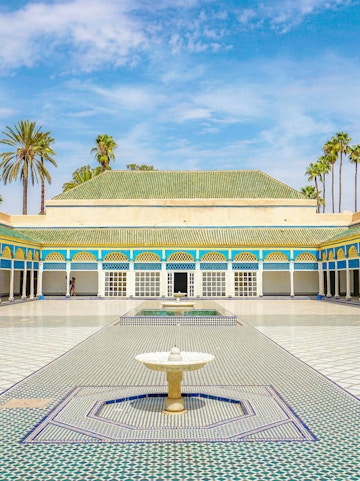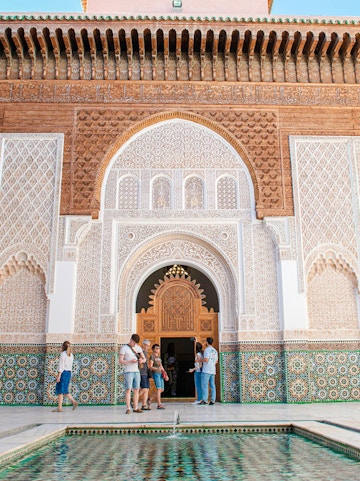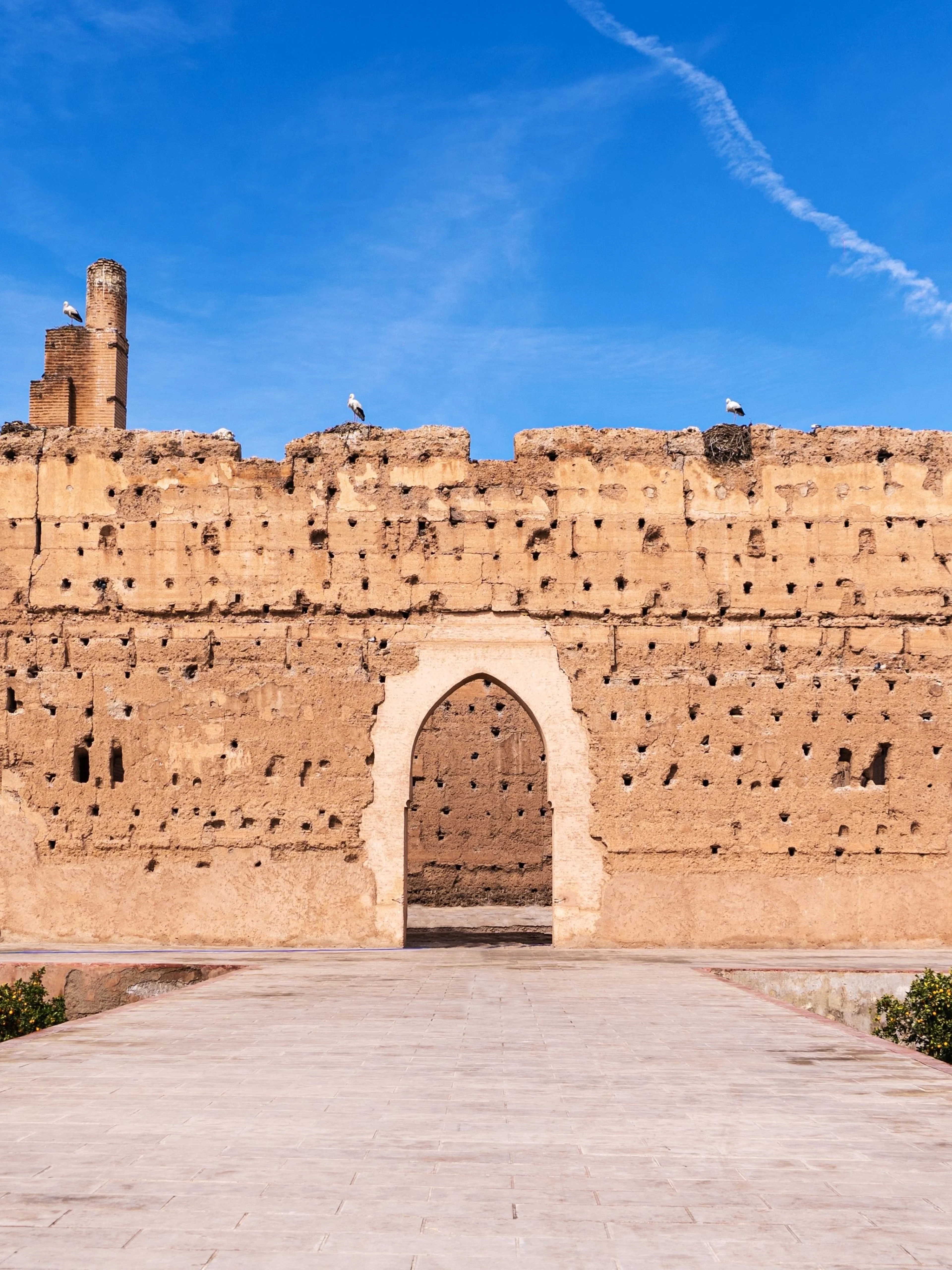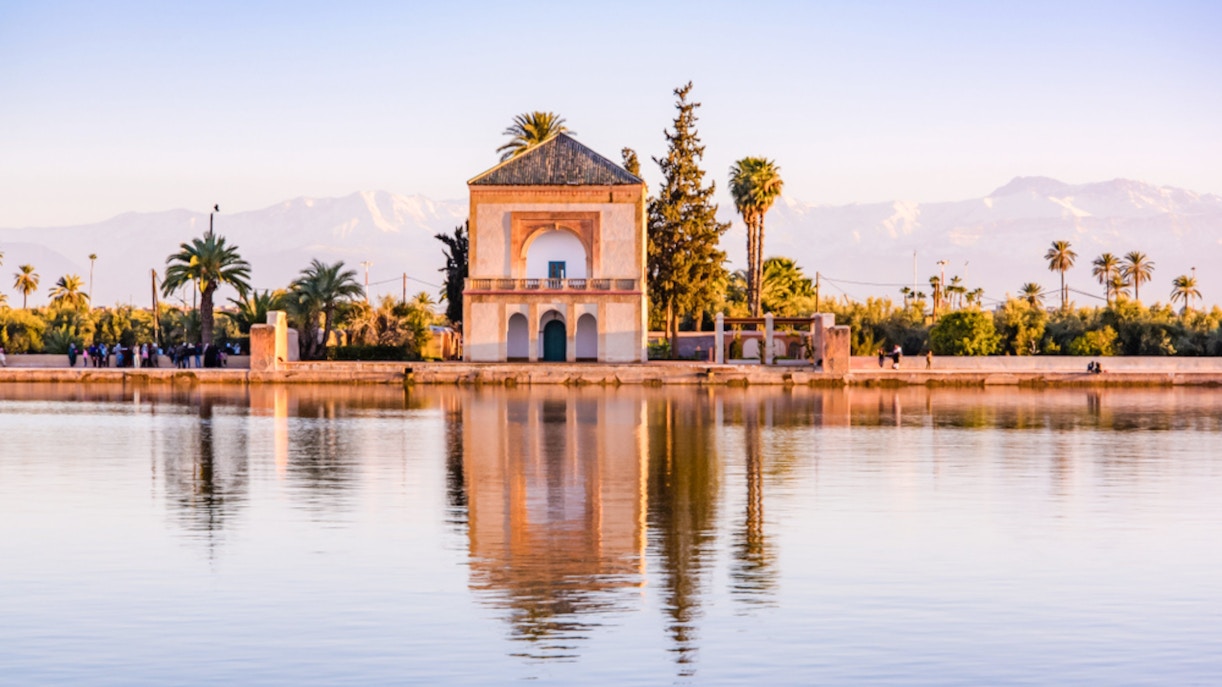
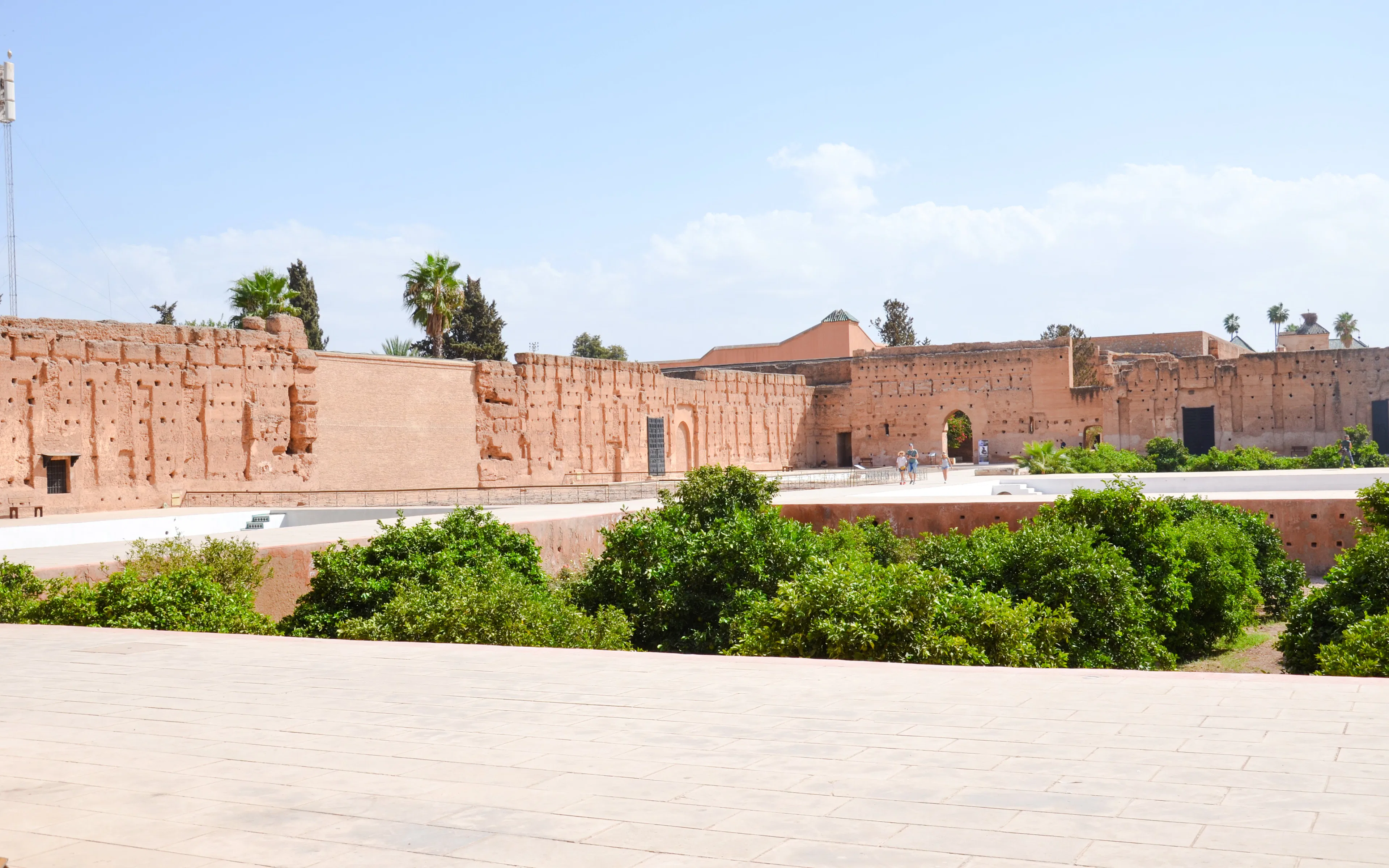
At the center of the palace, this open archaeological court frames a 90-metre reflecting basin and the site’s main circulation. Most visits begin here before branching to the gardens, underground passages, western pavilion ruins, and upper terraces.
How Headout makes choosing experiences effortless
We curate the best ways to experience
We research and organise all unique experiences - from tickets to tours to special combos - so you get all the choices without the clutter.
We partner with the best
Every supplier is vetted for quality, reliability, and value so you only get top rated experiences. No surprises, no disappointments.
All the best options, in one place
Each experience is thoughtfully organised to give you maximum availability, great value and an easy way to choose.
Book with complete peace of mind
Free cancellations, Flexible payments, and 24/7 support - thoughtfully designed for flexibility, assurance, and total peace of mind.
Slide 1 of 41/4
Slide 1 of 4
El Badi Palace: Quick overview
- Ways to explore: Self-guided entry with a souvenir postcard, or as part of a guided walking tour covering El Badi's wider Kasbah context: Bahia Palace, the Koutoubia Mosque, and the Medina souks.
- What's included: The entry ticket covers the full site, including the grand courtyard, sunken gardens, ramparts, underground passages, and the Koutoubia Minbar pavilion, plus a physical postcard mailed after your visit. Guided tours include a licensed guide and, depending on option, entry fees.
- Unique experience: The Koutoubia Minbar, carved in Cordoba in 1137, is displayed here. It took eight years to make and is considered one of the finest surviving examples of Islamic woodwork. The palace itself was called the Eighth Wonder of the World at its opening, then stripped bare by a rival sultan.
- Queues and access: Online booking skips the ticket-payment counter (20–45 min in peak season). Security and scanning still apply. Self-guided visits take 1–1.5 hours. Guided tours cover El Badi's wider circuit over 3–4 hours.
- When to book: Visit before 10am or after 3:30pm in summer; the courtyard is fully open-air. Guided tours cap at 15 people and depart on schedule.
- Good to know: El Badi means "The Incomparable." The palace was systematically stripped by Moulay Ismail over 12 years from 1696. What you see is the structure after deliberate dismantling; understanding this changes how you read the ruins.
- Pair it: The Saadian Tombs are 5 minutes on foot. Both were built by Ahmad al-Mansur using the same ransom wealth.
What to expect at El Badi Palace
1/6
Enter through Bab Al-Rokham, the Marble Gate
You arrive through a formal gate into an open-air site that is different from every other Marrakech attraction. El Badi is a ruin. The scale is what registers first: a 135-metre courtyard, stripped walls, and the silence of a place that was once called the Eighth Wonder of the World.
The grand courtyard and its history
The central basin is 90 metres long. It was originally flanked by four reflecting pools, 360 rooms, and a 50-metre pavilion. Sultan Moulay Ismail dismantled all of it between 1696 and 1708, taking the gold, marble, and cedarwood to build his capital at Meknes. The walls standing now are the shell. On a guided tour, this context arrives early; self-guided visitors benefit from reading it before they enter.
The Koutoubia Minbar, the reason to come
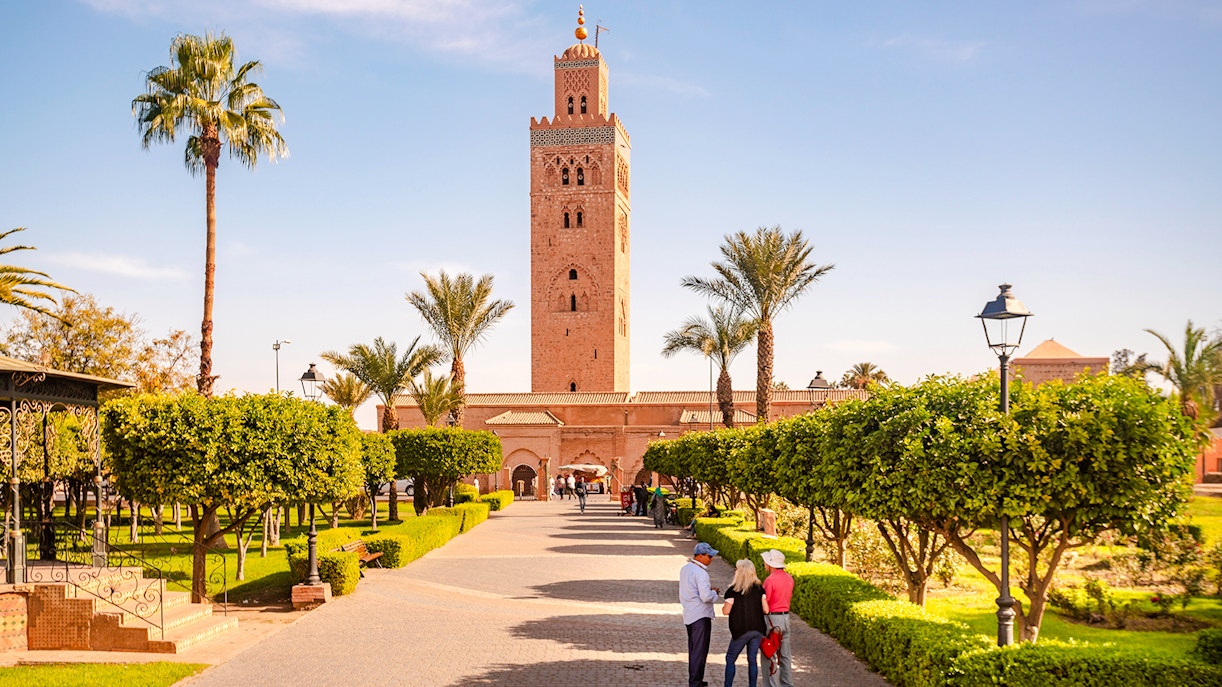
The Minbar is displayed in a dedicated pavilion at the palace. Carved in Cordoba in 1137, over 400 years before El Badi was built, from cedarwood, ebony, ivory, and silver, and took eight years to complete. It stood in the Koutoubia Mosque for centuries before being moved here for preservation. Guided tours that include the Koutoubia Mosque on their route give this additional context.
Climb the ramparts
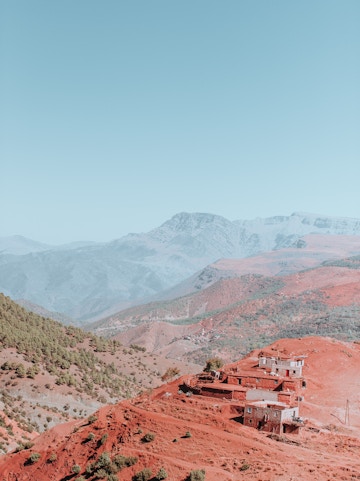
Stairway access to the ramparts gives elevated views across the courtyard and, on clear days between October and April, the Atlas Mountains to the south. The stork nests (January–July) are easiest to photograph from here.
The underground passages
Below the courtyard, a network of vaulted stone corridors and dungeons is walkable throughout. Cool year-round, noticeably so after the open courtyard. Originally used for storage and stabling; later repurposed as prisons.
Leave with a postcard
The self-guided entry ticket includes a souvenir postcard, a physical print of your chosen palace photo, mailed after your visit. It's the only Marrakech monument ticket that ships something home.
Things to know before booking your El Badi Palace tickets
- Online booking skips the payment counter, not security. The counter queue can be 20–45 minutes in peak season. Online entry bypasses that queue. Security and ticket scanning at the gate apply to all visitors.
- El Badi Palace is not a named stop on the guided tours. Both the Bahia Palace tour and the Marrakech Highlights tour cover the Saadian Tombs, Bahia Palace, Koutoubia Mosque, and the Souks. If you want to visit El Badi specifically, book the self-guided entry ticket. The Saadian Tombs, a 5-minute walk from El Badi, are included on both tours.
- The standard entry ticket covers the full site. Grand courtyard, sunken gardens, ramparts, underground passages, and the Koutoubia Minbar pavilion are all included. There are no separately ticketed sub-areas within El Badi Palace.
- On-site information panels are in Arabic and French only. There is no audio guide available at El Badi Palace and no handset rental. If you want English commentary, download a guide app or bring a reference before arriving.
- The postcard is a physical print, mailed to you. Not a digital file. Your chosen photo is printed and posted to the address you provide. International delivery times vary; factor this in if you're booking close to your departure date.
- The site is fully open-air with almost no shade. Wear sun protection and bring water if visiting between May and September. Morning (before 10am) or late afternoon (after 3:30pm) visits are significantly more comfortable in summer.
- El Badi and the Saadian Tombs are a natural pair. Both were built by Ahmad al-Mansur using ransom money from the Battle of the Three Kings (1578). The Tombs are a 5-minute walk. Both sites in one morning covers the full picture of Saadian Marrakech, and the guided tours that include the Tombs give you that dynastic context with a live guide.
Which El Badi Palace ticket is best for you?
| Ticket type | What's included | Guide | Duration | Why pick this | Price from |
|---|---|---|---|---|---|
Online Entry + Postcard | Grand courtyard, sunken gardens, ramparts, underground passages, Koutoubia Minbar pavilion, souvenir postcard (physical print, mailed after visit) | None (self-guided) | 1–1.5 hours | Best if you want to explore at your own pace with a souvenir to take home | US$17 |
Bahia Palace, Saadian Tombs, Koutoubia and Souks Guided Tour | Bahia Palace + Saadian Tombs + Koutoubia Mosque + Souks. Monument tickets included (as per option selected). | Live guide, shared group | 1–4 hours | Covers the Kasbah quarter in one structured circuit with a guide who explains the Saadian dynasty | US$33 |
Marrakech Highlights Guided Tour | Bahia Palace + Saadian Tombs + Koutoubia Mosque + Souks + Medina. Monument entry fees paid separately on the day (~100 MAD per site per adult). | Live guide, English or French, shared group, max 15 | 4 hours | Best for first-time visitors who want to understand the full Medina — not just the Kasbah monuments | US$23 |
Explore El Badi Palace
What to see at El Badi Palace
1/5
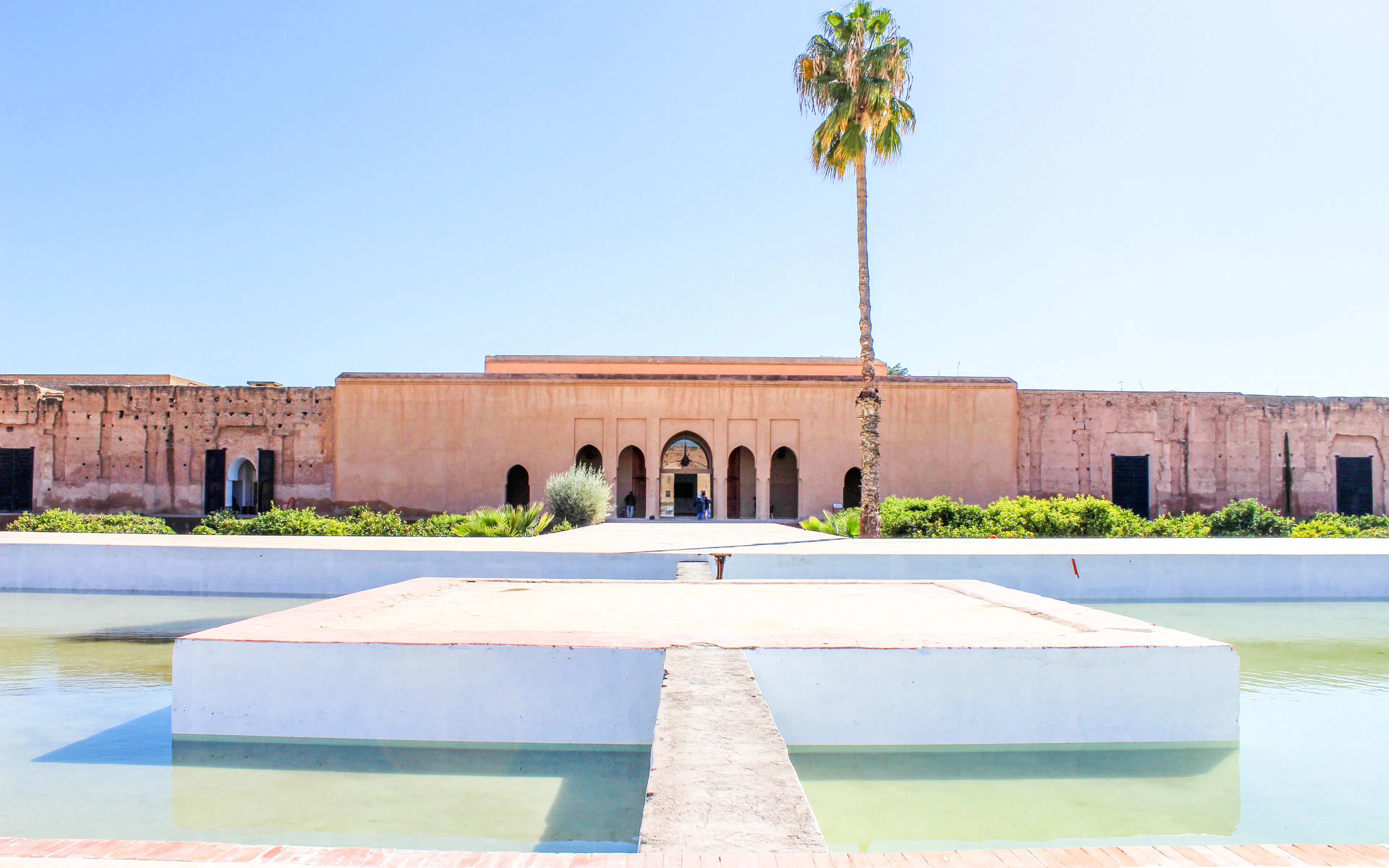
The grand courtyard and central reflecting pool
At 135 by 110 meters, El Badi’s vast central courtyard was built to impress foreign envoys. Its 90-meter reflecting pool once mirrored the sky and cooled the air, helping you grasp the palace’s original imperial scale.
The sunken gardens
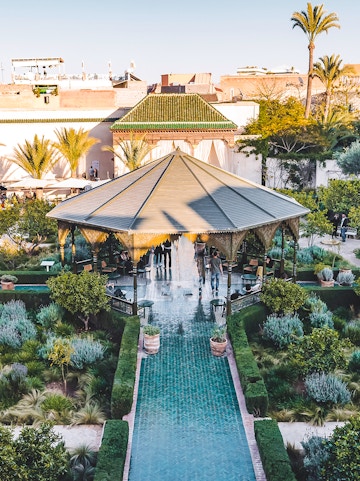
Set around the central pool, four excavated gardens reinterpret the classic riad on an imperial scale. Replanted with orange and olive trees, they soften the red sandstone ruins and hint at the palace’s carefully engineered water system.
The Koutoubia Minbar
Commissioned in 1137 for Marrakech’s Koutoubia Mosque and crafted in Córdoba, this cedar-wood minbar is inlaid with bone, ivory, silver, and gold. Its million-piece marquetry makes it the palace’s most important surviving masterpiece.
The subterranean passages and dungeons
Beneath the courtyards, vaulted brick corridors reveal the palace’s hidden workforce and logistics. Once used for storage, kitchens, quarters, and possibly prisons, these cooler tunnels add atmosphere and context that the open ruins above can’t show.
The Qubba al-Khamsiniya and terrace viewpoints
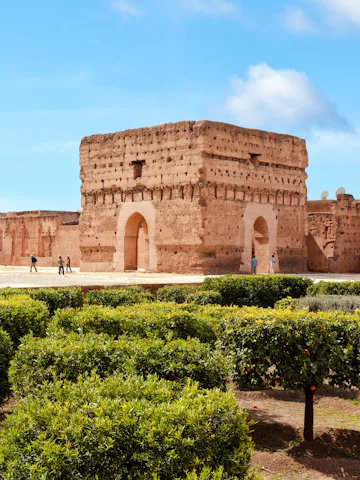
The ruined Qubba al-Khamsiniya, once the audience hall of Sultan Ahmad al-Mansur, anchors the western side of the complex. Climb above it for sweeping views of the Medina, Koutoubia minaret, Atlas Mountains, and nesting white storks.
Plan your visit to El Badi Palace
- Restrooms: Restrooms are available near the main entrance to the palace grounds.
- Food and drink: A small seasonal café operates inside the grounds. Availability varies; bring water, especially in summer.
- Storage: No lockers or cloakroom are available on-site.
- Seating: Stone seating is available along the courtyard perimeter and near the sunken garden.
- Shopping: No official shop currently operates on-site.
- Audio guide: No audio guide handsets are available for rental. On-site panels are in Arabic and French. Download an English reference before arriving.
- Entrance access: The main entrance gate and grand courtyard are accessible at ground level.
- Courtyard surface: The courtyard is compacted earth and stone; manageable for wheelchairs in dry conditions, but uneven in places.
- Ramparts: Rampart access requires stair climbing. There is no lift or ramp alternative.
- Underground passages: The dungeons and underground corridors have uneven stone floors and low ceilings in sections. Not suitable for wheelchair users.
- Minbar pavilion: The Koutoubia Minbar pavilion is at ground level and fully accessible.
- On-site aids: No wheelchairs, braille guides, or hearing-support devices are provided on-site.
- Guided tours: Both available guided tours note they are not wheelchair accessible, due to cobblestone Medina streets and stairs at monument sites.
- Modest clothing: El Badi Palace is a historic royal site. Modest dress is expected throughout.
- Shoulders and knees: Keep shoulders and knees covered during your visit.
- Avoid: Short shorts, crop tops, and sleeveless tops are not appropriate.
- Comfort tip: Lightweight layers work well in Marrakech's heat while meeting dress expectations. The underground passages are cool year-round; a light layer is useful if you plan to spend time below.
- Bag policy: Bags pass a brief security check at the entrance gate. Large luggage is impractical as no storage is available.
- Photography: Personal photography is allowed throughout the site, including the Minbar pavilion. No tripods or professional filming equipment.
- Food and drink: Food and drinks are not permitted inside the palace complex.
- Behavior: Keep voices low in the Minbar pavilion, which houses a sacred Islamic artefact.
- Touching: Do not touch the Minbar, carved surfaces, or historic stonework anywhere on-site.
- Pets: Pets are not permitted inside the site.
Tips & guidelines
- Start at 9am: The courtyard is open-air and the light is best before 10am. Tour groups begin arriving mid-morning.
- Walk the courtyard first: Go end to end before heading to the Minbar pavilion. The 135-metre scale makes more sense once you've walked it. Most visitors head straight for the Minbar and miss the spatial context of the ruins.
- Visit the underground passages mid-way: After the open courtyard, the cool of the dungeons is a welcome pause. Re-enter the Minbar pavilion last, when the space is quieter.
- Bring water: The courtyard has almost no shade. Bring at least one litre in mild weather, more between May and September.
- Best season for views: October–February gives the clearest Atlas Mountain visibility from the ramparts. Arrive early for the best light and least crowd on the walkways.
- Watch for storks: White storks nest on the palace walls between January and July. The northern rampart section gives the best vantage point.
- No English signage on-site: Download a guide app or read up before you arrive. There is nothing to rent or borrow at the palace.
- For guided tours: Bring at least 1.5 litres of water, more in summer. Wear closed-toe shoes with ankle support, Medina cobblestones are uneven. Tours are approximately 3–4 hours of continuous walking. Arrive at your meeting point 15 minutes early. Tours depart on schedule and late arrivals forfeit their spot.
Frequently asked questions about El Badi Palace tickets
Yes, especially for busy spring and autumn mornings. Online booking lets you bypass the ticket window queue, which can take 20–45 minutes at peak times.
No. It skips the ticket purchase line only. All visitors still go through bag inspection and ticket scanning at the main Bab Al-Rokham entrance.
Entry to the full site, grand courtyard, sunken orange garden, ramparts, underground passages, and the Koutoubia Minbar pavilion, plus a souvenir postcard: a physical print of your chosen palace photo, mailed after your visit.
El Badi Palace is not a named stop on either of the available guided tours. Both tours cover Bahia Palace, the Saadian Tombs, Koutoubia Mosque, and the Souks. If you want to visit El Badi, the self-guided entry ticket is the right option. The Saadian Tombs, a 5-minute walk from El Badi, are included on both guided tours.
It’s a monumental ruin, not a restored palace. Expect vast courtyards, stripped walls, and open-air remains rather than preserved tiled rooms.
Plan 1.5–2 hours to explore the courtyard, underground passages, Minbar exhibition, and terrace viewpoints comfortably. Early visits are easier in warmer months.
The palace is usually open daily from 9am to 5pm. During Ramadan, hours typically shift to 10am–4pm, so check timings before visiting.
Partly. The main courtyard, garden paths, and ground-floor exhibition spaces are flat, but the underground passages and upper terraces require stairs.
No. There’s no café or water vendor inside the grounds, so it’s best to bring water with you before entering.
The only public entrance is Bab Al-Rokham, reached from Place des Ferblantiers in the Kasbah. Ignore unofficial guides and head straight to the gate.
Mostly, yes. The site reopened after the 2023 earthquake, but some exhibition areas may have localized closures or scaffolding during restoration works.
El Badi translates as "The Incomparable." The name was given by Sultan Ahmad al-Mansur at the palace's completion in 1603. Guests at the opening reportedly called it the Eighth Wonder of the World.
The Minbar is a carved wooden pulpit commissioned for the Koutoubia Mosque in 1137 and made by craftsmen in Cordoba. It stood in the mosque for centuries before being moved to El Badi Palace for preservation. Made from cedarwood inlaid with ebony, ivory, and silver marquetry — considered one of the finest surviving examples of Islamic woodwork.
Yes, and most visitors do. The two sites are 5 minutes apart on foot through the Kasbah district. Both were built by Ahmad al-Mansur using the same source of wealth. They are separate tickets, both bookable online.
There is no dedicated guided tour for El Badi Palace. The two available guided tours cover the Saadian Tombs, Bahia Palace, Koutoubia Mosque, and the Souks — El Badi is not on either itinerary. The self-guided entry ticket is the only current option for visiting El Badi.
Yes — a physical print, not a digital file. Your chosen photo is printed and mailed to the address you provide. International delivery times vary.
Before 10am or after 3:30pm in summer (May–September). The courtyard is open-air with no shade. October–April is the most comfortable season, and October–February gives the best chance of Atlas Mountain views from the ramparts.