Plan your visit to Saadian Tombs
The Saadian Tombs are a compact 16th-century royal necropolis best known for their lavish marble columns, zellij tilework, and gilded cedar ceilings. The visit is short, but it can feel more crowded than expected because everyone funnels through a small entrance and into just a few chambers. What matters most here isn't stamina but timing. This guide covers the best arrival window, ticket options, layout, and practical on-the-day tips.
Quick overview: Saadian Tombs at a glance
This is a quick planning snapshot before you lock in your route.
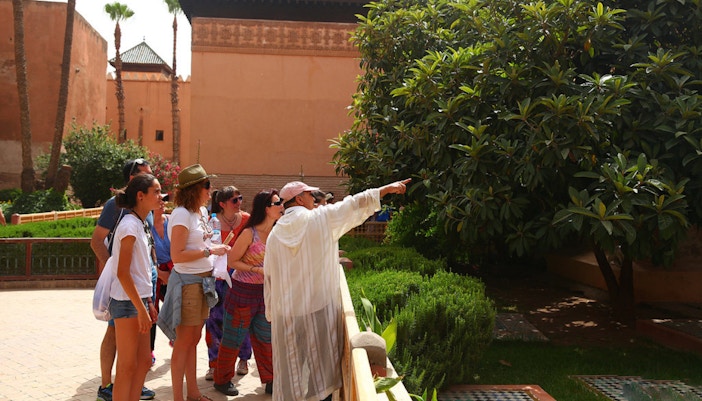
- When to visit: Daily, 9am–5pm. 9am–10am is noticeably calmer than 11am–2pm, because most Kasbah and medina combo tours reach the tombs mid-morning.
- Getting in: From 100 MAD for standard entry. Guided tours start from around 199 MAD. Same-day entry is usually possible, but booking ahead helps most in spring, summer, and holiday periods when the entrance queue builds fast.
- How long to allow: 45–60 minutes suits most visitors. It stretches closer to 90 minutes if you linger in the Hall of Twelve Columns, read the panels, and pair the visit with guided commentary.
- What most people miss: The Chamber of the Three Niches and the garden graves are easy to rush past, even though they add the clearest sense of who else was buried here beyond Sultan Ahmad al-Mansur.
- Is a guide worth it? Yes, if you want the Saadian dynasty story and the symbolism in the decoration; if you're making this a short standalone stop, a good audio guide usually gives enough context for less.
Jump to what you need
Where and when to go
Which Saadian Tombs ticket is best for you
| Ticket type | What's included | Best for | Price range |
|---|---|---|---|
Entry + Audio Guide | All three mausoleums, open courtyard, in-app audio commentary | A self-paced visit where you want context without joining a group | From 70 MAD |
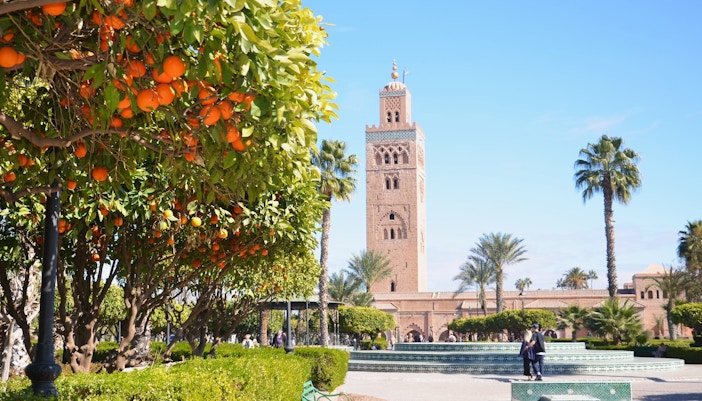
Bahia Palace, Saadian Tombs, Koutoubia and Souks Guided Tour | Saadian Tombs + Bahia Palace + Koutoubia Mosque + Souks, with a live licensed guide. Ticket-inclusive option available. | Combining three or more Kasbah sites in one morning where you want a guide to connect the history between them | From US$33 |
Marrakech Highlights Guided Tour | Saadian Tombs + Bahia Palace + Koutoubia Mosque + Souks + Medina, with a licensed English or French-speaking guide, max 15 people. Monument entry fees paid separately on the day (~100 MAD per site). | A first visit to Marrakech where you want the full Medina picture alongside the monuments, with a guide who adjusts stops to the group's interests | From US$23 |
How do you get around Saadian Tombs?
The site is best explored on foot, and most visitors cover it in under 1 hour. It’s compact, but the route matters because the main mausoleum draws nearly everyone first.
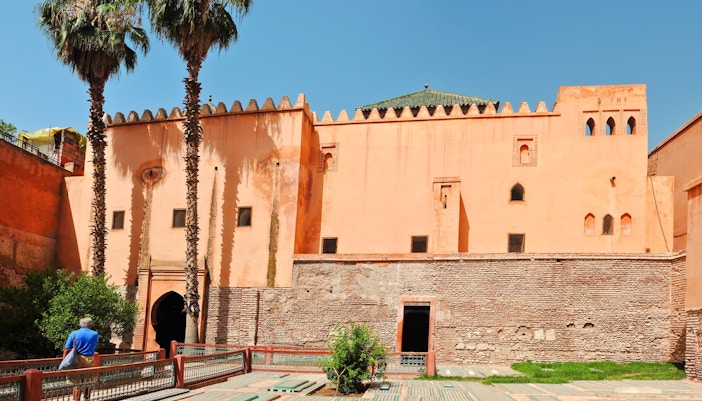
The main focal point sits beyond the garden courtyard, with the grandest chamber at the heart of the complex and smaller spaces branching off beside it.
What are the most significant spaces in Saadian Tombs?
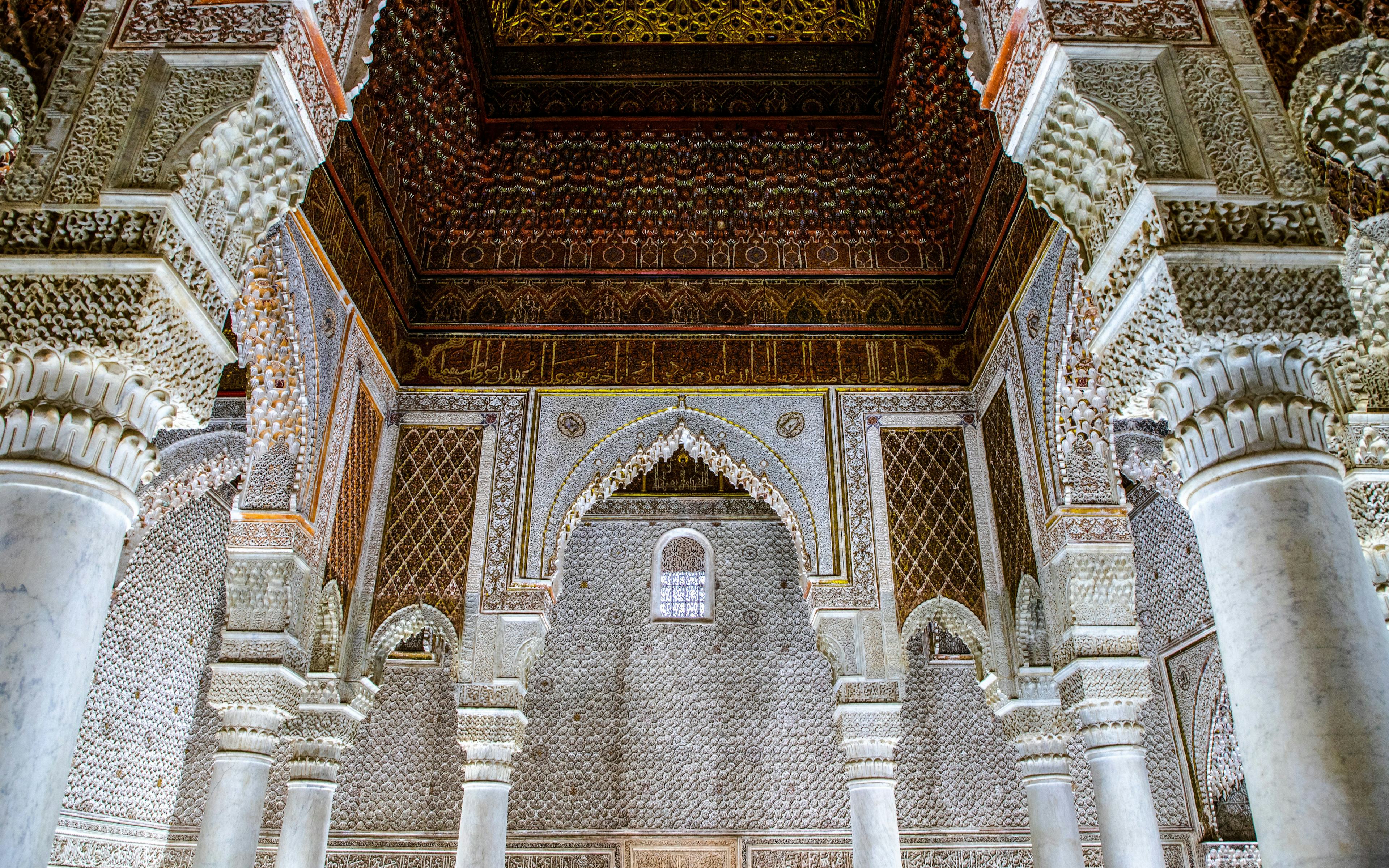
Hall of Twelve Columns
Attribute — Function: Royal mausoleum of Sultan Ahmad al-Mansur
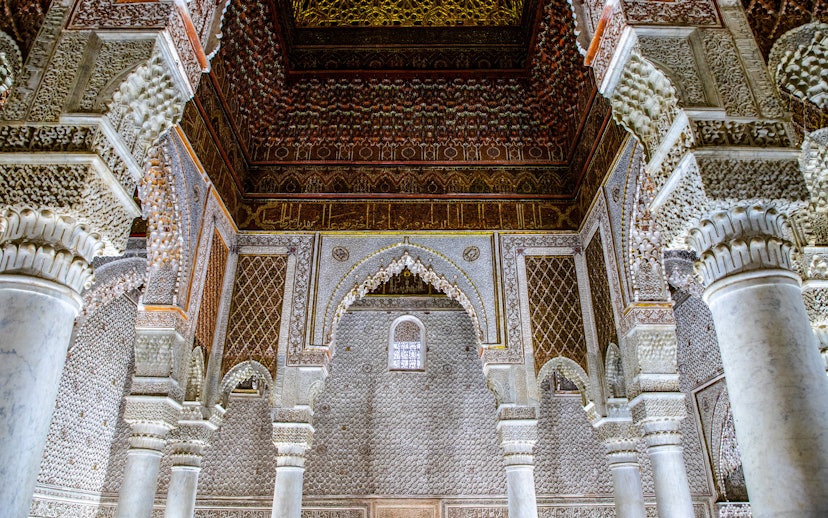
This is the room most people come for, and it earns the attention. The twelve Carrara marble columns, gilded cedar ceiling, and dense zellij work create the most theatrical interior in the complex. What visitors often miss is how small the room actually is — if you wait a minute for the crowd to shift, the carved arches and muqarnas details become much easier to read.
Where to find it: In the main mausoleum building, beyond the central garden courtyard.
Mihrab Hall
Attribute — Function: Prayer chamber and royal burial space
The Mihrab Hall feels quieter and more contemplative than the main mausoleum, even though the decoration is nearly as rich. Look for the carved prayer niche and the tomb of Lalla Mas’uda, Ahmad al-Mansur’s mother. Many visitors glance at the mihrab and move on, but the real payoff is in the plaster carving and calligraphy around it.
Where to find it: In the western chamber of the mausoleum complex, beside the main burial rooms.
Chamber of the Three Niches
Attribute — Function: Family burial annex
This smaller room is easy to miss because the Hall of Twelve Columns pulls most of the attention, but it gives the clearest sense of the tombs as a family necropolis rather than a single ruler’s monument. The three recessed niches once held funerary slabs for royal wives and children. The detail most visitors rush past is the room’s restraint — it helps you notice the contrast in status and design.
Where to find it: Adjacent to the Hall of Twelve Columns in the main mausoleum structure.
Garden tombs
Attribute — Function: Open-air burial garden
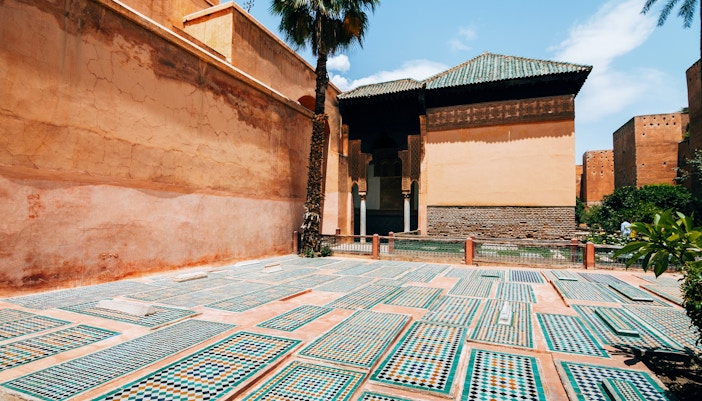
The garden is where the visit slows down, and it’s worth letting it. Dozens of low graves belonging to Saadian relatives, officials, and courtiers sit among paths and planting, with some marked by green tile or Quranic inscriptions. Most visitors use it as a walkway between chambers, but it’s the best place to grasp the scale of the dynasty’s burial ground.
Where to find it: In the central courtyard between the two main mausoleum buildings.
Facilities and accessibility
- 🎟️ Ticket booth: Same-day tickets are handled at the entrance, which is useful for spontaneous visits but can slow entry in the late morning.
- 🪑 Seating / rest areas: The site is short to cover, but you’ll find limited places to pause around the courtyard edges rather than full rest zones.
- 📖 Interpretive panels: On-site panels help with room-by-room orientation, though they’re best treated as a supplement rather than your main source of context.
- 🚕 Drop-off point: Place des Ferblantiers is the most practical taxi drop-off, and it keeps the walk to the entrance short.
- ♿ Mobility: Accessibility is partial rather than seamless, because the site includes narrow passages, thresholds, and garden paths that can be awkward for wheelchairs or anyone who needs a completely step-free route.
- 👁️ Visual impairments: Much of the experience is visual, so an audio guide is more useful here than relying on wall text alone.
- 🧠 Cognitive and sensory needs: The quietest visit windows are early morning and late afternoon, while the main chamber can feel tight and overstimulating when tour groups arrive together.
- 👨👩👧 Families and strollers: The compact layout helps, but the entrance approach and tighter interior spaces make full stroller use less convenient than a baby carrier.
Saadian Tombs works best for children who can engage with patterns, stories, and short historical visits rather than hands-on exhibits.
- 🕐 Time: With children, 30–45 minutes is usually realistic, and the Hall of Twelve Columns plus the garden gives the best balance of wow factor and movement.
- 🏠 Facilities: This is a heritage stop rather than a family attraction, so plan for a short visit and use nearby cafés or larger monuments for a longer break.
- 💡 Engagement: Turn the visit into a detail hunt by asking children to spot the marble columns, the prayer niche, and the green-tiled graves in the garden.
- 🎒 Logistics: Bring water and sun protection, skip bulky strollers if possible, and aim for the first hour after opening when the small rooms are easier to navigate.
- 📍 After your visit: El Badi Palace is right nearby and gives children more open space after the tighter indoor tomb chambers.
Rules and restrictions
Practical tips
- Booking and arrival: If you’re visiting between March and May or in summer, book ahead or arrive right at 9am; late-morning same-day lines build faster here than the small site size suggests.
- Pacing: See the Hall of Twelve Columns first, then circle back through the smaller chambers and garden; if you leave the main room for later, you’re more likely to hit the heaviest crowd.
- Crowd management: The best sweet spot is usually the first hour after opening or after 3pm, because most city walking tours hit the tombs between 11am and 2pm.
- What to bring or leave behind: Bring a small bag, not a bulky backpack, since the entrance passage and indoor viewing points are narrow and slower to navigate with extra gear.
- Photos: If you care about clean interior shots, wait a beat inside the main mausoleum instead of shooting immediately; the room clears in waves as guided groups move on.
- Food and drink: There’s no reason to schedule a meal break around the tombs themselves, since the visit is only 30–60 minutes; eat before you go or head to Place des Ferblantiers afterward.
- Pairing strategy: Don’t make a cross-city detour just for this unless you’re especially interested in Saadian history; it works best combined with El Badi Palace and Bahia Palace in one half-day route.
What else is worth visiting nearby?
Eat, shop and stay near Saadian Tombs
- On-site: There isn’t a café inside the tomb complex, so plan this as a short heritage stop rather than a place to pause for food.
- Better options nearby: Place des Ferblantiers cafés (2–5-minute walk, Place des Ferblantiers): Best for a quick coffee, juice, or simple lunch right after your visit without adding another detour.
- Better options nearby: Kasbah-area restaurants (5–10-minute walk, Rue de la Kasbah): Best if you want a sit-down meal before continuing to El Badi Palace or Bahia Palace.
- Better options nearby: Jemaa el-Fna terrace cafés (15-minute walk, Jemaa el-Fna): Best if you’d rather eat after finishing the Kasbah sights and want broader choice.
- 💡 Pro tip: Don’t stop for food before 11am if you’re trying to avoid the queue; do the tombs first, then eat nearby once the late-morning bottleneck has formed behind you.
- Kasbah and Mellah artisan shops: Small ceramics, metalwork, leather goods, and textiles are the most practical buys, and they’re easier to browse here than in the denser central souks.
- Medina souks north of Jemaa el-Fna: Better for a wider range of souvenirs if the tombs are only the first stop in your day.
The Kasbah area is a practical base if you want a quieter edge-of-medina stay with easy access to the royal monuments. It’s more atmospheric than polished, and it suits travelers who like walking rather than relying on taxis for every short move. For longer stays, many visitors still prefer a riad deeper in the medina or a more modern base in Guéliz.
- Price point: Mid-range riads dominate, with a few higher-end restored properties closer to the palace and mosque quarter.
- Best for: Short stays where you want to walk to Saadian Tombs, El Badi Palace, Bahia Palace, and Jemaa el-Fna without much planning.
- Consider instead: Central medina works better if food, nightlife, and souk access matter most, while Guéliz suits longer stays if you want wider streets, newer hotels, and easier taxi access.
Frequently asked questions about visiting Saadian Tombs
Most visits take 45 minutes to 1 hour. You can move through the whole complex in less time, but the main chamber gets congested and that slows the visit more than the site’s small footprint suggests.
No, you don’t always need to book ahead, but it helps in spring, summer, and holiday periods. Same-day entry is common, though the entrance queue builds quickly late in the morning when city walking tours arrive.
Yes, skip-the-line can be worth it if you’re visiting in peak months or on a tight half-day Kasbah route. The site itself is short, so wasting 20–30 minutes at the entrance has a bigger impact here than it does at a larger monument.
Arrive 10–15 minutes early if you’ve pre-booked, or aim to be there right at opening if you’re buying on-site. The first hour is the easiest time to see the Hall of Twelve Columns without people stacked in front of it.
Yes, but a small bag is the smarter choice. The approach and indoor viewing areas are narrow, so large backpacks make the visit less comfortable for you and everyone behind you.
Yes, photos are one of the main reasons people linger here. The easiest shots are in the courtyard and garden, while the mausoleum interiors are tighter and work best if you avoid flash and don’t block the room for long.
Yes, and many visitors do as part of a guided Kasbah or medina tour. The main thing to know is that the site feels crowded faster than larger attractions, so large groups can make the interior rooms feel full very quickly.
Yes, if you treat it as a short cultural stop rather than a long family attraction. Most families do best with a 30–45-minute visit focused on the marble columns, the carved ceilings, and the garden graves.
Accessibility is partial rather than fully seamless. The site is compact, but narrow entrances, thresholds, and uneven garden paths can make parts of the visit difficult without assistance.
Food isn’t the point of this stop, and the visit is too short to plan a meal inside it anyway. The easiest nearby options are around Place des Ferblantiers and along Rue de la Kasbah, both just a few minutes away on foot.
The best time is 9am–10am or the last hour before closing. Those windows usually give you better visibility inside the chambers, while 11am–2pm is when the narrow entrance and main mausoleum feel most congested.
Yes, Saadian Tombs works best as part of a half-day Kasbah route. El Badi Palace is the most logical pairing because it’s right next door, and Bahia Palace is close enough to add without much extra walking.