ANIMA Garden visitor guide from Marrakesh
ANIMA Garden is André Heller’s three-hectare art-and-botany garden in the Ourika Valley, best known for monumental sculptures set among bamboo, palms, and cacti. It feels calm rather than sprawling, but the winding paths, hidden clearings, and mountain-view pauses make it easy to lose track of time. The main planning mistake is underestimating transport: while the garden itself takes 2–3 hours, the return trip from Marrakesh turns this into a half-day outing. This guide covers timing, entry, transport, and what to prioritise.
Quick overview: ANIMA Garden at a glance
If you want the quietest art-and-garden escape near Marrakesh, plan this as a transport-dependent half day, not a quick stop.
- When to visit: Daily, roughly 9am–6pm. The first morning shuttle is noticeably calmer than the 2:30pm departure, because you’ll have cooler paths, softer light, and enough time for the café terrace without watching the clock.
- Getting in: From $16 for standard entry. Headout currently offers one simple option and booking ahead matters most in spring and fall, when shuttle-linked visits are the first to fill.
- How long to allow: 2–3 hours for most visitors. Lunch at Café Paul Bowles, photo stops, and the indoor galleries push you toward the longer end.
- What most people miss: The two indoor exhibition rooms and the framed Atlas viewpoints are easy to skip if you treat this as only a botanical garden.
- Is a guide worth it? Usually not for a first visit if you’re happy moving at your own pace, though art-focused visitors will get more from the sculpture trail if they read up before they go.
🎟️ Shuttle-linked slots for ANIMA Garden sell out several days in advance during spring and fall. Lock in your visit before the departure you want is gone.
Jump to what you need
🕒 Where and when to go
🗓️ How much time do you need?
🎟️ Which ticket is right for you?
🗺️ Getting around
🌿 What to see
♿ Facilities and accessibility
Where and when to go
How do you get to ANIMA Garden?
ANIMA Garden sits in the Ourika Valley, about 27km south of Marrakesh’s medina, and it’s easiest to reach if you treat transport as part of the booking rather than an afterthought.
K28, Route de l’Ourika, Douar Sbiti, Ourika, Marrakesh, Morocco
- Official shuttle: Parking & Lavage La Koutoubia, behind Koutoubia Mosque → 40–45 min ride → free for ticket holders, but reserve your seat at least 24 hours ahead.
- Public bus: ALSA Line 25 from Sidi Mimoun → drop-off near the access road → budget backup if the shuttle is full, followed by a short final approach.
- Taxi / private car: Route de l’Ourika to km 28 → 40–45 min from central Marrakesh → fares are usually negotiated, and the last 500m is on an unpaved access road.
Which entrance should you use?
There’s one main entrance, and the thing visitors most often get wrong is assuming transport and entry can be figured out on arrival. The gate itself is straightforward; the real bottleneck is getting there at the right time.
- Main entrance: Located off Route de l’Ourika at km 28. Expect 5–10 min waits when shuttle passengers arrive together.
When is ANIMA Garden open?
- Monday–Sunday: 9am–6pm
- Last entry: 5pm
When is it busiest: Spring and fall weekends, plus late-morning arrival windows tied to the first shuttle, feel busiest because most visitors aim for cooler weather and lunch with mountain views.
When should you actually go? The 9:30am shuttle is the smart choice because you’ll get softer light on the sculptures, cooler walking conditions, and enough unhurried time for the galleries and café.
How do you get around ANIMA Garden?
Garden layout
ANIMA Garden is a zone-based botanical garden rather than one big open park, and most visitors need 1.5–2 hours for the highlights or closer to 3 hours for a slower full visit. The crowd-flow trick here is not to race the first sculptures near the entrance — the best mountain-framed moments and quieter clearings come later in the loop.
- Entrance garden zone: First sculptures, dense planting, and the tone-setting paths → budget 20–30 min.
- Bamboo and cactus sections: The strongest ‘maze’ feeling and some of the garden’s coolest shade → budget 30–40 min.
- Atlas view clearings: Best long views toward Jbel Toubkal and the most rewarding photo pauses → budget 15–20 min.
- Pavilion and galleries: Two indoor exhibition rooms and the transition back to the exit → budget 20–30 min.
- Café Paul Bowles terrace: Best reserved for the end if you want to sit with the mountain backdrop instead of breaking your walking rhythm → budget 30–45 min.
Suggested route: Start outdoors while the light is still soft, work the full loop before lunch, then finish with the indoor galleries and café; many visitors do the café too early and end up skipping the galleries on the way out.
Maps and navigation tools
- Map: On-site orientation map → covers the garden loop, pavilion, and café → pick it up at the entrance before you start.
- Signage: Good enough for a relaxed self-guided visit, though the winding layout makes it easy to miss smaller clearings if you move too quickly.
- Audio guide / app: A formal guide isn’t essential here, but reading the sculpture names and artist notes adds far more than treating the art as background.
- Large outdoor POI note: The garden is compact enough to navigate alone, so you don’t need offline GPS tools the way you would on a larger trail-based site.
💡 Pro tip: Don’t turn back once you reach a viewpoint; the paths are designed as a loop, and backtracking is the fastest way to make the garden feel more confusing than it is.
What is ANIMA Garden worth visiting for?

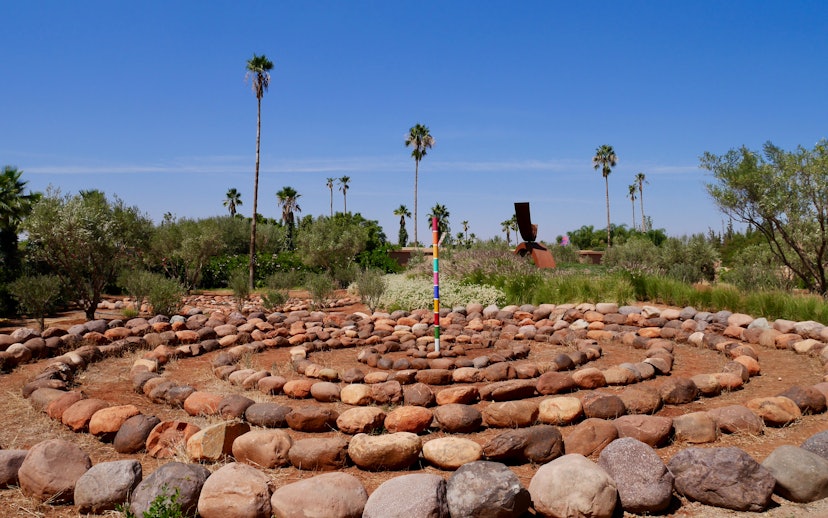
Monumental sculpture trail
Attribute — Creator: Pablo Picasso, Keith Haring, Alexander Calder, Auguste Rodin, and André Heller
This is the heart of the visit: major modern works placed outdoors where palms, bamboo, and cactus shape how you see them. It feels less like a museum route and more like a sequence of discoveries. What most visitors rush past is the contrast between playful, brightly colored pieces and the much quieter plant-framed placements around them.
Where to find it: Along the main winding garden paths from the entrance through the central botanical loop
Global botanical labyrinth
Attribute — Type: Botanical collection from multiple continents
ANIMA works because it isn’t a neat formal garden — it’s a layered maze of palms, cacti, bamboo, and dense shade designed to slow you down. The planting creates a cooler microclimate, which matters more than you’d expect in warmer months. What many visitors miss is how much the route changes sound as well as sight, especially in the bamboo sections.
Where to find it: Across the full outdoor loop, especially in the middle sections away from the entrance
Atlas mountain viewpoints
Attribute — Type: Landscape vista
The garden’s most memorable views often come when the paths suddenly open up and the High Atlas Mountains appear behind the foliage. On clear days, the contrast between irrigated green planting and the harsher mountain backdrop is the shot most photographers come away happiest with. Many people stop only once, but there are several framed sightlines worth slowing for.
Where to find it: In the open clearings along the upper sections of the loop and from the café terrace
Indoor exhibition galleries
Attribute — Type: Contemporary art galleries
These two indoor rooms turn the visit from ‘beautiful garden’ into a more complete art experience. The exhibitions rotate, so they add something current even if you’ve already come for the outdoor sculpture trail. Most visitors on the afternoon shuttle underestimate how much time to save here and end up doing a rushed final pass.
Where to find it: Inside the central pavilion near the end of the main route
Café Paul Bowles terrace
Attribute — Type: Rooftop café and viewpoint
This is more than a convenience stop. The terrace gives you one of the cleanest mountain-facing pauses in the whole garden, and the menu ties back to the site’s own herbs, olives, and saffron. What many people miss is that it works best after the full loop, when you’ve already seen the garden and can sit rather than watch the clock.
Where to find it: Beside the central pavilion, above the main indoor spaces
Facilities and accessibility
- 🚻 Restrooms: Clean restrooms are available on-site, and they’re one of the consistently praised parts of the visitor experience after the outdoor garden walk.
- 🍽️ Café Paul Bowles: The on-site café serves Moroccan-international dishes, juices, and mint tea, and it’s worth treating as part of the visit rather than a fallback meal stop.
- 🛍️ Gift shop / merchandise: A boutique near the main pavilion sells crafts and design-led souvenirs that fit the garden’s art focus better than generic tourist items.
- 🪑 Seating / rest areas: Benches, shaded corners, and hammocks are spread through the grounds, which makes this easier on slower walkers than the photos might suggest.
- ♿ Mobility: Access is partial rather than full; the main trails are relatively flat pressed gravel, but narrower offshoots and some twists are harder for wheelchair users to manage comfortably.
- 👁️ Visual impairments: The garden is best experienced with a companion because it relies heavily on outdoor orientation, changing path widths, and visual encounters between plants and sculpture.
- 🧠 Cognitive and sensory needs: This is one of the calmer excursions from Marrakesh, and morning visits are the least stimulating because paths are quieter and temperatures are easier.
- 👨👩👧 Families and strollers: Strollers can manage the main routes, but the more uneven side paths are less smooth, so it’s better to stay on the primary loop.
ANIMA Garden works well with children because it feels exploratory rather than formal, and the winding paths, bold sculptures, and open-air layout give them room to stay engaged.
- 🕐 Time: 1.5–2 hours is realistic with younger children if you focus on the main sculpture loop and skip a long café stop.
- 🏠 Facilities: Restrooms, shaded seating, and the café make it manageable as a half-day outing even with younger kids.
- 💡 Engagement: Turn the walk into a sculpture hunt — children usually engage faster when they’re spotting colors, shapes, and hidden figures between the plants.
- 🎒 Logistics: Bring sun protection and water, and avoid fragile footwear because the pressed-gravel paths are easier in sneakers than sandals.
- 📍 After your visit: If your family still has energy, continuing deeper into the Ourika Valley makes more sense than heading back into the medina crowds.
Rules and restrictions
What you need to know before you go
- Entry requirement: Pre-booking is the smart move because transport-linked visits are limited, even though the entry process at the gate itself is straightforward.
- Bag policy: A small day bag is easiest on the gravel paths, while bulky luggage is impractical for a garden visit and best left behind in Marrakesh.
- Re-entry policy: Plan to complete your visit in one go, because leaving for food or transport mid-visit defeats the point of coming this far out of the city.
- Dress note: There’s no enforced dress code, but closed shoes and sun protection make a real difference on gravel paths and exposed sections.
Not allowed
- 🚫 Food and drink: Eating is best kept to the café areas rather than the paths, especially around the art installations.
- 🚬 Smoking and vaping: Smoke away from other visitors and planted areas, since this is a quiet garden environment rather than an open public park.
- 🐾 Pets: Leave pets at home, while service animals should be checked with the venue in advance.
- 🖐️ Touching exhibits: Don’t climb on or handle sculptures, because the art is integrated into the landscape but still part of a curated exhibition.
Photography
Photography is one of the main reasons people come, and outdoor personal photos are part of the experience. The practical distinction is that the best shots are along the sculpture trail, in the clearings with Atlas views, and from the café terrace. Flash, tripods, and bulky photo setups are best avoided unless the venue has cleared them in advance, because the paths are narrow and the space works best when people keep moving.
Good to know
- Shuttle timing: The real sell-out risk is usually the shuttle seat rather than the garden itself, so don’t treat transport as something to sort out later.
- Pacing: Because the garden feels peaceful and compact, visitors often underestimate how much time photo stops and the indoor galleries add.
Practical tips
- Booking and arrival: Reserve at least 24 hours ahead if you want the official shuttle, and several days ahead in spring or fall; once the preferred departure is full, the whole plan gets more expensive and less convenient.
- Pacing: Save your longest pause for Café Paul Bowles at the end, not the middle, or you’ll be tempted to rush the indoor galleries when it’s time to leave.
- Crowd management: The 9:30am shuttle is the sweet spot here because the light is softer, the paths are cooler, and you won’t be sharing the first half of the route with as many same-time arrivals.
- What to bring or leave behind: Wear shoes you’re happy walking gravel in; the main paths are easy enough, but thinner sandals feel less stable once you start taking the narrower turns.
- Food and drink: If lunch matters to you, build it into the visit rather than planning to eat after — leaving for a meal means giving up one of the best terrace views on the property.
- Photography: Winter and clear spring days give you the cleanest mountain backdrop, so don’t use all your photo time near the entrance before the Atlas views reveal themselves later in the loop.
What else is worth visiting nearby?
Commonly paired: Setti Fatma Waterfalls
- Distance: ~25km — 35–45 min by car
- Why people combine them: It’s the most natural same-day continuation deeper into the Ourika Valley, giving you a quiet art-and-garden morning followed by a more active afternoon.
Commonly paired: A saffron farm in the Ourika Valley
- Distance: ~15km — 20–25 min by car
- Why people combine them: The pairing works because both sit along the same valley route, but the mood shifts from curated sculpture garden to rural agricultural experience without adding a huge detour.
Also nearby
Ourika Valley villages
- Distance: ~10–20km — 15–30 min by car
- Worth knowing: They’re a better add-on than another city attraction if you want to keep the day slow, scenic, and outdoors-focused.
Marrakesh medina
- Distance: ~27km — 40–45 min by shuttle or car
- Worth knowing: It’s the contrast that makes this pairing work: ANIMA gives you quiet and space, while the medina brings you back to the city’s intensity afterward.
Eat, shop and stay near ANIMA Garden
- On-site: Café Paul Bowles, Moroccan-international cuisine, mid-range pricing, and genuinely worth doing for the terrace views rather than treating it as a last-resort café stop.
- Pro tip: If you’re on the afternoon shuttle, decide early whether lunch is part of the plan — a full meal here can easily be the difference between seeing or skipping the indoor galleries.
- ANIMA boutique: Design-led souvenirs and local crafts near the pavilion, and a better place for a thoughtful keepsake than the generic stalls you’ll find around more crowded Marrakesh attractions.
Staying right by ANIMA Garden only makes sense if you want a slower Ourika Valley escape rather than a city break. The setting is peaceful and scenic, but it’s not the most practical base for first-time visitors who also want easy access to the medina, restaurants, and evening plans. For most travelers, this works better as a half-day trip from Marrakesh than as the center of a full stay.
- Price point: The valley skews toward boutique guesthouses and rural stays rather than a wide hotel spread, so choice is narrower than in Marrakesh.
- Best for: Travelers who want quiet, mountain views, and a slower pace after the city, or couples building a countryside night into a longer Morocco trip.
- Consider instead: Stay in the medina or Hivernage if this is your first time in Marrakesh; both make city logistics easier, while ANIMA remains simple to visit as a planned excursion.
Frequently asked questions about visiting ANIMA Garden
Most visits take 2–3 hours inside the garden. If you’re coming from Marrakesh on the official shuttle, the full outing usually takes 4–5 hours once the 40–45 minute ride each way is included. Lunch at Café Paul Bowles and time in the indoor galleries are what usually push visits toward the longer end.
Yes, it’s best to book in advance, especially if you want the official shuttle from Marrakesh. The garden controls daily numbers, and the more common frustration is missing out on your preferred shuttle departure rather than being turned away at the gate. Spring and fall are the periods when planning ahead matters most.
Arrive at least 15–20 minutes before shuttle departure if you’re leaving from Marrakesh. The ride runs on a fixed schedule, and missing it turns a simple half-day outing into a taxi or public-bus problem. If you’re driving yourself, arriving a little before opening gives you the calmest first hour inside.
Yes, a small backpack or day bag is fine and is the easiest way to carry water, sunscreen, and a layer. What doesn’t work well here is large luggage or bulky bags, because the visit is fully walking-based and the narrower turns feel awkward when you’re carrying too much.
Yes, photography is one of the best reasons to come. The strongest images are usually along the sculpture trail, at the Atlas viewpoints, and from the café terrace. It’s smartest to keep your setup light, because the paths are not designed for tripods, large equipment, or long stationary shoots during busier arrival windows.
Yes, small groups work well here, but the experience is best if everyone moves at a similar pace. The paths are winding and quiet, so large groups can lose some of the atmosphere if they bunch up or keep stopping in narrow sections. If you’re coordinating transport together, reserve shuttle seats as early as possible.
Yes, it’s one of the easier half-day outings from Marrakesh for families. The winding paths, colorful sculptures, and open-air layout keep children more engaged than a conventional museum would. Children up to the age of 11 years enter free, which also makes it better value than many city attractions for families.
Partly, but not fully. The main trails are relatively flat and made of pressed gravel, so some visitors will manage them comfortably, but narrower offshoots and uneven sections can be difficult. It’s better to expect partial access to the primary route rather than full ease across every corner of the garden.
Yes, food is available on-site at Café Paul Bowles, and that’s the most convenient option by far. Because the garden is outside Marrakesh in a rural stretch of the Ourika Valley, it’s better to plan your meal there or before you leave the city rather than counting on plenty of alternatives right nearby.
Yes, for most visitors it’s the easiest way to do the trip. It removes fare negotiation, follows a direct route from behind Koutoubia Mosque, and makes the outing feel much more structured. The catch is that seats are limited, so it only stays convenient if you reserve in time.
Morning is the best time for most visitors. You’ll get cooler temperatures, softer light on the sculptures, and enough time to complete the full route without cutting the galleries or café. The afternoon departure still works, but it feels more compressed, especially if you like stopping often for photos.