Getting to Merzouga from Marrakesh
Merzouga sits on the edge of Morocco’s Erg Chebbi dunes, about 560km (348mi) east of Marrakech. Reaching it is a commitment: by road, expect roughly 9–10 hours one way without long sightseeing stops, while most guided tours spread the journey over 3–4 days. Your main options are a multi-day tour, self-drive, or a long-distance bus. Tours are usually the easiest because they bundle transport, camp stays, and camel logistics. Spring and fall are the smoothest seasons; summer heat and winter cold both make timing more important.
Where is Merzouga located?
- Address: Merzouga, Errachidia Province, Drâa-Tafilalet, Morocco
- Find on map: Merzouga
- Distance from Marrakesh: ~560km (~348mi)
- Time taken from Marrakesh: ~9–10 hr by road, or 3–4 days on a guided desert itinerary
- Access: By road only; there is no direct rail connection to Merzouga
- Recommended tour: 3-Day Merzouga Desert Tour with Camel Rides & Sandboarding with Return Transfers to Marrakesh or Fes
Marrakesh to Merzouga: Time & distance
- From Marrakesh: ~560km / 348mi
- By bus: ~11–13 hr
- By car: ~9–10 hr (no long stops)
- By tour (round-trip): 3–4 days including sightseeing and camp stay
Guided tours (recommended)
- The road trip is long: Tours break the drive into workable stages, so you’re not attempting a punishing same-day dash to the dunes.
- Last-mile logistics are handled: Camp transfers, camel rides, and overnight timing are coordinated for you.
- You see more en route: Most itineraries build in stops like Ait Benhaddou, Todra Gorge, or Atlas viewpoints.
- Comfort options matter: You can choose shared, private, standard, or luxury setups depending on how much comfort you want.
- Meals and overnights are bundled: That removes a lot of planning once you’re far from Marrakech.
By bus
Long-distance buses are the cheapest independent way to reach the Merzouga area from Marrakech, but they’re also the least flexible. Expect a full-day or overnight journey of roughly 11–13 hours, depending on traffic, route, and the final drop-off point. Some services stop in or near Merzouga, while others may leave you in nearby towns such as Rissani or Erfoud, so confirm that before booking. You’ll also need a final transfer to your desert camp if you’re not staying in the village itself. This option works best if you’re comfortable with long overland travel and don’t mind arranging the last mile yourself.
- Duration: ~11–13 hr
- Cost: $25-$50 (one-way trip)
- Frequency: Once per day
- Best for: Budget travelers and independent planners
- Cons: Very long ride, fewer comfort stops, and camp transfer usually not included
By car / self-drive
Driving from Marrakech to Merzouga gives you the most freedom, but it’s a serious road trip rather than a casual day drive. Most routes cross the High Atlas via Tizi n’Tichka Pass, then continue through Ouarzazate, Tinghir, or Erfoud before reaching the dunes. In normal conditions, count on about 9–10 hours without extended sightseeing, though many travelers split the journey with an overnight stop. The upside is flexibility: you can pause at Ait Ben Haddou, Dades Gorge, or Todra Gorge at your own pace. The trade-offs are mountain roads, driver fatigue, fuel costs, and the need to coordinate camp access once you arrive.
- Duration: ~9–10 hr from Marrakech
- Cost: Rental car + fuel + overnight stop + parking/transfer costs
- Best for: Couples, groups, photographers, and flexible itineraries
- Cons: Long drive, winding roads, and tiring return journey
Compare your options
| Mode | Duration | Cost | Best for | Key notes |
|---|---|---|---|---|
Guided tour | 3–4 days | $91–$600+ | First-timers, multi-stop travelers | Usually includes transport, camp stay, meals, and camel rides |
Bus | 11–13 hr | $25-$50 (one-way trip) | Budget DIY travelers | Cheapest option, but last-mile camp transfer is extra |
Car | 9–10 hr | Rental + fuel + extras | Groups, detours, flexible road trips | Best freedom, but the drive is long and tiring |
Getting around in Merzouga
- Walking: Merzouga village itself is manageable on foot, but the dunes are vast and camps are spread out. Walking works for short village distances, not for camp-to-camp exploration in midday heat.
- Camel transfers: Many overnight stays include a sunset camel ride into the dunes and a sunrise ride back. It’s scenic, but not the fastest option, and some travelers find the saddle uncomfortable after an hour.
- 4x4 camp transfers: If you don’t want the camel ride, many camps can arrange a 4x4 transfer instead. This is the most practical choice if you’re arriving late, carrying extra luggage, or have mobility concerns.
- Local drivers and taxis: Short transfers between Merzouga, Hassilabied, Rissani, and nearby lodges are usually done by taxi or prearranged driver. Confirm the fare before departure if it’s not booked through your stay.
- Own car: If you self-drive, you’ll usually park at your hotel, auberge, or camp meeting point rather than driving deep into the dunes yourself. Ask your host exactly where to stop before arrival.
Things to do in Merzouga
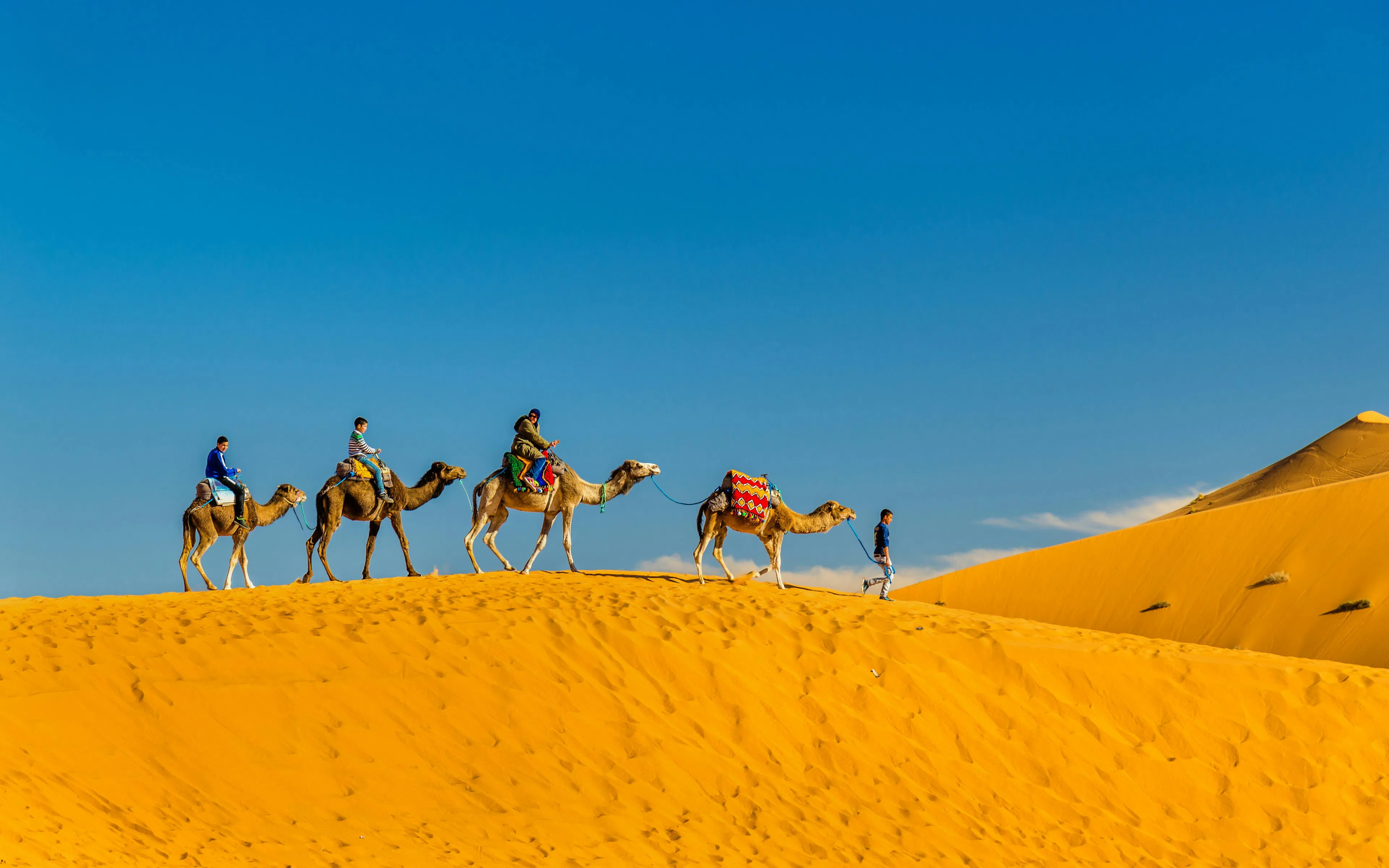
Erg Chebbi dunes
Merzouga’s signature sight: giant orange dunes that rise far higher than Morocco’s shorter desert stops, especially dramatic around sunset and sunrise.
Camel trek into camp
The classic arrival experience, with a slow ride across the sand as the light changes and the dunes start to glow.
Overnight desert camp
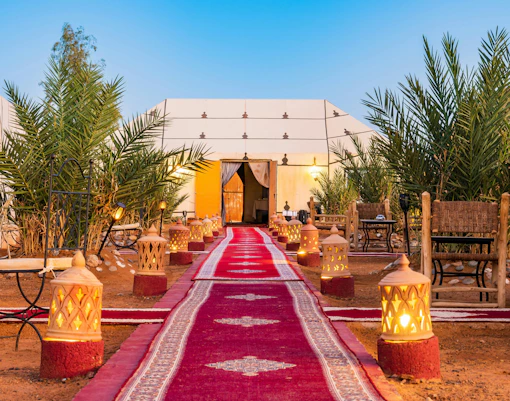
Spend the night in a standard or luxury camp for dinner, music, stargazing, and an early-morning return across the dunes.
Sunrise dune climb
Wake before dawn and climb a nearby ridge for the softest light, cooler temperatures, and the calmest moment of the whole trip.
Sandboarding
Many tours include boards for short runs down the slopes. It’s simple, fun, and easy to try between sunset and dinner or after sunrise.
Khamlia or Rissani stops
If your itinerary has time, nearby villages and market towns add local music, food, and a break from the camp-and-dunes rhythm.
Suggested itinerary for Merzouga
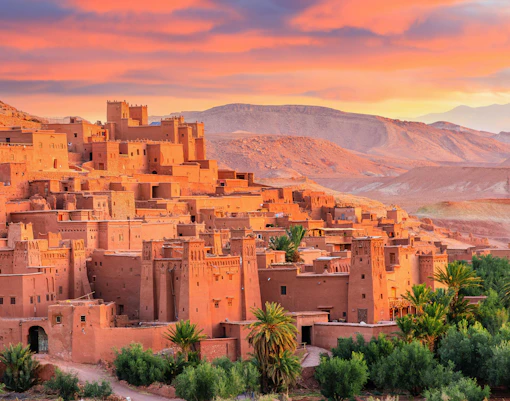
Day 1
Leave Marrakech early and cross the High Atlas. Stop at Ait Ben Haddou and continue toward the Dades or Tinghir area for your overnight.
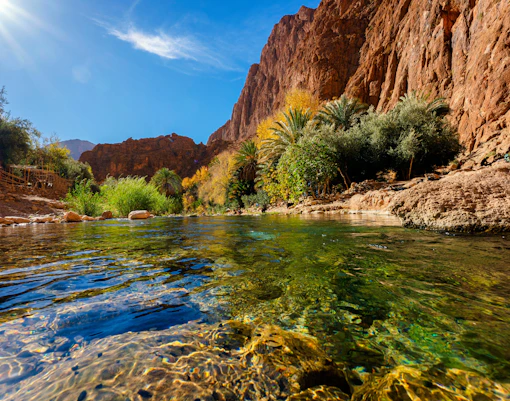
Day 2
Visit Todra Gorge if it’s on your route, then continue to Merzouga. Arrive in the late afternoon, switch to camel or 4x4 transport, and head into camp before sunset.
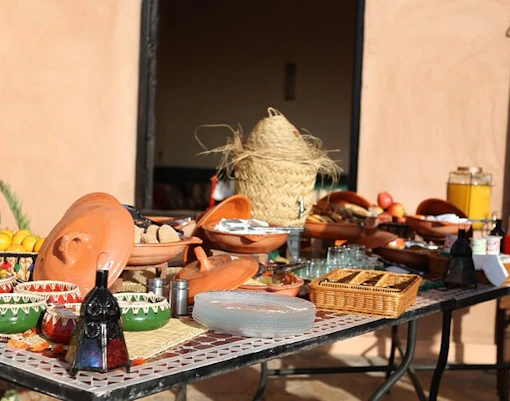
Day 3
Wake early for sunrise in the dunes, return to the village for breakfast, and then either drive back toward Marrakesh or continue north if you’ve booked a one-way itinerary.
Optional add-on
If you can spare the time, choose a 4-day version or a luxury camp. The extra time makes the road feel less rushed and gives you more breathing room at the dunes.
Handy tips
- Best time: Aim for spring or fall if you can. Temperatures are easier, and the journey feels much less draining than in peak summer.
- Booking hack: If comfort matters to you, spend extra on a luxury camp or smaller-group option rather than trying to save a little on the longest leg of the trip.
- Seasonal note: Summer brings extreme heat, while winter nights in the desert can get very cold — pack layers either way.
- Route planning: If you’re self-driving, split the trip with an overnight stop instead of forcing the full drive in one go.
- Expectation check: Merzouga is spectacular, but it isn’t empty wilderness. You’ll likely see other camps, camel groups, and tour vehicles.
Travel FAQs / Getting to Merzouga: FAQs
A long-distance bus is usually the cheapest independent option, but it takes the longest and often requires a separate transfer to your camp.
A private road transfer or self-drive is the fastest practical route, usually around 9–10 hours in normal conditions.
Yes, for most first-time visitors. It simplifies the long road journey, camp logistics, meals, and major stops along the way.
No. Morocco’s rail network does not reach Merzouga, so train travel is not a practical option for this route.
Yes, but it’s a long drive across mountain and desert roads. Most travelers split it with an overnight stop.
If you want taller dunes and the classic Sahara look, yes. Zagora is closer to Marrakesh, but the desert scenery is less dramatic.
Cold enough to surprise many travelers, especially in winter. Bring warm layers even if Marrakech feels mild when you leave.
Yes, if you’re arriving independently. Many camps require a camel or 4x4 transfer from a meeting point outside the dunes.


