Ouzoud is a travertine waterfall system, meaning the water actively builds the rock beneath it rather than simply eroding existing stone. This is rare worldwide and one of the main reasons Ouzoud is considered geologically special.
Ouzoud Waterfalls are not just Morocco’s most famous cascade. They’re the result of rare geological processes, centuries of Amazigh life, and a fragile ecosystem still evolving today. Knowing what’s happening beneath the surface turns a photo stop into a deeper connection with the land, wildlife, and communities that depend on it.
Ouzoud Waterfalls: The geological significance
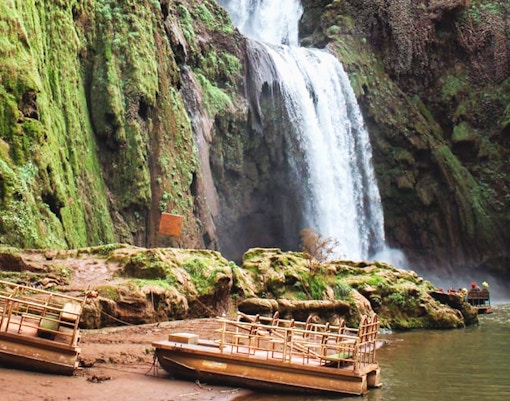
Travertine formation: A living laboratory
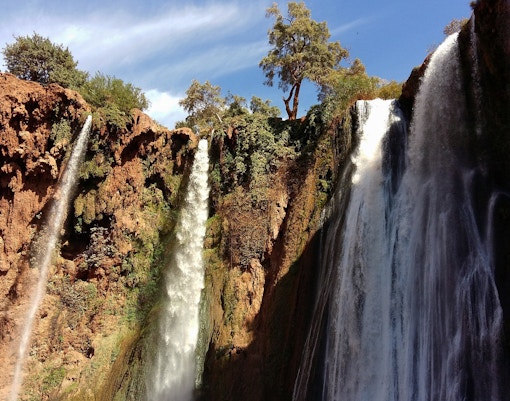
How travertine forms at Ouzoud
Upstream, the Al-Abid River flows through limestone, absorbing calcium carbonate. When the water plunges over the 110-meter drop, dissolved carbon dioxide escapes into the air, triggering a chemical reaction that deposits thin mineral layers known as travertine tufa along the cliff face.

The chemical process
As pressure drops at the waterfall, calcium carbonate can no longer stay dissolved in the water. It crystallizes onto rock surfaces, slowly building new layers, millimeter by millimeter, over centuries.
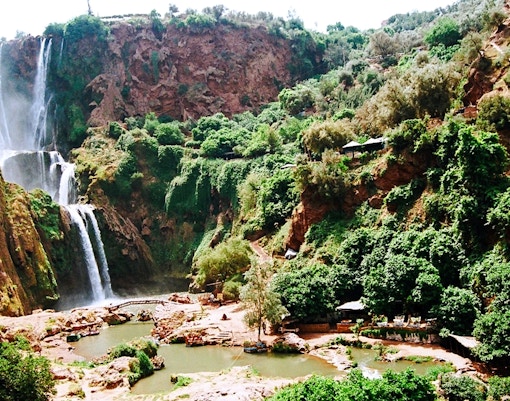
Age
The formations are estimated to be 5,000–20,000+ years old. While young in geological terms, they predate written history in the region. The waterfall is still geologically active today, with new travertine forming continuously, though very slowly.
What sets Ouzoud apart is the combination of active geology, wildlife habitat, and living cultural landscape in one accessible location.
Barbary Macaques: Endangered wildlife at Ouzoud
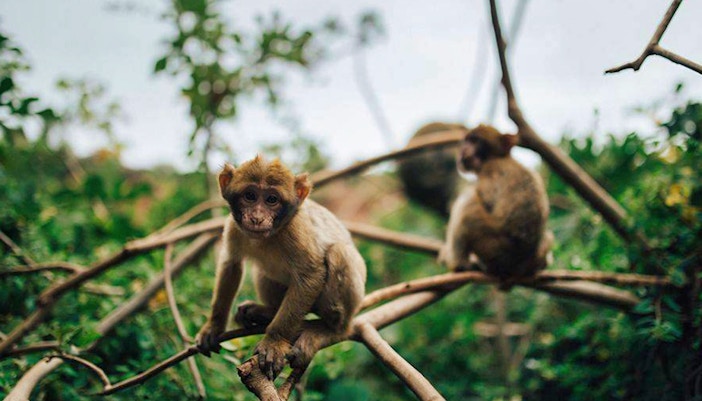
The Barbary macaque (Macaca sylvanus) is the only wild primate in North Africa and one of the most endangered primates globally.
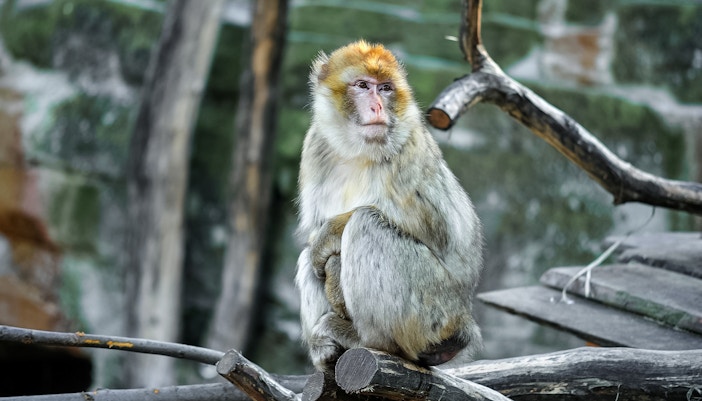
Basic facts
- Global population: ~8,000
- Ouzoud population: ~100–150
- Activity: Diurnal (daytime)
- Behavior: Forages for leaves, bark, seeds
- Social structure: Highly social troops with cooperative infant care
Conservation
- IUCN Red List: Endangered
- Main threats: Habitat loss, illegal pet trade, human-wildlife conflict
- Population trend: Declining across Morocco and Algeria
The gorge acts as a refuge population, with some troops remaining relatively unhabituated to humans. This makes Ouzoud important for long-term conservation and genetic diversity.
Ethical observation
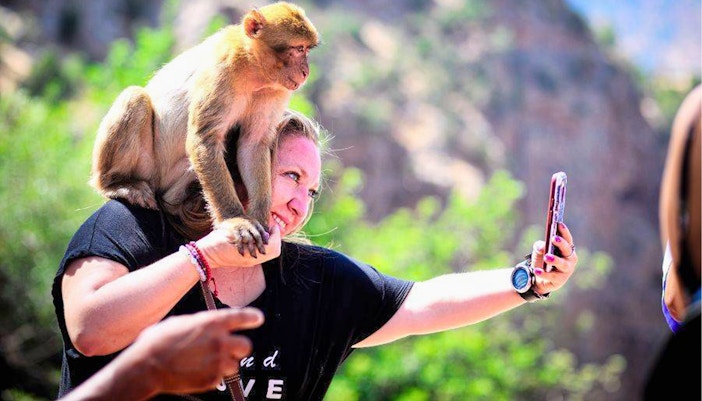
- Sightings are common between 10am–3pm
- Keep 10–20 meters distance
- Never feed macaques
- Secure bags and avoid approaching infants
Why this matters: Feeding causes dependency and aggression, leading to crop damage and retaliatory killings. Ethical observation directly supports species survival.
Ouzoud's role in human history
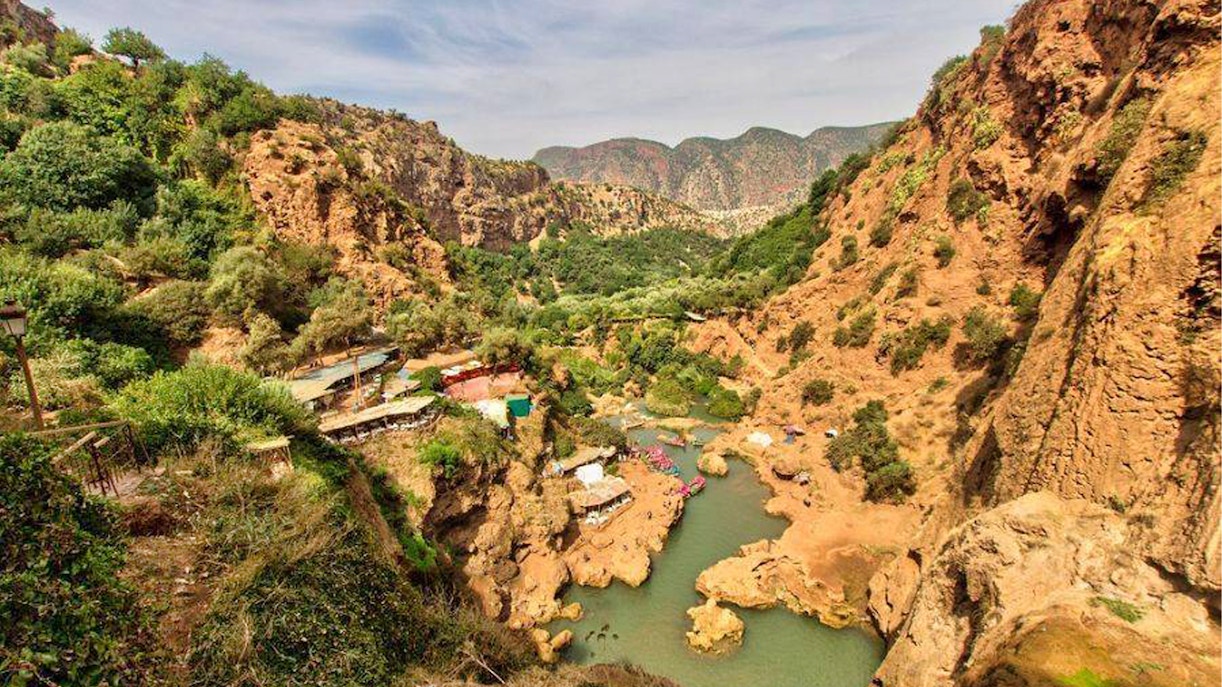
- “Ouzoud” comes from the Tamazight word for “grinding grain,” reflecting the site’s historical role as a center for water-powered milling. For centuries, local Amazigh communities used the waterfall’s force to mill wheat, barley, and olives. Mills were communal assets, with grinding paid for in grain or small fees.
- These mills represent a sustainable, pre-industrial relationship between people and landscape—engineering designed around local resources rather than imposed on them.
- Terraced olive groves surrounding Ouzoud reflect generations of land stewardship. Olive oil production remains central to local livelihoods and Moroccan cuisine.
Environmental conservation & ongoing challenges
Ouzoud is part of the larger Al-Abid and Draa river systems, making it important for downstream water security.
Current challenges
- Climate change: Reduced flow during drought years
- Upstream dams: Alter natural water rhythms
- Deforestation: Impacts groundwater recharge
- Tourism pressure: Litter, erosion, informal trails
Active conservation Initiatives
- UNESCO M’Goun Geopark programs
- Barbary macaque protection projects
- Local guide cooperatives promoting low-impact tourism
- Reforestation of native cedar and fir species
What makes Ouzoud unique
Ouzoud stands out because it combines:
- A 110-meter single cascade
- Active travertine geology
- Endangered wildlife sightings
- Strong cultural heritage
- Easy access from Marrakech
Few natural sites globally offer this mix of scale, science, wildlife, and comfort in a single visit.
How to support conservation
- Hire local guides: 80–150 MAD supports guides and incentivizes anti-poaching vigilance.
- Buy from local cafés: Your lunch purchase funds families directly.
- Don't feed the monkeys: Feeding creates dependency; undermines conservation.
- Respect trail markers: Prevent erosion and habitat trampling.
- Pack out all trash: Litter removal is expensive; prevention is easier.
- Donate to NGOs: IFAC and M'Goun Geopark accept donations for protection/research.
- Share ethical photos: Emphasize wildlife ethics and conservation context.
Frequently Asked Questions About Ouzoud Waterfalls
Tugela Falls (South Africa, Eastern Cape) at 948 meters is Africa's tallest (though it's a multi-tiered system; methodology debate exists). Ouzoud's single cascade at 110 meters makes it the tallest single-drop waterfall in North Africa and second overall on the continent.
Unhabituated monkeys are not dangerous if given space (10m+). However, if fed or teased, they become aggressive and may bite. Never approach babies (mothers fiercely protective). Respect = safety.
Historical records are sparse; estimates suggest 400–500+ years. Ottoman documents (1500s) mention mills in the Azilal region, though exact Ouzoud dating is unclear.
No. Water is contaminated with minerals (travertine particles) and possible microbial load (upstream villages discharge waste). Stick to bottled water sold at cafés.
Yes. Ouzoud is on several "Atlas Circuit" treks combining the waterfall with Toubkal (highest peak) or Imlil Valley hiking. Tours ranging 3–7 days typically include Ouzoud.
Mixed. Some benefit economically (guides, cafés, lodges). Others express concerns about overcrowding, environmental impact, and cultural change. Respectful, low-impact tourism is increasingly appreciated by locals.


