How to visit Moroccan Culinary Art Museum
Moroccan Culinary Art Museum is a compact, self-paced museum in a restored medina riad, best known for turning Morocco's food culture into a walk-through sensory experience. The visit itself is straightforward, but the three-floor layout, uneven zellige tiles, and app-based audio guide reward a little preparation. The biggest mistake is arriving without the guide downloaded, because there is no Wi-Fi inside and signal can be patchy. This guide helps you plan arrival, timing, tickets, and what to prioritize once you're in.
Quick overview: Moroccan Culinary Art Museum at a glance
If you want a cultural stop that fits neatly between bigger medina sights, this is one of the easier ones to plan well.
- When to visit: Plan it as a late-morning or early-afternoon stop in the southern Medina; the first part of the day feels calmer than mid-afternoon, when nearby Bahia Palace traffic spills onto Rue Riad Zitoun el Jdid and makes the entrance easier to miss.
- Getting in: Book the standard museum ticket for the three-floor exhibits, digital audio guide, and tea/coffee break, or book the monument option if you want Bahia Palace, El Badi Palace, or the Saadian Tombs folded into the same route, because that combination is the main reason to reserve ahead.
- How long to allow: Allow 1-1.5 hours for most visits, and closer to 2 hours if you listen to the full audio guide and take the included tea or coffee break slowly.
- What most people miss: The courtyards, tea salon replica, and antique utensil displays add the most context, and they are the parts people rush past on their way to the better-known dish displays.
- Is a guide worth it? For the museum alone, the digital audio guide is usually enough, but a live guide adds more value if you are pairing the visit with nearby monuments that need stronger historical context.
Jump to what you need

🕒 Where and when to go

🗓️ How much time do you need?
🎟️ Which ticket is right for you?
🗺️ Getting around
🍽️ What to see
♿ Facilities and accessibility
Where and when to go
How do you get to Moroccan Culinary Art Museum?
The museum is in Marrakech's southern Medina on Rue Riad Zitoun el Jdid, right beside Bahia Palace and about a 15-minute walk from Koutoubia Mosque.
Rue Riad Zitoun el Jdid, Marrakesh, Morocco
- On foot: From Koutoubia Mosque → around 15 min → follow Rue Riad Zitoun el Jdid into the southern Medina.
- Petite taxi: Ask for Bahia Palace → short final walk → fares from central Marrakesh usually run 20-50 MAD.
- Rideshare/drop-off: Use Bahia Palace as the drop point → under 1 min walk → the museum entrance sits directly beside it.

Which entrance should you use?
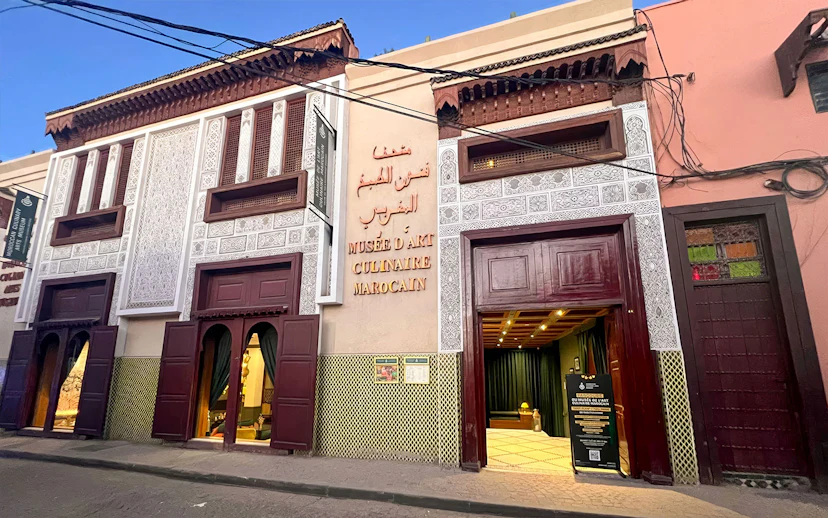
There is one street entrance, and what most visitors get wrong is simply walking past it on a busy medina street without realizing they are already there.
- Main entrance: Located on Rue Riad Zitoun el Jdid beside Bahia Palace. Best for all visitors. Expect little to no wait because entry is self-paced rather than tour-based.

When is Moroccan Culinary Art Museum open?
- Museum admission: Check the live schedule before you go, because museum entry timings, tea salon service, and rooftop dining hours do not match.
- Tea salon: 9am-8pm.
- Le Douar Medina rooftop restaurant: 12pm-5pm.
- Last practical museum start: Leave enough time to finish the exhibits before taking the included tea or coffee break on the ground floor.
When is it busiest? Mid-afternoon feels busiest, especially when Bahia Palace visitors spill onto the same street and the entrance area gets more congested.
When should you actually go? Late morning works best because you get a calmer street approach, cooler indoor pacing, and an easier same-day pairing with Bahia Palace or El Badi Palace.
The museum's thick riad walls and lack of indoor Wi-Fi make last-minute downloads frustrating, so install the app and save the guide before you leave your riad or hotel.
How much time do you need?
| Visit type | Route | Duration | Walking distance | What you get |
|---|---|---|---|---|
Highlights only | Grand Courtyard, ground-floor Spice Chambers, and Agricultural Heritage rooms. | 45 to 60 mins | ~0.3 km | You see the stunning Carrara marble fountain, learn about historic trade routes, and smell the open spice sacks, but you skip the upper galleries, cooking stations, and rooftop view. |
Balanced visit | Complete three-floor loop, including tool galleries, the replica Tea Ritual Salon, and a panoramic rooftop walk. | 1.5 to 2 hours | ~0.6 km | Covers all cultural exhibits and regional food histories at a comfortable pace, with extra time included to sit down for your complimentary Moroccan mint tea and pastries. |
Full exploration | The complete three-floor museum tour combined with an immersive on-site cooking masterclass. | 3.5 to 4.5 hours | ~0.8 km | Explore the historical galleries and then head to a 34-station state-of-the-art kitchen to prepare a traditional tagine under the guidance of an expert dada (local chef) before eating your creation. |
Your standard museum entry ticket includes a complimentary Moroccan mint tea and traditional pastry service. Save this reward for the very end of your route. The tea salon is located up on the panoramic rooftop terrace, making it the perfect reward after climbing the steep, narrow stairwells of the historic palace.
Which Moroccan Culinary Art Museum ticket is best for you
| Ticket type | What's included | Best for |
|---|---|---|
Marrakesh: Moroccan Culinary Art Museum Tickets | Entry to the Moroccan Culinary Art Museum + self-guided exploration across 3 floors + digital audio guide app + mint tea or coffee + 3 Moroccan pastries | A shorter medina stop where you want cultural depth, flexible pacing, and a built-in break without committing to a longer guided activity |
Moroccan Culinary Art Museum Tickets with Marrakesh Monument Options | Entry to the Moroccan Culinary Art Museum + entry to Bahia Palace/El Badi Palace/Saadian Tombs depending on option selected + tea/coffee at MCAM | A same-day southern Medina route where you want to link food heritage with one major historic monument on a single booking |
How do you get around Moroccan Culinary Art Museum?
The museum is spread across three floors inside a restored riad, so it feels more like moving through a house with themed rooms and courtyards than following a big museum loop. In practice, it is easy to self-navigate, but the layered layout makes it easy to miss quieter rooms if you rush upstairs too quickly.
Museum layout
- Ground floor: Entrance, major courtyards, and core culinary displays → start here and allow 30-40 min.
- Thematic galleries: Spices, salads, utensils, pastries, and street food displays → move slowly and allow 20-30 min.
- Upper levels: Additional exhibit areas and vantage points across the riad → allow 15-20 min.
Suggested route: Start on the ground floor with the courtyards and main food displays, then work upward, and finish back downstairs for your included tea or coffee break, because many visitors climb too quickly and never properly return to the quieter rooms.
Maps and navigation tools
- Map: The digital audio guide app doubles as your main orientation tool → it covers the museum visit → download it before arrival from the link sent by email.
- Signage: Basic in-building wayfinding is enough for moving floor to floor, but the audio guide adds the context that the room labels alone do not.
- Audio guide / app: Accessed on your own smartphone with your own earphones → it is the best-value upgrade over self-guided wandering because it explains dishes, tools, and rituals room by room.
💡 Pro tip: Finish the full route before taking your tea or coffee break, because once visitors sit in the salon they often do not go back upstairs for the last rooms.
Where are the masterpieces inside Moroccan Culinary Art Museum?
The Spice Gallery
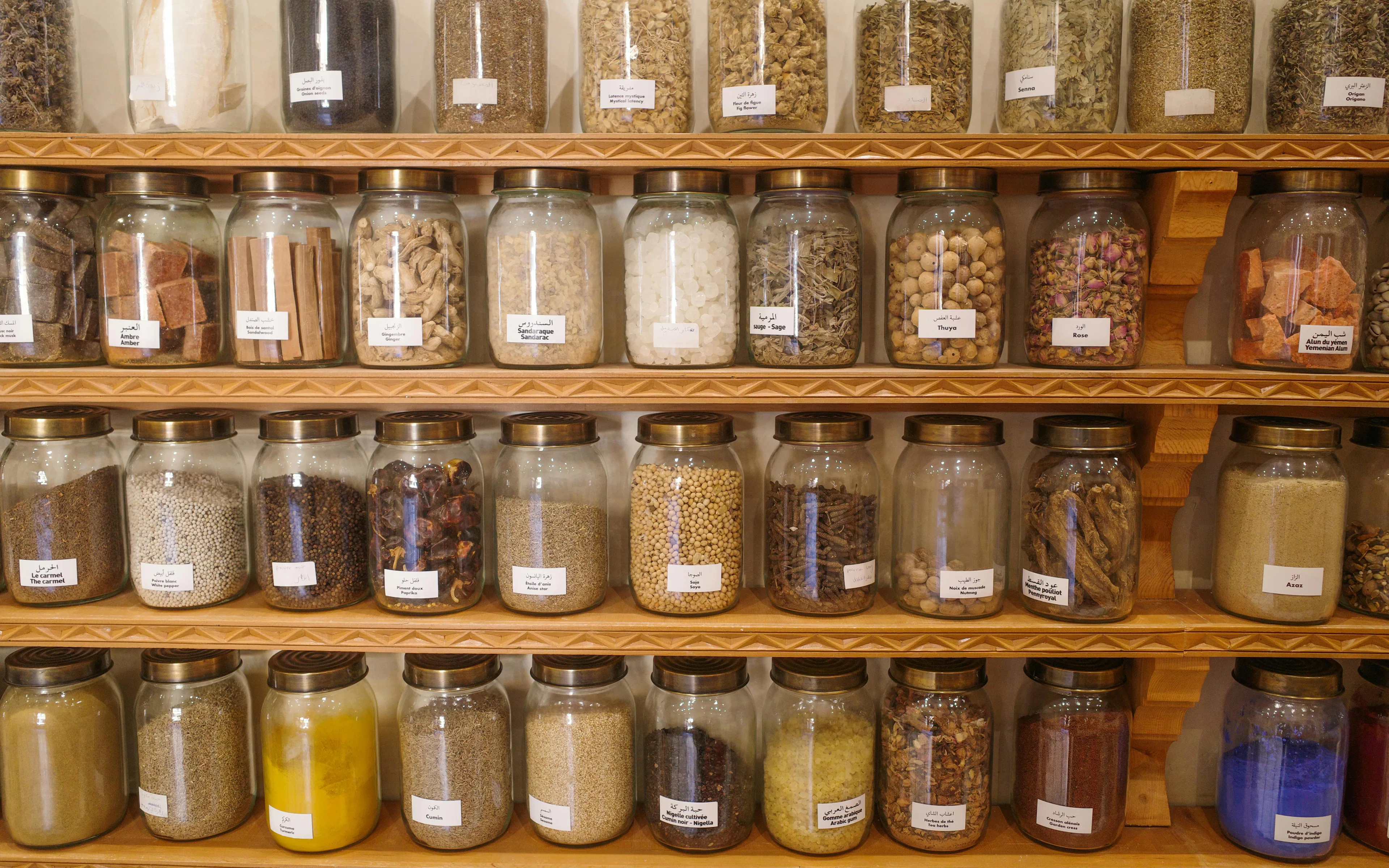
Attribute - Theme: Regional spices, trade routes, and agricultural origins
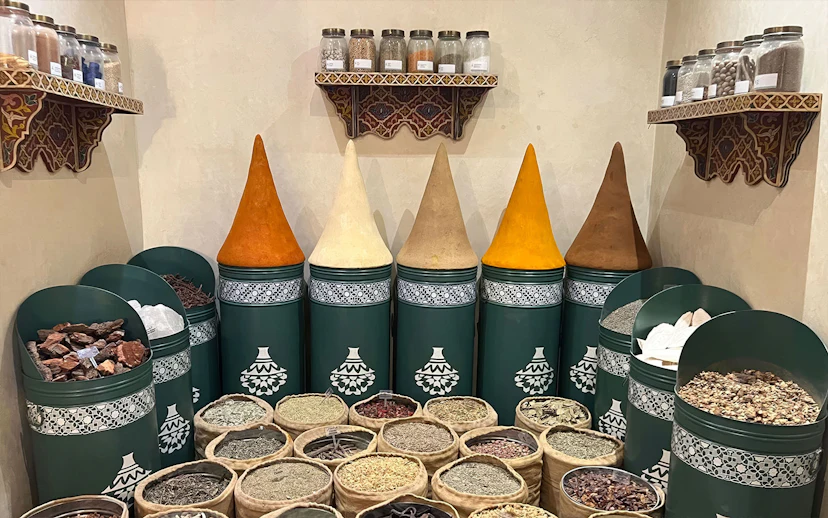
This is one of the clearest introductions to Moroccan cooking because it moves beyond familiar names like cumin and saffron and shows how spice blends are tied to geography and trade. Slow down here for the displays around Ras el Hanout rather than treating it as a single-ingredient stop. Most visitors glance at the sacks, take a photo, and move on without reading how the blends differ by region.
Where to find it: In the main thematic exhibition route on the lower museum levels.
The utensil collection
Attribute - Theme: Antique cooking implements and kitchen technique
The antique tools give real weight to the dish displays because you can see how tagines, couscous steamers, copper pots, and bread ovens shaped the food itself. It is worth pausing here before you listen to the audio sections on slow cooking and communal ovens. Most visitors notice the photogenic copper pieces but miss how the older vessels explain timing, texture, and fuel use in Moroccan kitchens.
Where to find it: Along the permanent exhibition route near the core culinary display rooms.
The tea salon replica
Attribute - Theme: Hospitality ritual and social customs
This room explains why tea in Morocco is more than a drink stop. The furnishings, trays, glasses, and reception-style layout show how hospitality is staged and performed in domestic life. Most visitors focus on the pastries elsewhere in the museum and rush this room, but it is the section that makes your included tea break feel connected to the visit rather than tacked on at the end.
Where to find it: Within the permanent exhibits before you return to the ground-floor tea service area.
The pastry and street food exhibits
Attribute - Theme: Regional sweets and urban food culture
These rooms are especially useful if you already know the headline dishes and want to understand everyday eating beyond tagines and couscous. The displays tie pastries, ferrans, and street food to neighborhood life rather than presenting them as isolated recipes. Most people move quickly through this area, but it is where the museum feels most rooted in living city culture instead of heritage display.
Where to find it: In the thematic exhibit sequence across the museum's permanent galleries.
The central courtyard and Carrara marble fountain
Attribute - Theme: Riad architecture and sensory setting
The biggest courtyard is not just a pretty pause point. It shows how architecture, shade, sound, and airflow shape the whole museum experience, and it helps explain why food, hospitality, and space are presented together here. Most visitors take one fast photo and head on, but this is the best place to notice the zellige floors, carved columns, olive trees, and the building's cooler interior atmosphere.
Where to find it: On the ground floor, immediately within the main riad layout.
The crowd flow pulls people toward the headline food displays first, so the courtyards, tea ritual spaces, and slower interpretive rooms often get skimmed even though they make the rest of the museum make sense.
Facilities and accessibility
- 🎧 Digital audio guide: The museum visit uses a digital audio guide app on your own phone, so bring your own earphones because none are provided on-site.
- 🍽️ Tea salon: Your ticket includes mint tea or coffee with 3 Moroccan pastries at Le Salon de Thé on the ground floor after the exhibits.
- 🍴 Rooftop restaurant: Le Douar Médina operates separately from the museum ticket, so treat it as an optional lunch stop rather than part of admission.
- 🛍️ Boutique: The on-site shop sells spices, oils, tea blends, ceramics, trays, teapots, and other tableware tied directly to Moroccan food culture.
- 🪑 Seating / rest areas: Seating is available in the interior courtyard areas, which makes it easy to pause without leaving the museum.
- 📶 Wi-Fi: There is no Wi-Fi inside the museum, so download your ticket QR code and audio guide before you arrive.
- ♿ Mobility: Accessibility is limited because the museum spans 3 floors of an 18th-century riad with no confirmed elevator access, so wheelchair users may not be able to reach every level.
- 👁️ Visual impairments: The digital audio guide is the most helpful accessibility feature currently confirmed, but there is no confirmed tactile map or on-site visual assistance service in the museum details.
- 🧠 Cognitive and sensory needs: The self-paced format is helpful because you can pause, skip, and move slowly, and the quieter courtyard spaces are usually the easiest places to regroup.
- 👨👩👧 Families and strollers: Stroller access is challenging because of narrow riad corridors and zellige tile floors, and the ground-floor courtyards are the easiest areas to manage with young children.
The museum suits older children best, especially if they already enjoy food, markets, or hands-on cultural stories rather than high-energy exhibits.
- 🕐 Time: Around 45-60 min is realistic with younger children, and the courtyards, pastries, and street food displays are usually the easiest sections to prioritize.
- 🏠 Facilities: The built-in tea or coffee break with pastries gives families a natural pause point without needing to leave immediately after the exhibits.
- 💡 Engagement: Let children look for the cooking tools first, because the antique utensils and visible food objects usually hold attention better than longer interpretation panels.
- 🎒 Logistics: Bring a charged phone, your own earphones, and a small bag, and aim for an earlier slot so children are not navigating the busiest medina foot traffic outside.
- 📍 After your visit: Bahia Palace is right next door, so it is the easiest nearby follow-up if your group still has energy for one more stop.
Rules and restrictions

What you need to know before you go
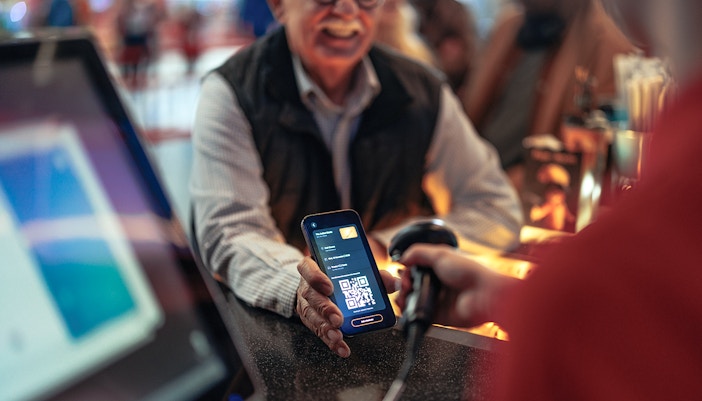
- Bring the ticket QR code on your phone, your own earphones, and a charged smartphone with the audio guide already downloaded before you arrive.
- A passport or ID card is required at entry, and children under 9 enter free with valid ID.
- No confirmed locker service is listed with the current ticket, so a small bag is the simplest option for the stepped riad layout.
- Re-entry is not clearly advertised with the current museum ticket, so plan the visit as one continuous stop and take the included tea or coffee break before leaving.
Not allowed
- 🚫 Commercial photography and video require advance written permission from the museum, even though personal photography is permitted.
- 🍽️ Cooking classes, the rooftop restaurant, and the full tea salon menu are separate bookings and are not covered by the standard museum ticket.
Photography
Personal photography is permitted throughout the museum. Commercial or professional photography and video need advance written permission from the museum. The clearest line is purpose rather than room: casual visitor photos are fine across the exhibits and courtyards, but anything shot professionally needs approval before you go.

Good to know
- The entrance is easy to miss on a busy medina street, so use the Google Maps search term 'Moroccan Culinary Art Museum Marrakech' rather than relying on street signage alone.
- The included coffee break is taken after the exhibits at Le Salon de Thé on the ground floor, so let staff know it is part of your ticket before ordering anything extra.
Tickets are valid for a single, continuous entry only. If you step outside the museum gates for any reason, even just to step back onto the street for a clearer phone signal or to check an adjacent market stall. You cannot re-enter on the same voucher. Ensure you have fully explored all three floors and enjoyed your complimentary tea service on the rooftop before heading through the exit gates.

Practical tips
- Booking and arrival: Download the ticket QR code and audio guide before leaving your accommodation, because they are sent by email and there is no Wi-Fi inside the museum.
- Pacing: Save 15-20 min at the end for the courtyards and tea salon atmosphere, because visitors tend to rush the quieter architectural spaces after the food displays.
- Crowd management: Late morning is the easiest window, since the street outside is calmer before nearby Bahia Palace traffic builds and the entrance is less likely to be missed.
- What to bring or leave behind: Bring your own earphones, a charged phone, and shoes with grip, because the museum's historic riad layout includes uneven zellige tiles and stepped corridors across 3 levels.
- Food and drink: Do the included tea or coffee break after the exhibits, not before, and if you want a fuller meal plan separately for Le Douar Médina because the rooftop restaurant is not part of museum admission.
- Same-day planning: If you are using the monument option ticket, pair the museum with Bahia Palace first for the tightest route, or with El Badi Palace and the Saadian Tombs as a longer southern Medina loop.
What else is worth visiting nearby?

Commonly paired: Bahia Palace
Distance: Next door - under 1 min walk
Why people combine them: The museum and Bahia Palace sit on the same street, so it is the cleanest same-day pairing in the southern Medina and works well if you want architecture and food culture in one short route.
✨ Moroccan Culinary Art Museum and Bahia Palace are most commonly visited together - and simplest to do on a combo ticket. It keeps both stops on one booking and lets you move between them in minutes. → See combo options

Commonly paired: El Badi Palace
Distance: About 10 min walk
Why people combine them: El Badi Palace gives you a broader historic counterpoint to the museum's intimate indoor format, so the two visits feel different rather than repetitive.

Also nearby
Saadian Tombs
- Distance: About 10-15 min walk
- Worth knowing: This is the best nearby add-on if you want a shorter second site than El Badi Palace, but the mausoleum viewing line can move slowly in direct sun.
Koutoubia Mosque
- Distance: About 15 min walk
- Worth knowing: It is a useful orientation point before or after the museum, especially if you are walking in from central Marrakech rather than taking a taxi.
Eat, shop and stay near Moroccan Culinary Art Museum
- On-site: Le Salon de Thé serves the included mint tea or coffee with 3 Moroccan pastries and works best as a quiet post-visit pause rather than a full meal stop.
- Le Douar Médina: A separate-booking restaurant on the rooftop, best if you want to stay in the same building and keep the food theme going after the exhibits.
- Bahia Palace area cafés: The most practical nearby café options if you want a quick drink before or after your slot.
- Rue Riad Zitoun el Jdid snack stops: Useful for a fast, low-commitment stop, but better as convenience options than destination meals.
- Koutoubia-side cafés: A better choice if you want a broader selection after walking back toward the city-center side of the medina.
- 💡 Pro tip: Do the museum first and eat after, because the included tea break gives you a built-in reset and makes it easier to decide whether you want a light café stop or a full lunch.
- MCAM Official Boutique: The most relevant place to shop after your visit, with spices, oils, tea blends, ceramics, teapots, trays, and tableware tied directly to Moroccan cooking culture.
- Southern Medina artisan stalls: Useful if you want to keep browsing after the museum, but the museum boutique is the more curated stop if you want food-linked souvenirs rather than general medina shopping.
Yes, if your priority is walking access to Bahia Palace, El Badi Palace, the Saadian Tombs, and a slower southern Medina route. This part of the medina is atmospheric and practical for short cultural sightseeing days, but it is not the quietest or easiest base if you want fast car access across the city.
- Price point: The area generally skews mid-range to upper-mid-range for character stays, with the usual medina spread between simple riads and more polished boutique properties.
- Best for: Short stays where you want to walk to major southern Medina sights and keep day planning simple.
- Consider instead: Stay closer to Koutoubia for easier orientation and quicker access to both the medina and newer city areas, or choose Gueliz if you want a more modern base with easier taxis, broader dining, and less alleyway navigation.
Frequently asked questions about visiting Moroccan Culinary Art Museum
Most visits take around 1 to 1.5 hours. That is enough time for the 3 floors of permanent exhibits, the digital audio guide, and the included mint tea or coffee with 3 pastries. If you like to photograph interiors or read every display, it can stretch closer to 2 hours.
Yes, booking ahead is the easier option, especially if you want the museum-plus-monument ticket rather than the museum-only entry. The standard visit is self-paced and not a long guided block, but reserving online means your QR code and audio guide details arrive before the day of your visit.
Arrive around 10-15 minutes early. That gives you time to find the entrance beside Bahia Palace on a busy medina street and sort out your phone, QR code, and earphones without feeling rushed. The museum is easy to miss if you cut it too close.
Yes, a small bag is the most practical option. No confirmed locker service is included with the current ticket details, and the museum's narrow corridors, stepped layout, and tea break at the end are all easier with something compact rather than a large backpack.
Yes, personal photography is allowed throughout the museum. The one important limit is that commercial or professional photography and video require advance written permission. If you are just taking personal travel photos of the courtyards, displays, and interiors, that is generally fine.
Yes, but it works best for small groups who are happy to move at a self-guided pace. The building is a restored riad rather than a wide modern museum, so narrower passageways and multiple floors make it less suited to large groups trying to stay tightly together.
Yes, especially for children who already enjoy food, markets, or cultural displays. The museum is self-paced, compact enough for a manageable family stop, and ends with pastries, which helps. Very young children may engage more with the courtyards and utensils than with the longer interpretation panels.
Accessibility is limited rather than fully step-free. The museum covers 3 floors in an 18th-century riad with no confirmed elevator access, and the zellige floors and narrower corridors can also make stroller use difficult. The ground-floor courtyard areas are the easiest parts to navigate.
Yes, and your ticket already includes a tea or coffee break with 3 Moroccan pastries on the ground floor. There is also a separate-booking rooftop restaurant, Le Douar Médina, for lunch, and the Bahia Palace side of the southern Medina gives you more nearby café options once you leave.
Yes, download the audio guide app and its content before you arrive. Your QR code and guide details are sent by email, and there is no Wi-Fi inside the museum. This is the one prep step that makes the biggest difference to how smooth the visit feels.
Yes, and that is one of the smartest ways to visit this part of Marrakech. Bahia Palace is right next door, while El Badi Palace and the Saadian Tombs are each around a 10-minute walk away. If you pair the museum with either of those longer sites, plan a half-day.