Operating hours, directions, entrances and the best time to arrive
Menara Pavilion visitor guide for Marrakesh
Menara Pavilion is the small green-roofed pavilion at the edge of Menara Gardens' vast reflecting basin, best known for its classic Marrakech silhouette with the Atlas Mountains behind it. The visit is simple rather than packed with sights: a straight walk through olive groves, a photo stop by the water, and, if you pay the entry fee, a quick look inside the pavilion. What changes the experience most is timing, because heat, haze, and weekend local crowds can completely change the atmosphere. This guide covers when to go, how long to allow, what to expect, and how to fit it into your day.
Quick overview: Menara Pavilion at a glance
If you're deciding whether Menara Pavilion deserves a slot in your Marrakech plan, these are the details that matter most.
- When to visit: Daily: generally 8am–6pm, with later summer closing around 7pm; weekday mornings are noticeably calmer than weekend late afternoons, and they also give you the best chance of clear Atlas Mountain views before heat haze builds.
- Getting in: From: MAD 60 for foreign adults and MAD 30 for children aged 7–13; pre-booking is usually unnecessary because walk-up waits are short, and skipping the purchase line saves little here.
- How long to allow: 20–60 min works for most visitors, while a slower visit stretches longer if you walk around the basin, wait for softer light, or linger in the gardens.
- What most people miss: Don't miss: the upstairs balcony view inside the pavilion and the huge carp gathering near the basin edge, both of which are easy to rush past when people come only for the postcard shot.
- Is a guide worth it? Usually no: this is a straightforward self-guided stop, though some historical context helps because there is very little on-site interpretation.
Jump to what you need
🕒 Where and when to go
🗓️ How much time do you need?
🎟️ Which ticket is right for you?
🗺️ Getting around
♿ Facilities and accessibility
Where and when to go

How do you get to Menara Pavilion?
Menara Pavilion sits inside Menara Gardens, west of the medina and roughly 3 km from central Marrakech, making it easy to reach by taxi and less appealing on foot in the heat.
Address: Menara Gardens, Avenue de la Menara, Marrakesh 40000, Morocco
- Taxi: Menara Gardens drop-off → short walk to the main gate → usually the simplest option from the medina or Hivernage.
- Bus: Public buses serve the wider Menara area → expect a longer final walk → best if you're already comfortable using Marrakech's local network.
- Walking: Possible from Hivernage in cooler weather → allow extra time for sun exposure → not the best choice at midday.
- Rideshare/private driver: Drop-off near the entrance road → useful if you're pairing Menara with other stops → easiest for a half-day route.
Which entrance should you use?
The gardens themselves are open space, but the paid pavilion visit happens at the pavilion door by the basin, and most confusion comes from assuming you need a separate gate queue at the main entrance.
- Pre-booked tickets: For e-ticket holders. Expect near-zero wait on most days and a short pause only if tour groups arrive together.
- On-site tickets: For walk-up pavilion entry. Expect 10 min waits, with the longest waits usually on weekend afternoons or mid-morning group-tour windows.
When is Menara Pavilion open?
- Daily: 8am–6pm
- Summer months: Closing may extend to around 7pm
- Gardens: Open-air access follows daylight hours most closely
- Last entry: Best not left until the final part of the day if you want time inside the pavilion and photos outside
When is it busiest? Weekend afternoons from about 4pm–6pm are busiest with local families, while weekday mid-mornings bring the most tour groups.
When should you actually go? Go on a weekday between 8am and 10am if you want the calmest paths, cooler temperatures, and the clearest chance of seeing the Atlas Mountains before haze builds.
How do you get around Menara Pavilion?
Menara is best explored on foot, and even a relaxed visit is easy to cover in under 1 hour unless you stay longer for the gardens and changing light. The reflecting basin and pavilion are the clear focal point, reached by the main straight path through the olive groves.
Maps and navigation tools
- Main entrance path: The direct approach through the olive grove → the essential walk to the basin → allow 5–10 min each way.
- Reflecting basin edge: The best open views of the pavilion and mountain backdrop → where most photos happen → allow 10–20 min.
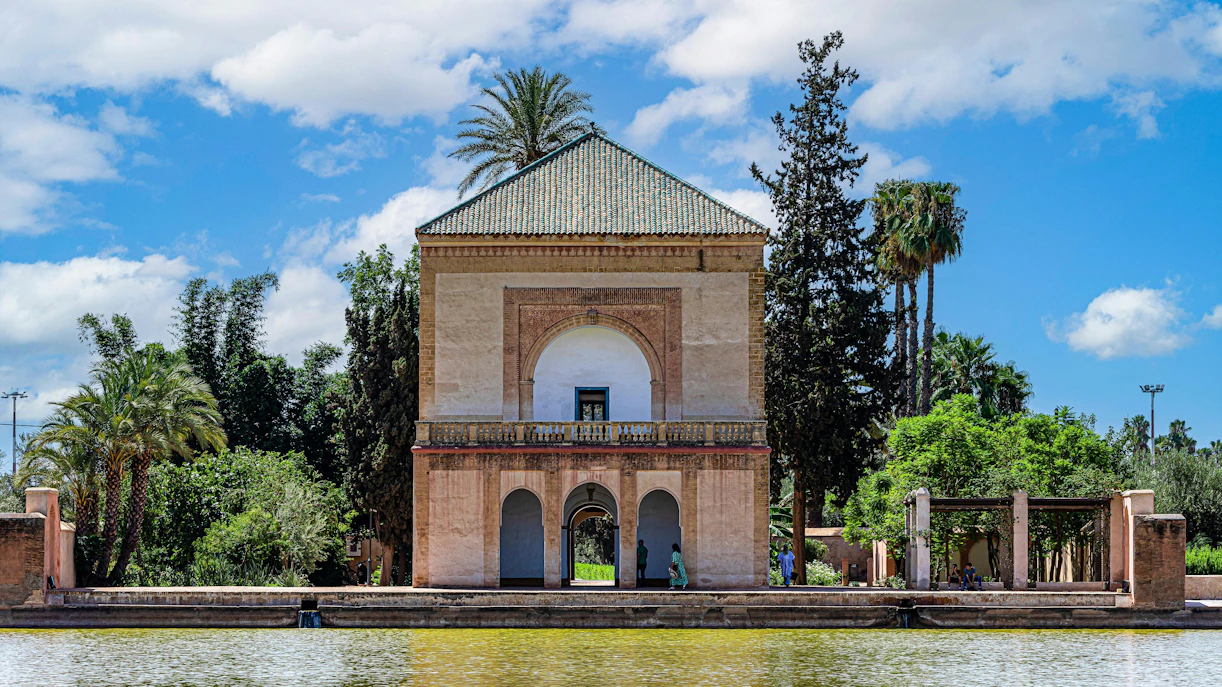
- Pavilion interior and balcony: A quick paid add-on with a staircase and higher viewpoint → mainly for the elevated angle over the water → allow 10–15 min.
Olive grove surroundings: Quieter open space beyond the headline photo spot → best for a slower stroll or short break → allow 10–20 min.
- Map: A Google Maps pin or offline city map → enough to get you to the main gate and pavilion route → download it before leaving the medina.
- Signage: Wayfinding is simple because the main path is obvious, but on-site interpretation is limited and won't tell you much about the history.
- Audio guide / app: Third-party app guides exist for visitors who want context, but most people can navigate the site perfectly well without one.
- Large outdoor POIs only: This is a compact open-air site rather than a trail network, so offline GPS is useful mainly for the taxi drop-off and return.
💡 Pro tip: Don't drift around the olive groves first if you're chasing the best photos — walk straight to the basin while the light is still working for you, then wander on the way back.
What is Menara Pavilion worth visiting for?
1/5
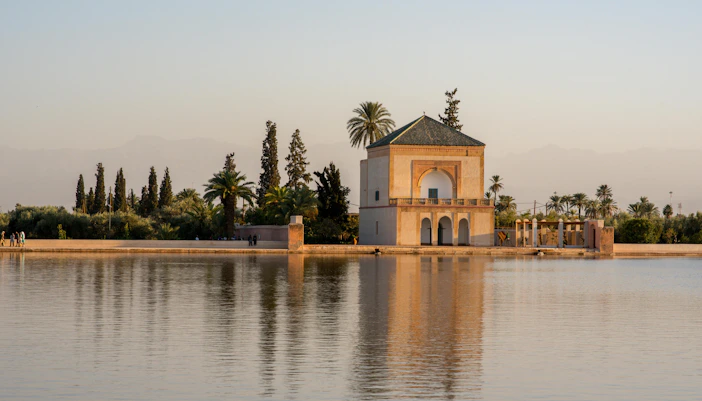
Menara Pavilion reflection
Era: 19th-century royal pavilion
The main reason most people come is the classic reflection of the green-roofed pavilion across the basin. On a calm morning, the symmetry is what makes the site feel memorable rather than merely pleasant. What many visitors miss is that the cleanest reflection often comes before the weekend crowds gather at the water's edge and disturb the surface.
Where to find it: Along the front edge of the large rectangular basin, facing the pavilion from the main approach path.
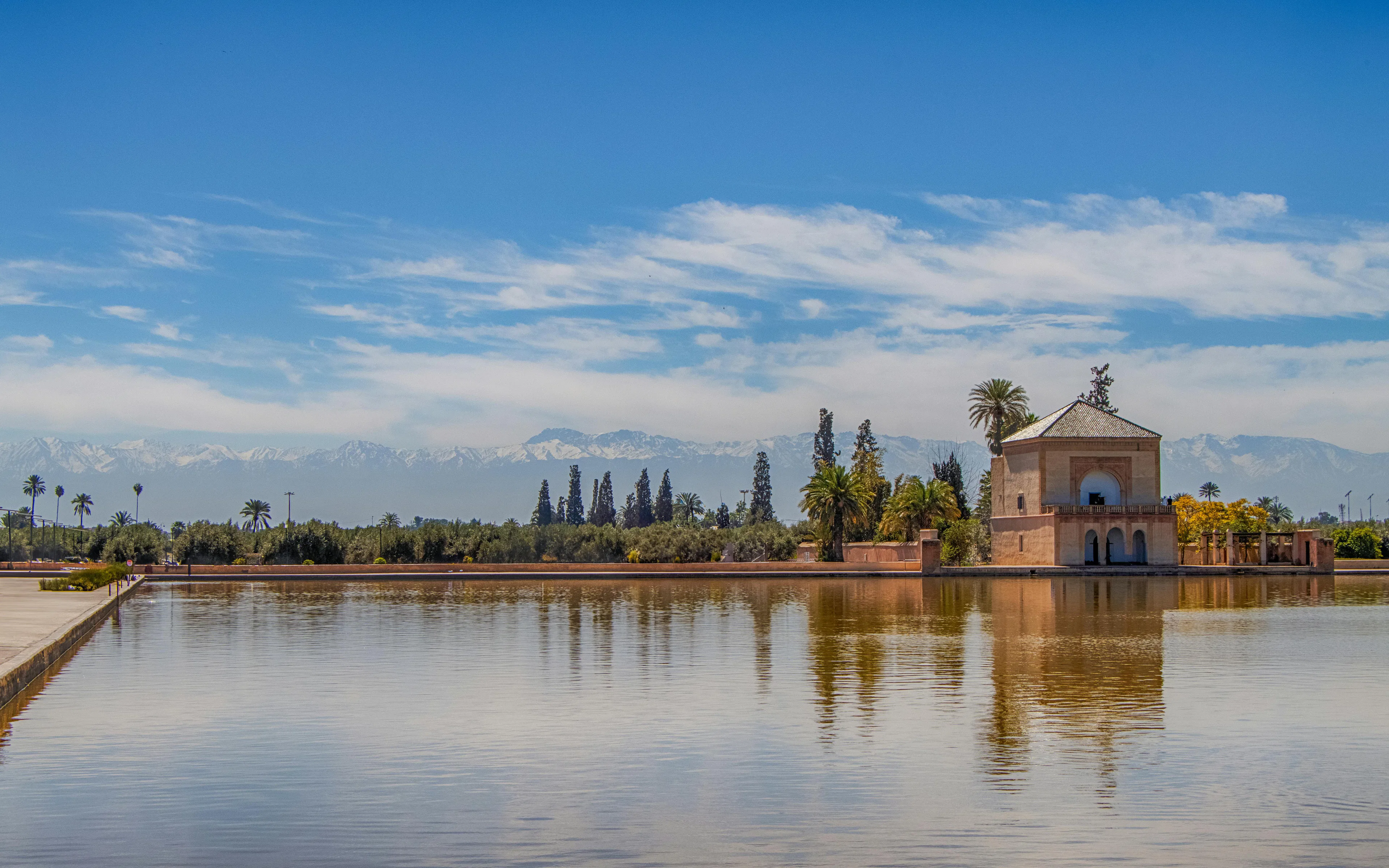
Atlas Mountain backdrop
View type: Long-distance mountain panorama
When the weather cooperates, the pavilion sits against one of Marrakech's most recognizable backdrops: the High Atlas Mountains. This is what turns Menara from a simple garden stop into a real photography moment. What people often underestimate is how quickly haze can wipe out the mountains, especially after the morning cool lifts.
Where to find it: From the basin's main viewing edge, looking past the pavilion toward the south on a clear day.
Pavilion balcony
Experience type: Elevated viewpoint
Inside the pavilion, the main reward is the upstairs balcony rather than the interior room itself. The structure is quite plain, so the value comes from the higher angle over the basin, olive grove, and city edge. Most people rush up, take one photo, and leave, but it's worth pausing long enough to look back across the wider garden setting.
Where to find it: Up the staircase inside the paid-entry pavilion beside the basin.
Olive grove atmosphere
Landscape type: Historic orchard garden
Menara is not a lush decorative garden in the Majorelle sense; it is a broad, sparse royal orchard, and that difference is part of the point. The long straight walk, open sky, and rows of olive trees create a quieter, more local feeling than many first-timers expect. What visitors often rush past is the contrast itself — this place works best as breathing space, not spectacle overload.
Where to find it: On the approach from the entrance to the basin and in the wider grounds around the pavilion.
Carp at the basin edge
Detail type: Small on-site moment
Near the water, large carp gather close to the stone edge and add a surprisingly lively detail to an otherwise still scene. Children usually notice them first, but adults often end up lingering there too. Because so many visitors arrive fixated on the mountain shot, they walk straight past one of the few genuinely playful moments on-site.
Where to find it: At the near edges of the reflecting basin, especially where people pause along the stone embankment.
Facilities and accessibility
- 🎒 Bags: Small day bags are easy to manage here, but there is no reason to bring large luggage because this is an exposed, walk-heavy stop.
- 🚻 Restrooms: Plan ahead before you arrive, because facilities on-site are limited and not the kind to rely on for a longer outing.
- 🍽️ Food and drink: The gardens are not a full meal stop, though you may find simple drink vendors nearby; carry your own water if you're visiting in warm weather.
- 🛍️ Shopping: This is not a gift-shop attraction, so don't expect a museum-style retail stop at the pavilion.
- 🪑 Seating / rest areas: Informal resting spots exist around the basin edge and under parts of the grove, but shade is limited and formal seating is minimal.
- 💧 Water: Bring a bottle with you, because the exposed approach can feel much hotter than the short walking distance suggests.
- 🩺 Comfort: Summer heat is the biggest practical issue here, not route complexity, so sun protection matters more than gear.
- ♿ Mobility: The grounds are broadly flat and manageable for many visitors, but the long exposed walk, uneven dusty surfaces, and stairs inside the pavilion make it less comfortable than the simple layout suggests.
- 👁️ Visual impairments: Wayfinding is straightforward because the route is mostly direct, but on-site interpretation is very limited, so visitors who want context may do better with a companion or pre-downloaded guide.
- 🧠 Cognitive and sensory needs: Weekday mornings are the easiest window for a calm visit, while weekend afternoons are livelier with family groups and occasional aircraft noise from the nearby airport.
- 👨👩👧 Families and strollers: The main approach is open and mostly flat, but the pavilion interior includes stairs and the site offers very little shade for babies or young children in hot weather.
Menara works best for children as a short outdoor stop rather than a long attraction day, with the fish, open space, and photo-friendly basin doing more of the work than formal activities.
- 🕐 Time: Around 20–40 min is realistic with young children, and the basin plus the carp are usually the parts that hold attention best.
- 🏠 Facilities: Family amenities are limited, so treat Menara as a quick outdoor visit rather than a place built around stroller services, play areas, or long comfort stops.
- 💡 Engagement: Let children look for the pavilion reflection and the fish at the basin edge, because those are the easiest details to turn into a simple game.
- 🎒 Logistics: Bring water, a hat, and sunscreen, and avoid the hottest part of the day because the walk in feels longer when there is little shade.
- 📍 After your visit: If energy is still high, use Menara as the quiet part of the day and move on to a second Marrakech stop rather than trying to stretch the gardens into a full family outing.
Rules and restrictions
What you need to know before you go
- Entry requirement: The gardens are free to access, but entering the pavilion requires a separate paid ticket.
- Bag policy: Travel light, because this is a short open-air visit and large bags only make the exposed walk more uncomfortable.
- Dress guidance: There is no strict enforced dress code like at a religious site, but modest, sun-smart clothing is the most practical choice.
- Re-entry policy: The gardens are a flexible open-air stop, so this isn't the kind of attraction where a strict one-way visit shapes your day.
Not allowed
- 🚫 Food and drink: Casual snacking in the wider gardens is common, but keep the basin and pavilion area clean and don't treat the monument zone like a picnic spot.
- 🚬 Smoking / vaping: Avoid smoking around the pavilion and shared viewing areas, especially when families are gathered nearby.
- 🐾 Pets: Don't assume pets are appropriate in the pavilion area; service-animal needs are best handled conservatively and respectfully on arrival.
- 🖐️ Behavior: Don't climb on the basin edges or treat the pavilion as a photo prop, because the site is a protected heritage space, not an interactive set.

Photography
Photography is one of the main reasons to visit, and outdoor personal photos around the basin are the norm. Be respectful when local families are picnicking nearby, avoid blocking narrow viewing spots, and don't assume every person in the frame wants to be photographed. Flash offers little value here, and tripods or bulky setups are best avoided when the site is busy.
Good to know
- Crowd pattern: Weekend afternoons feel more like a local park than a quiet monument stop, which can be either a plus or a minus depending on what you want from the visit.
- Weather reality: A clear mountain backdrop is never guaranteed, so treat the famous view as weather-dependent rather than automatic.
Practical tips
- Booking and arrival: You usually don't need to pre-book Menara Pavilion, because on-site waits are often minimal; what matters more is arriving before about 10am if clear views are your priority.
- Pacing: Walk straight to the basin first, then decide whether the pavilion interior is worth the extra time for you, because the exterior view does most of the heavy lifting.
- Crowd management: Pick a weekday morning for the quietest visit, or go late afternoon only if you value softer light more than solitude and don't mind local family crowds.
- What to bring: Carry water, sunglasses, and sun protection, because the main approach is exposed and even a 30 min visit can feel draining in summer.
- Photography: If the water is still, take your reflection shots before you circle the basin, because later foot traffic along the edges can break the symmetry.
- Transport: A taxi is usually the least stressful option from the medina or Hivernage, especially if you're pairing Menara with a second stop the same morning.
- Expectations: Don't plan this like Majorelle Garden or a museum visit; Menara works best as a scenic pause, not as a long, content-heavy attraction.
- Food and drink: Eat before you come or plan a proper meal after, because Menara is better for a short stop and water break than for lunch.
What else is worth visiting nearby?
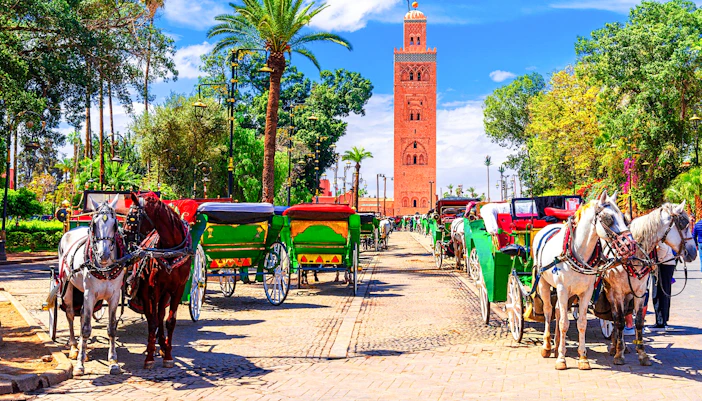
Commonly paired: Koutoubia Mosque
Distance: About 3 km — roughly 10–15 min by taxi
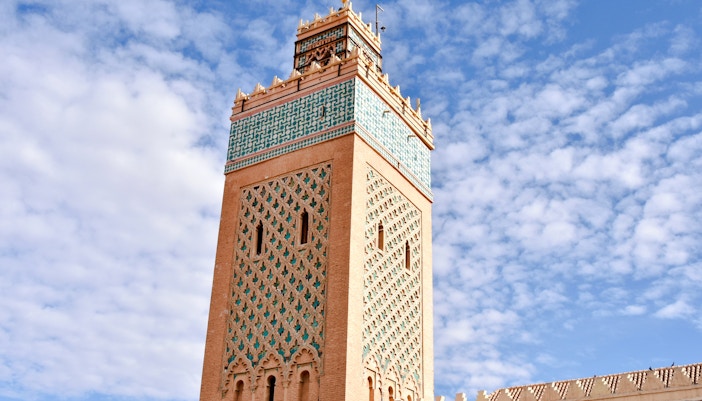
Why people combine them: It makes an easy half-day contrast: Menara for open space and views, then Koutoubia for a central Marrakech landmark on the way back toward the medina.
Book / Learn more
Commonly paired: Jardin Majorelle
Distance: About 4 km — roughly 15 min by taxi
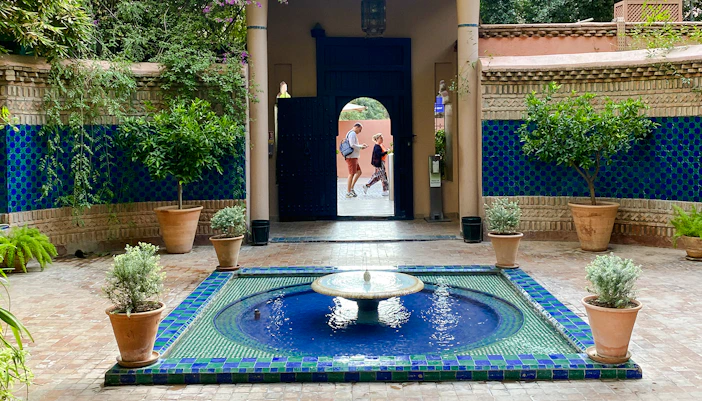
Why people combine them: People often pair the two to compare Marrakesh's most famous garden experiences, with Menara giving you space and landscape while Majorelle offers a much more designed, curated visit.
Also nearby
Agdal Gardens
Distance: About 6 km — roughly 15–20 min by taxi
Worth knowing: This is another historic orchard-and-garden setting, so it suits travelers who want more of Marrakech's quieter green spaces rather than another museum stop.
Saadian Tombs
Distance: About 4 km — roughly 15 min by taxi
Worth knowing: This is a much denser, more architectural visit, so it pairs well if you want Menara to be the calm outdoor part of a broader sightseeing half-day.
Eat, shop and stay near Menara Pavilion
- On-site: There is no dependable full-service café at the pavilion itself, so think of Menara as a scenic stop rather than a meal destination.
- Hivernage cafés and restaurants (short taxi ride, Hivernage area): A better fit for a pre-visit coffee or a proper post-visit meal, especially if you want shade, restrooms, and air-conditioning after the exposed walk.
- M Avenue dining area (short taxi ride, Hivernage): Useful if you're linking Menara with modern Marrakech, with several easy lunch options in one zone rather than one isolated stop.
- Medina return meal (10–15 min by taxi, central Marrakesh): Often the smartest plan if Menara is just one stop in your day and you want more food choice plus easier onward sightseeing.
- 💡 Pro tip: Visit Menara first, then eat afterward — midday food is much more comfortable in Hivernage or back in the medina than trying to build your meal around the gardens.
- Menara visit itself: This is not a shopping-focused stop, and there is no major gift-shop culture built around the pavilion.
- Hivernage / M Avenue area: If you want a modern retail stop after Menara, this nearby zone makes more sense than expecting shopping at the gardens themselves.
The Menara side of town is better as a stop than as the center of a first-time Marrakech stay. It is practical if you want easier road access, more modern hotels, and a quieter base than the medina, but it lacks the everyday atmosphere that many visitors come to Marrakech for.
- Price point: The nearby Hivernage side generally skews more mid-range to upscale than budget.
- Best for: Visitors who want easier taxi logistics, modern hotels, and a calmer base after busy medina days.
- Consider instead: Stay in the medina for atmosphere and walkable old-city sights, or choose Hivernage if you want hotel comfort while still keeping Menara within a short taxi ride.
Frequently asked questions about visiting Menara Pavilion
Most visits take 20–60 min. If you're only coming for the basin, the pavilion exterior, and a few photos, 20–30 min is enough, but allowing closer to 1 hour gives you time to go inside the pavilion, walk farther around the water, and enjoy the gardens without rushing.
No, most visitors do not need to book Menara Pavilion in advance. Walk-up waits are usually short, and this is not a high-pressure timed-entry attraction. Pre-booking makes more sense if you specifically want a digital guide or prefer arriving with everything sorted already.
Usually no, skip-the-line adds very little value here. Menara is not known for long entrance queues, and the time saved is often only a few minutes. Your visit will be shaped much more by weather, light, and crowd patterns than by the purchase line.
Arrive as early in the day as your schedule allows, even though timed entry is not usually the main issue here. The best window is often between 8am and 10am, when temperatures are lower, the paths are quieter, and the Atlas Mountains have the best chance of being visible.
Yes, a small bag or backpack is fine, but travel light. Menara is a short, exposed visit with little reason to carry bulky gear, and a large bag only makes the hot walk less comfortable. Bring the essentials: water, sunscreen, sunglasses, and your camera or phone.
Yes, personal photography is one of the main reasons people visit Menara Pavilion. The basin and pavilion exterior are the key photo spots, but be respectful when local families are nearby and don't assume strangers want to appear in your shots. Tripods and bulky setups are best avoided when the site is busy.
Yes, Menara works well as a group stop, and many Marrakech city tours include it for exactly that reason. The trade-off is that group visits are usually brief, often around 15–20 min on-site, so independent visitors get more flexibility if they want to wait for better light or stay longer.
Yes, Menara can suit families, but best as a short outdoor stop rather than a full attraction day. Children usually enjoy the open space, the fish by the basin, and the easy walking layout. The main drawback is the lack of shade, which makes timing and sun protection much more important.
Partly, but not fully in the easiest sense. The grounds are mostly flat, which helps, but the main walk is exposed and some surfaces are dusty or uneven. The pavilion interior includes stairs, so even visitors who manage the gardens comfortably may find the interior viewpoint harder to access.
Yes, but Menara itself is better for a quick drink than a proper meal. You may find simple vendors nearby, but most visitors are better off eating before they arrive or heading to Hivernage, M Avenue, or back toward the medina for more reliable options after the visit.
The gardens are free, but the pavilion interior is not. Foreign adult entry to the pavilion is generally MAD 60, with reduced pricing for children aged 7–13. If you're happy with the exterior views alone, you can still enjoy the main setting without paying for the indoor portion.
Wear light, modest, sun-smart clothing. There is no strict religious dress code enforced here, but this is still a public heritage site in Marrakech, and the bigger issue is practicality: closed or supportive shoes, a hat, and sun protection matter far more than dressing up for a formal indoor attraction.
