- Operating hours: Official hours are not consistently published; recent traveler sources place access from morning to early evening.
- Visit length: Most self-guided visits take 30–60 minutes; quick photo stops often finish in 20–30 minutes.
- Best time of day to go: Early mornings are quietest and usually offer the clearest Atlas Mountain backdrop.
- Late-day timing: Sunset brings warmer light and stronger reflections, but weekend traffic and crowds rise noticeably.
- Best season or month to visit: Spring and autumn usually give the best balance of clear skies, softer light, and manageable heat.
How Headout makes choosing experiences effortless
We curate the best ways to experience
We research and organise all unique experiences - from tickets to tours to special combos - so you get all the choices without the clutter.
We partner with the best
Every supplier is vetted for quality, reliability, and value so you only get top rated experiences. No surprises, no disappointments.
All the best options, in one place
Each experience is thoughtfully organised to give you maximum availability, great value and an easy way to choose.
Book with complete peace of mind
Free cancellations, Flexible payments, and 24/7 support - thoughtfully designed for flexibility, assurance, and total peace of mind.
Slide 1 of 41/4
Slide 1 of 4


Quick overview
- Ways to experience: Choose a self-guided pavilion visit with app commentary. Separate city tours usually treat the site as a short stop.
- Additional access: Includes pavilion entry and garden access. Gardens are free, so the paid extra is interior access plus app-based history.
- Unique experiences: The audio guide adds context missing on-site. Most visits take 30 to 60 minutes and focus on the basin, balcony, and reflections.
- When to book: Book ahead for convenience, not major queue savings. Spring, autumn, weekend afternoons, and sunset hours are the busiest.
- Good to know: Expect a 500m walk from the gate with little shade. Wind blurs reflections, and midday haze often hides the Atlas Mountains.
Things to know before booking your Menara Pavilion tickets
Booking window
- This is not a heavy sell-out attraction. Most visitors buy on site, and ticket lines are typically under 10 minutes; prebooking mainly helps if you want the audio guide ready.
What’s included
- The current live option includes pavilion entry plus a third-party smartphone audio guide. It is not an on-site device or staff-led service, and Menara Gardens access itself is free.
Entrances & flow
- Enter through Menara Gardens, then walk about 500m to the basin and La Menara Pavilion. Prebooking only skips the ticket-buy step; any guard check still applies.
Ways to explore
- La Menara Pavilion works best as a 30–60 minute self-paced stop. The audio guide gives you important historical context, since on-site signage is limited.
Policies & rules
- Paths are mostly flat but partly gravel, so wheelchair access is partial near basin edges. Stay on marked paths and out of the water; this is a scenic outdoor stop, not an exhibit-led visit.
Highlights of your Menara Pavilion experience
The mirrored basin and green roof
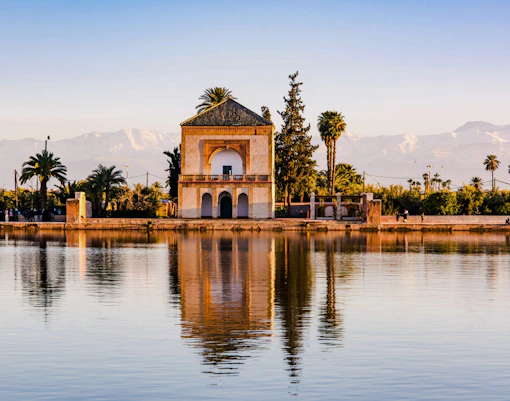
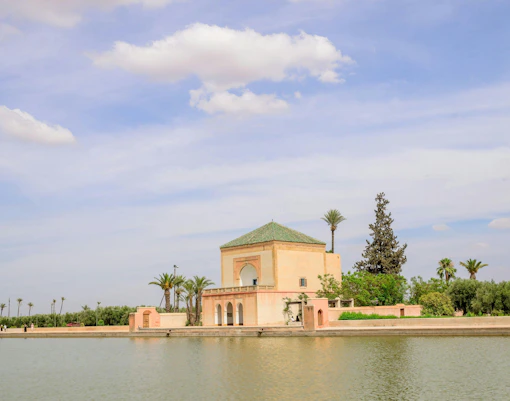
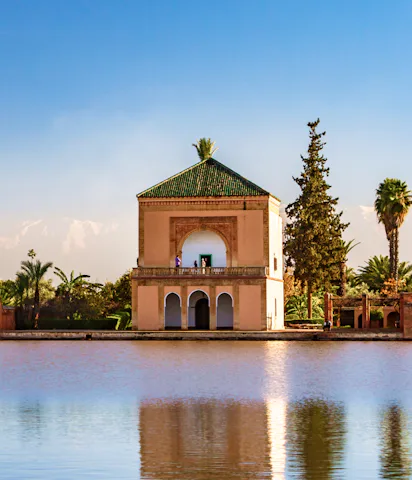
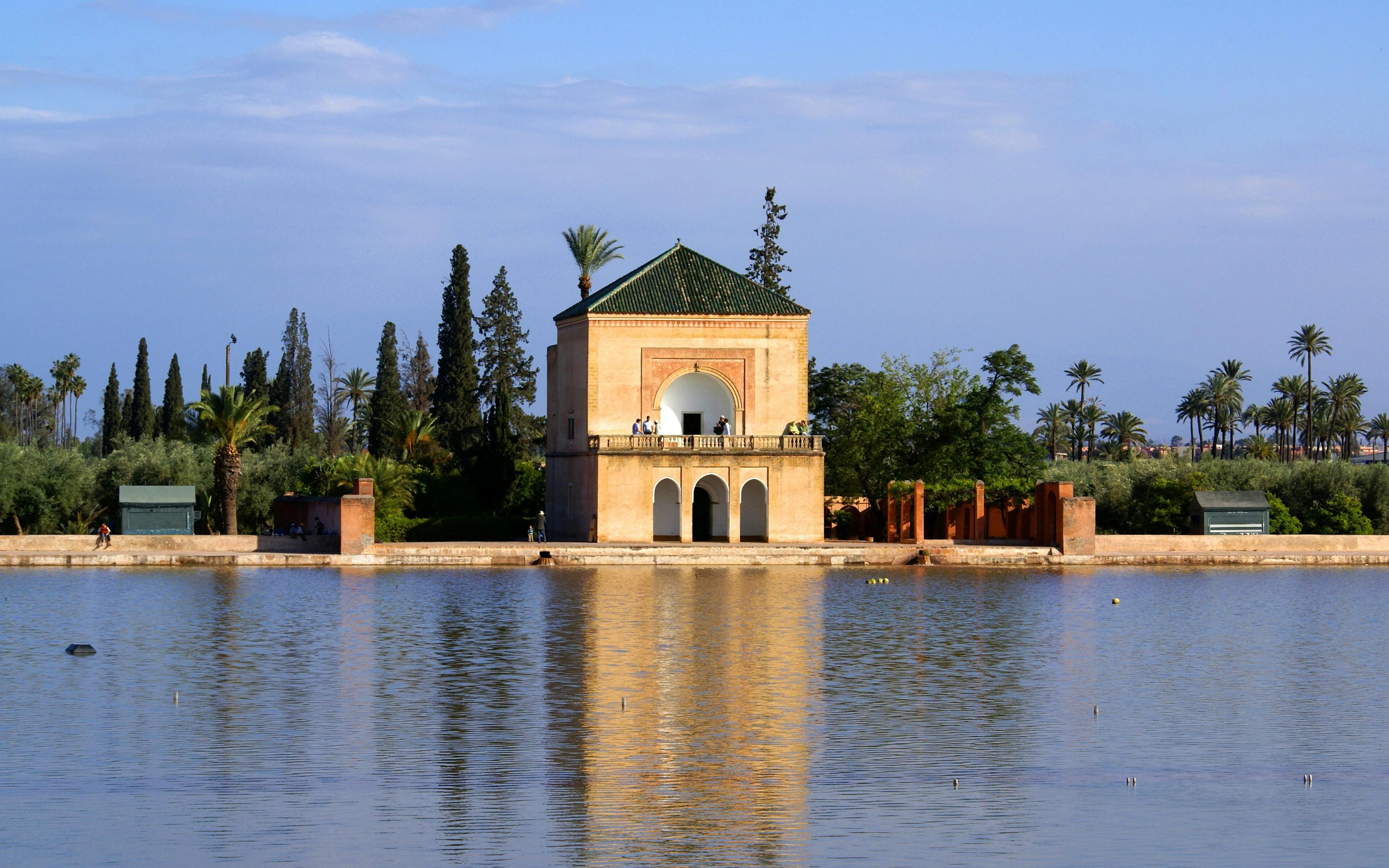
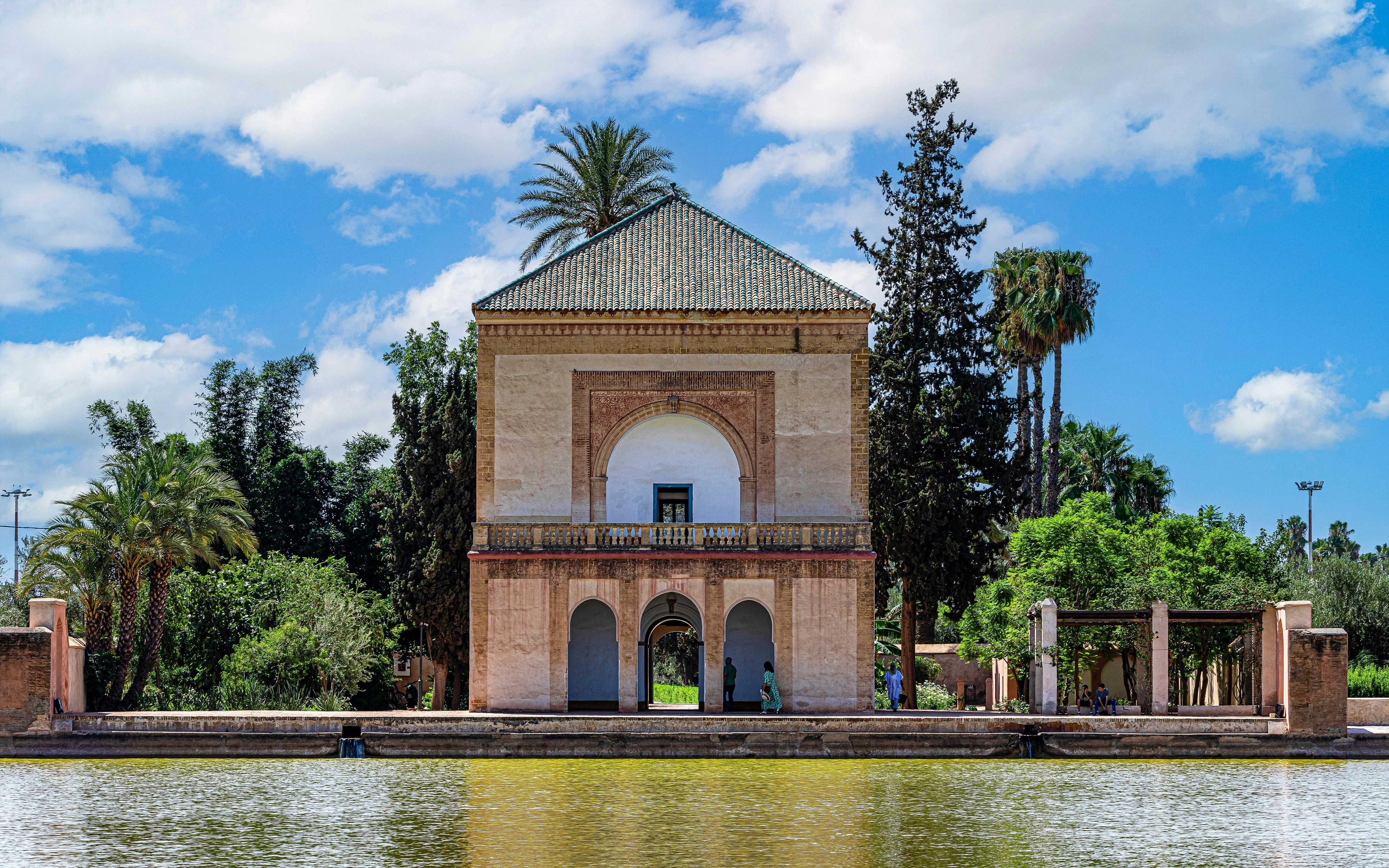
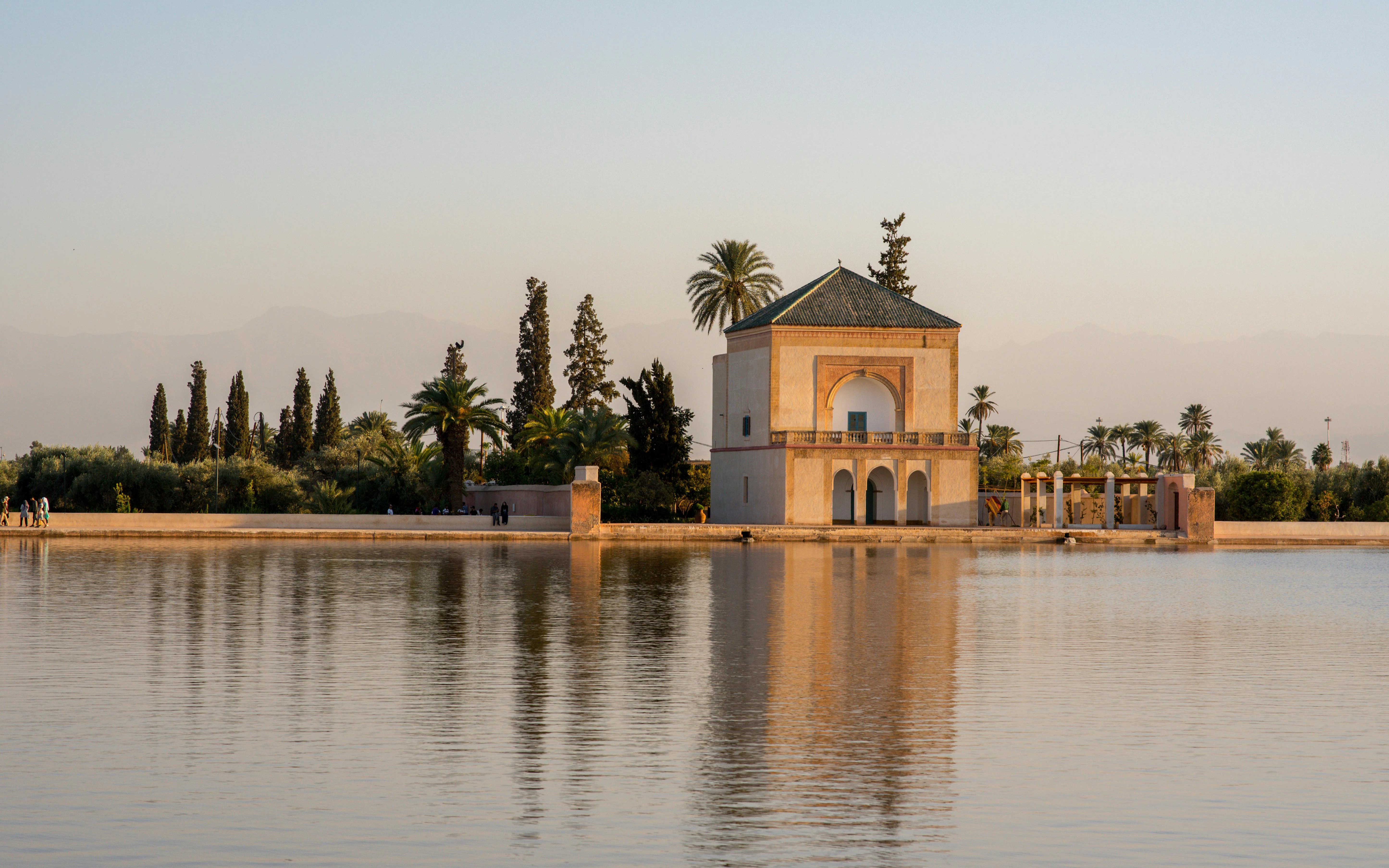
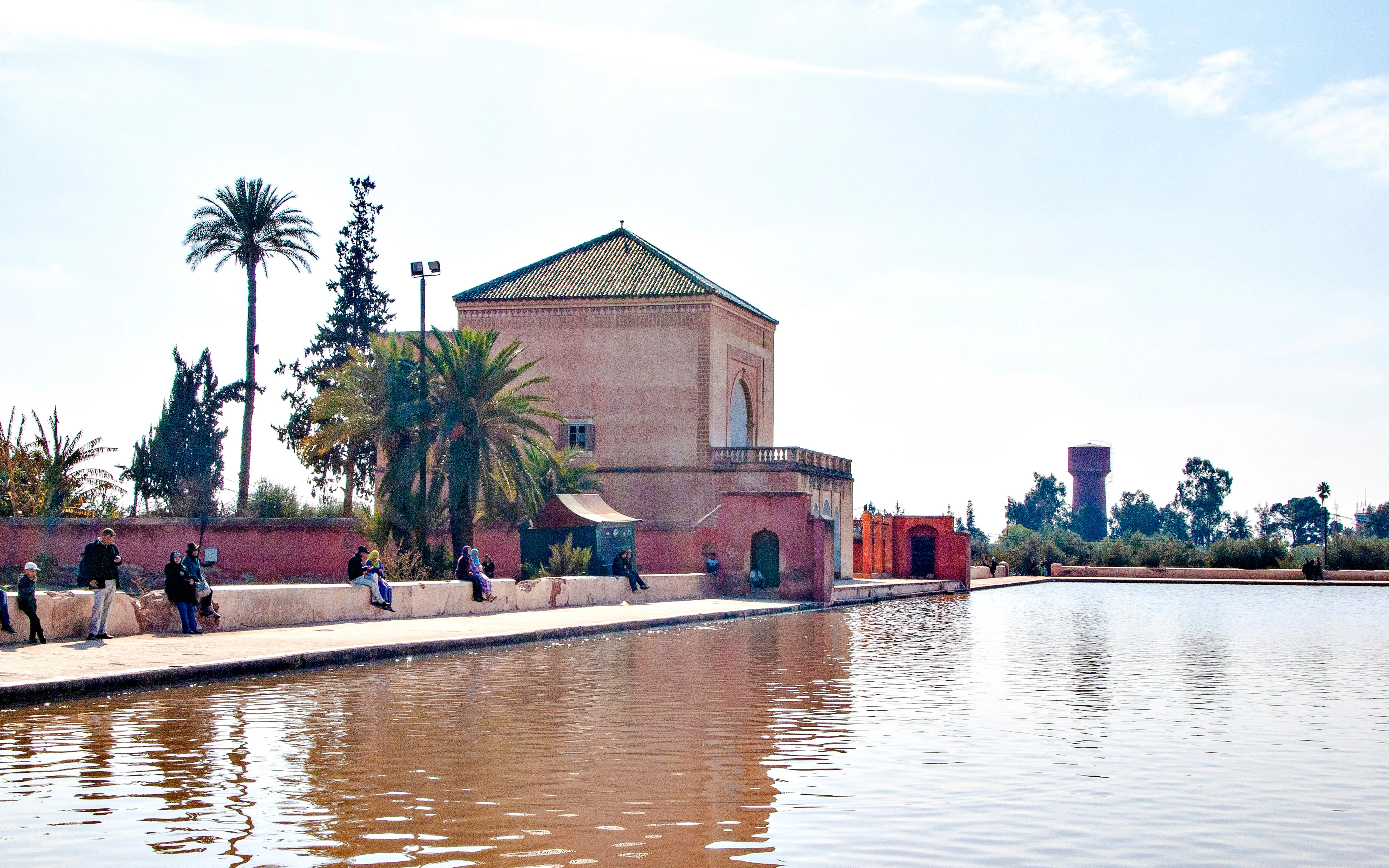
From the basin’s stone edge, the pavilion reads almost like a double image: ochre walls above, green-tiled roof and arches repeated below in the water. When the surface stays still, the symmetry sharpens; when a breeze passes, the reflection loosens into moving bands of color.
What to see at the Menara Pavilion
1/5
Menara Gardens
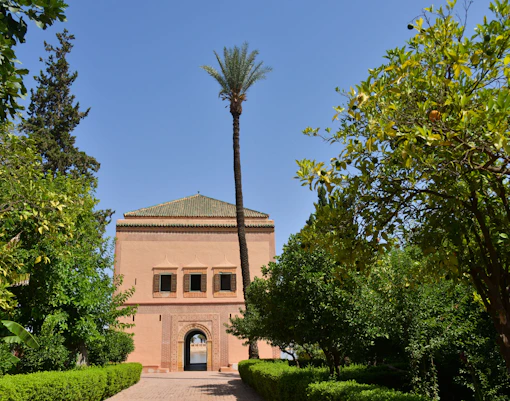
West of Marrakesh’s medina, this broad open-air garden frames the visit with flat paths, olive plantings, and long approach views. From the main gate, the central axis leads straight toward the basin, with the pavilion appearing gradually beyond the trees.
Olive Groves
Orderly rows of olive trees define most of the site, showing Menara’s working orchard character rather than formal flower beds. The grove flanks the approach from the entrance and continues around the water, with quiet detours away from basin edge.
Reflecting Basin
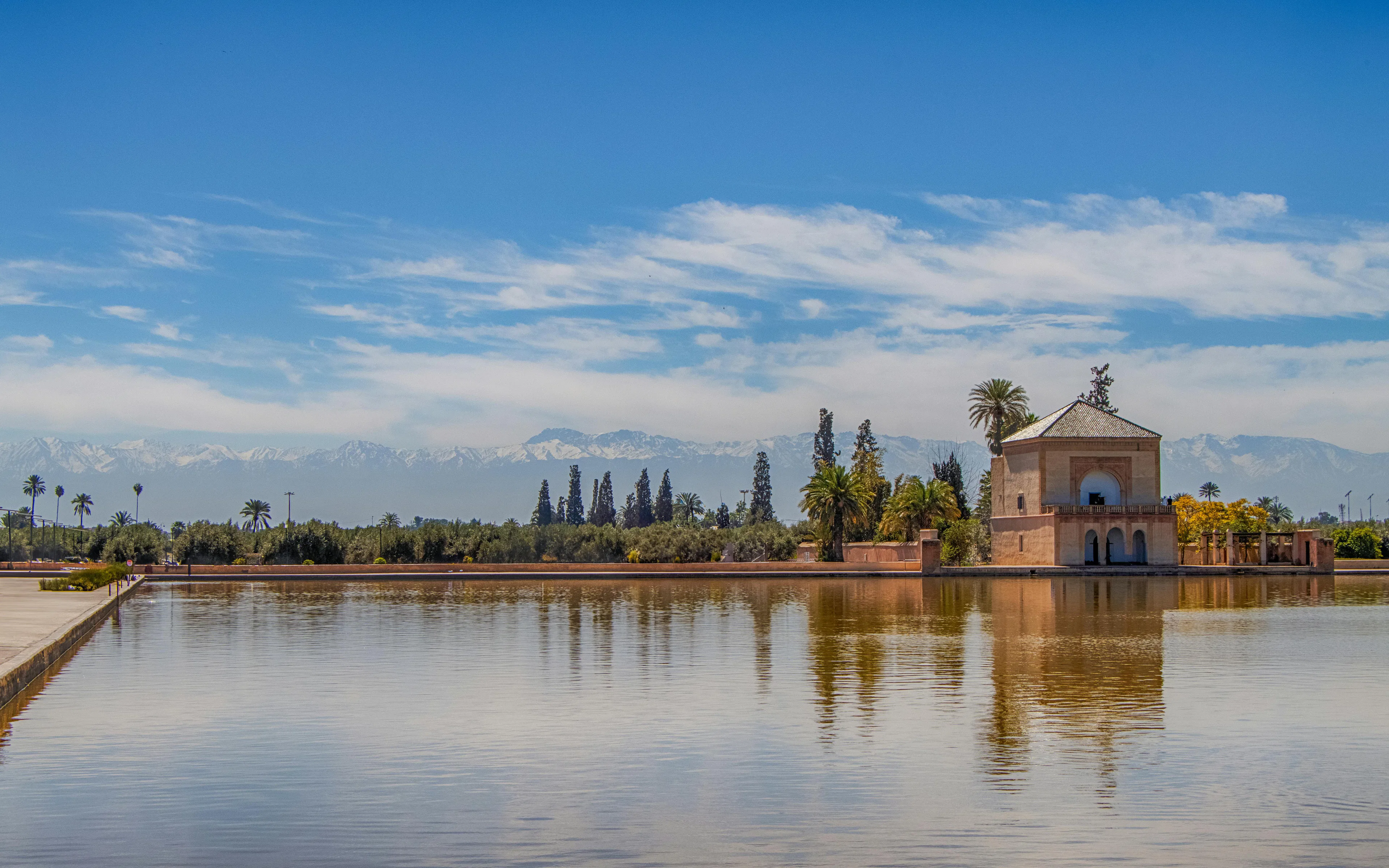
The large rectangular basin anchors the visit with water, stone embankments, and long sightlines toward the pavilion. Most visitors pause along the near edge first, then continue around the perimeter for changing reflection angles and wider mountain alignment.
Menara Pavilion
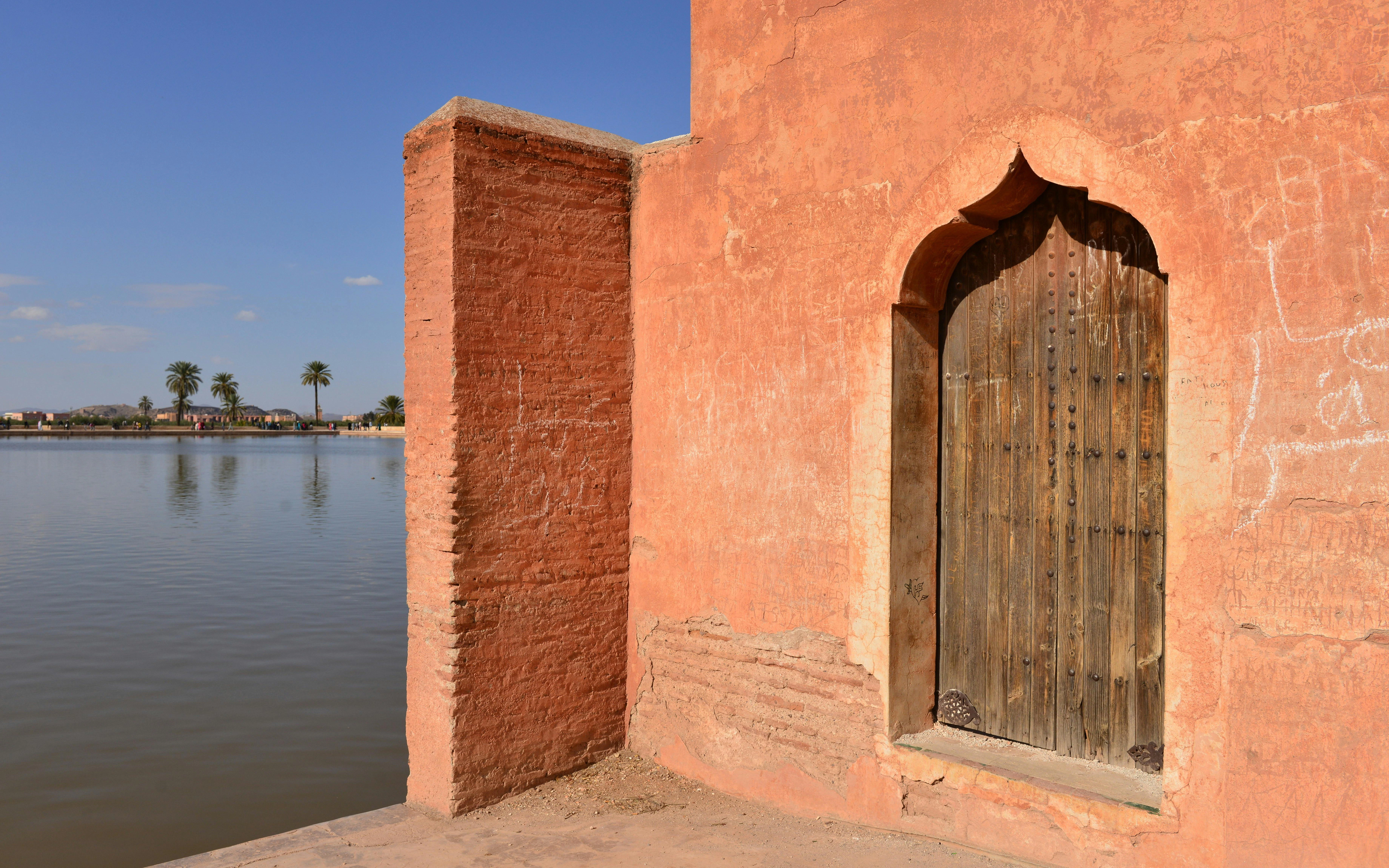
The green-tiled pavilion stands on the basin’s far side and serves as the site’s main architectural stop. Visitors reach it after the axial walk, then move through a simple interior before looking back across water, groves, and the city edge.
Basin Perimeter
This short walking circuit follows the rectangular water’s edge, changing the pavilion’s proportions and reflection angles as you move. Starting near the entrance side, it opens into side-on views, with olive rows and, on clear days, the Atlas line behind.
Plan your Menara Pavilion experience

Timings & duration

Starting point & meeting area
- Location: Menara Pavilion sits inside Menara Gardens, west of Marrakesh’s medina in a large olive grove.
- Main entry: Most visits begin at the Menara Gardens main gate, used by taxis and guided tours.
- Address: Menara Gardens, Marrakesh, Morocco.
- Find on Maps
Getting there:
- From the medina: Taxi rides usually take 15–25 minutes, depending on time of day.
- From Gueliz or the airport: Gueliz takes about 10–15 minutes; Marrakesh Airport usually takes 10–20 minutes.
Practical considerations
- Physical effort: The route is mostly flat, but the approach includes a roughly 500 m walk with little shade.
- Ground surface: Expect gravel and hard-packed garden paths rather than smooth museum-style flooring.
- Weather dependency: Wind breaks the mirror-like water reflection; midday haze often hides the Atlas Mountains.
- Crowd pattern: Weekday mornings are calmer; weekends and late afternoons draw more local families and tour stops.
- Age or participation constraints: The site is family-friendly, but the open basin edge calls for close child supervision.
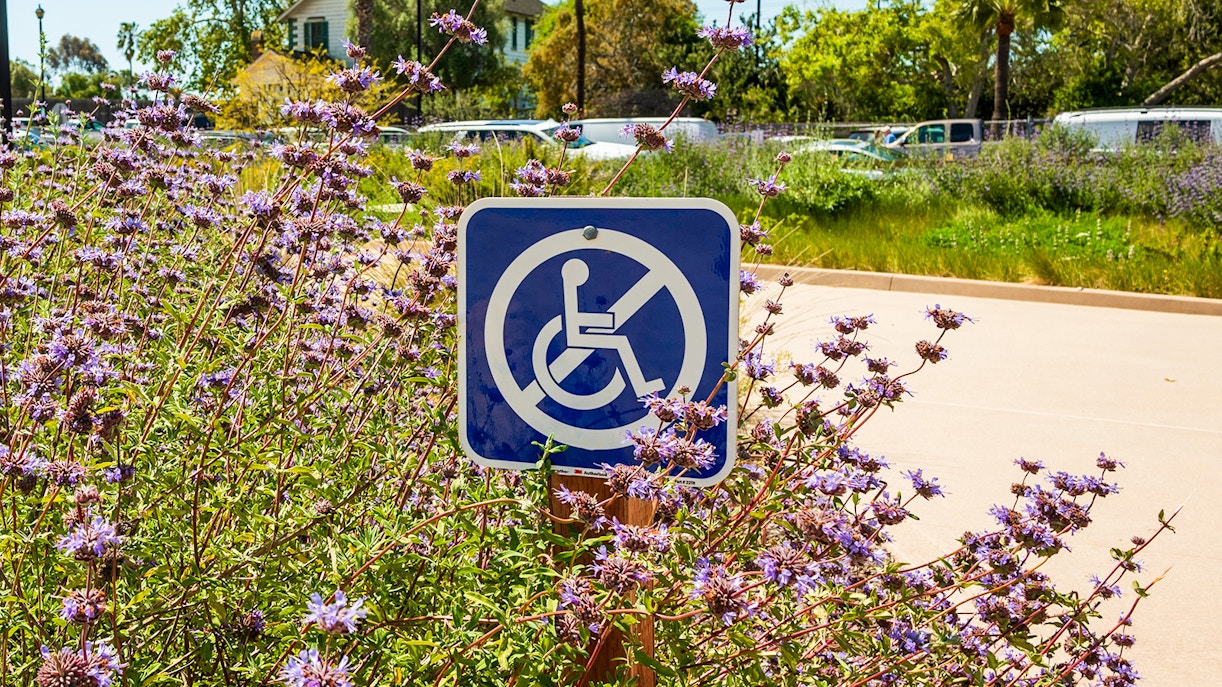
- Accessibility notes: Terrain is level overall, though gravel and uneven basin edges can add wheelchair friction.
Facilities
- Seating: Basic rest points are available around the gardens, but seating is limited near the main photo spots.
- Shade: Shade is patchy; the olive groves help in parts, but the main approach stays quite exposed.
- Food and drink: No reliably documented full-service café operates inside the gardens; carrying water is the safer plan.
- Restrooms: Restroom availability is not consistently confirmed in reliable sources, so a stop beforehand is sensible.
- On-site information: Signage is limited, making the digital audio guide useful for historical context and orientation.

Clothing & carry-ons
- Clothing: Light, modest clothing works best for an open-air heritage site with strong sun exposure.
- Footwear: Comfortable walking shoes handle gravel paths better than flat sandals or slippery soles.
- Sun protection: A hat, sunglasses, and sunscreen help most from late morning through mid-afternoon.
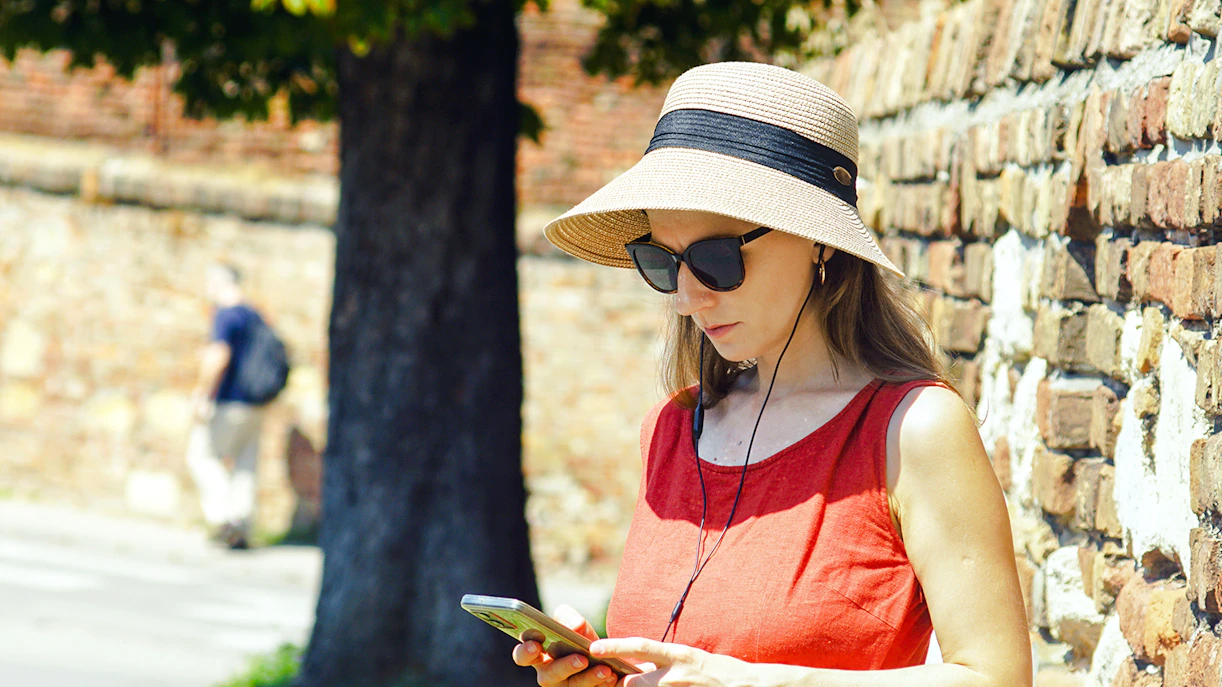
- Audio guide essentials: A fully charged phone, downloaded ticket, and headphones are important for the app-based guide.
- Bag choice: A small day bag is easiest; bulky luggage feels awkward on open paths and around the basin.
Tips & guidelines
- Expect a 500 m walk from the gate with almost no shade, so wear a hat, sunglasses, and breathable layers, especially in summer’s midday heat.
- Paths are dusty gravel, not paved promenades; choose closed shoes or sturdy sandals you don’t mind dirty, and skip heels or very white sneakers if you care about stains.
- For clear Atlas Mountain backdrops and sharp reflections, aim for early morning in cooler months or calm, low-wind evenings; summer middays often mean harsh glare, haze, and choppy water.
- Weekend late afternoons attract many local families picnicking and kids playing; it’s lively but less tranquil, so choose a weekday morning if you prefer quiet photos and open space.
- If you’re using a Menara digital audio guide, download the app and tour offline on hotel Wi‑Fi, and bring headphones plus a power bank to avoid battery stress mid-visit.
- Supervise children near the basin edge and stick to paths; locals feed fish with bread, but avoid throwing plastic or wrappers, and keep drones packed as restrictions are common.
Frequently asked questions about Menara Pavilion tickets
Menara Gardens are free to enter, while La Menara Pavilion entry is usually ticketed. The Headout variant bundles pavilion admission with a digital audio guide. Gate policies can vary, so check your ticket details and any posted notice on arrival.
This ticket includes entry to the pavilion plus a smartphone-based audio guide about Menara’s history and setting. It does not include a live guide or on-site audio devices. Bring your own phone and headphones for the smoothest experience.
No. The Menara digital audio guide is a third-party app, not a service provided by pavilion staff. On-site teams generally handle entry only, so download instructions and access support come from your booking confirmation rather than from the garden.
Most self-guided Menara Gardens visits take 45 minutes to 1 hour. If you only want the classic pavilion photo, 20–30 minutes can be enough. On guided Marrakech city tours, Menara is often just a 15–20 minute stop.
For clearer Atlas views and quieter paths, aim for early weekday mornings. Sunset brings warmer light and good reflection photos, but also heavier traffic and more local visitors. Midday, especially in summer, often means harsher light, heat, wind, and haze.
Usually, not for time savings alone. Menara Pavilion queues are generally short, and pre-booking mostly skips the ticket-buy step. Any guard or ticket check still applies, and the actual time saved is often under 10 minutes on ordinary days.
Taxi is the simplest option for most travelers. Expect about 15–25 minutes from the Medina, 10–15 minutes from Gueliz, and 10–20 minutes from Marrakesh Airport. Walking is practical only from closer western districts and is less appealing in the heat.
Menara Gardens themselves are free, but foreign adult entry to the pavilion was MAD 60 as of June 2024. Foreign children aged 7–13 were MAD 30. Prices can change, so it’s smart to check the latest rate before visiting.
Accessibility is partial. The garden is mostly flat, but gravel paths and uneven basin edges can make movement harder. The pavilion’s upper viewing area is reached by stairs, so travelers needing step-free access may prefer staying on the main garden paths.
Yes, if you keep expectations realistic and time the visit well. It’s a short, open-air stop with little shade and a roughly 500 m walk to the basin. Bring water, avoid the hottest hours, and supervise children closely near the water’s edge.
Wear light, modest clothing, comfortable walking shoes, and sun protection. A hat, sunglasses, and water matter more here because shade is limited. If you booked the Menara audio guide, bring a charged phone and headphones before you arrive.
Photography is one of the main reasons travelers visit, and the best shots depend on calm water and clear skies. Drone use is generally restricted in heritage zones and can be inconsistently enforced, so it’s safest to assume drones aren’t permitted.
Don’t plan a meal around Menara Gardens. Facilities are basic, and food options inside the gardens are limited. Small vendors may appear near the entrance at some times, but they’re inconsistent. It’s easier to eat in central Marrakech before or after visiting.
Flexibility depends on the ticket you book. Some Menara Gardens tickets may allow cancellation or date changes, while others may not. Check the policy on your booking page before payment, especially if your Marrakech schedule or weather plans may change.
Usually, it works better as a short add-on than a half-day plan. Menara is strongest as a scenic photo stop or quiet break between bigger Marrakesh sights. If you expect museum-style interiors or lots of activities, it can feel underwhelming.