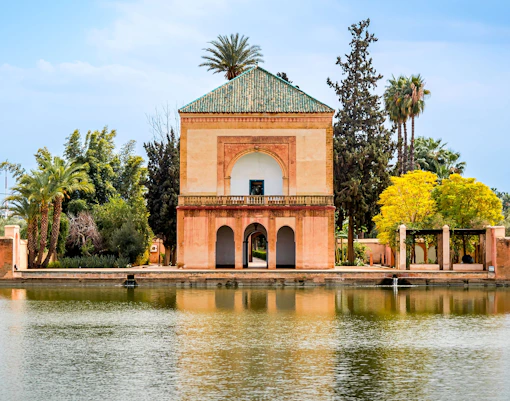
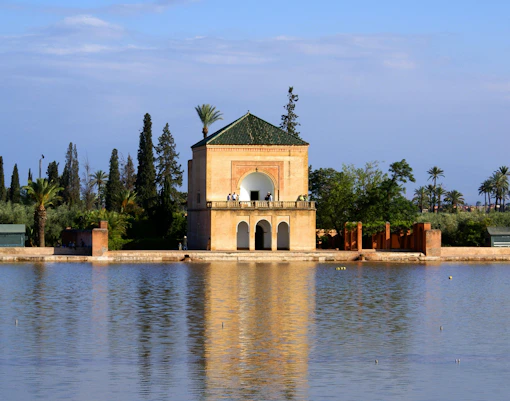
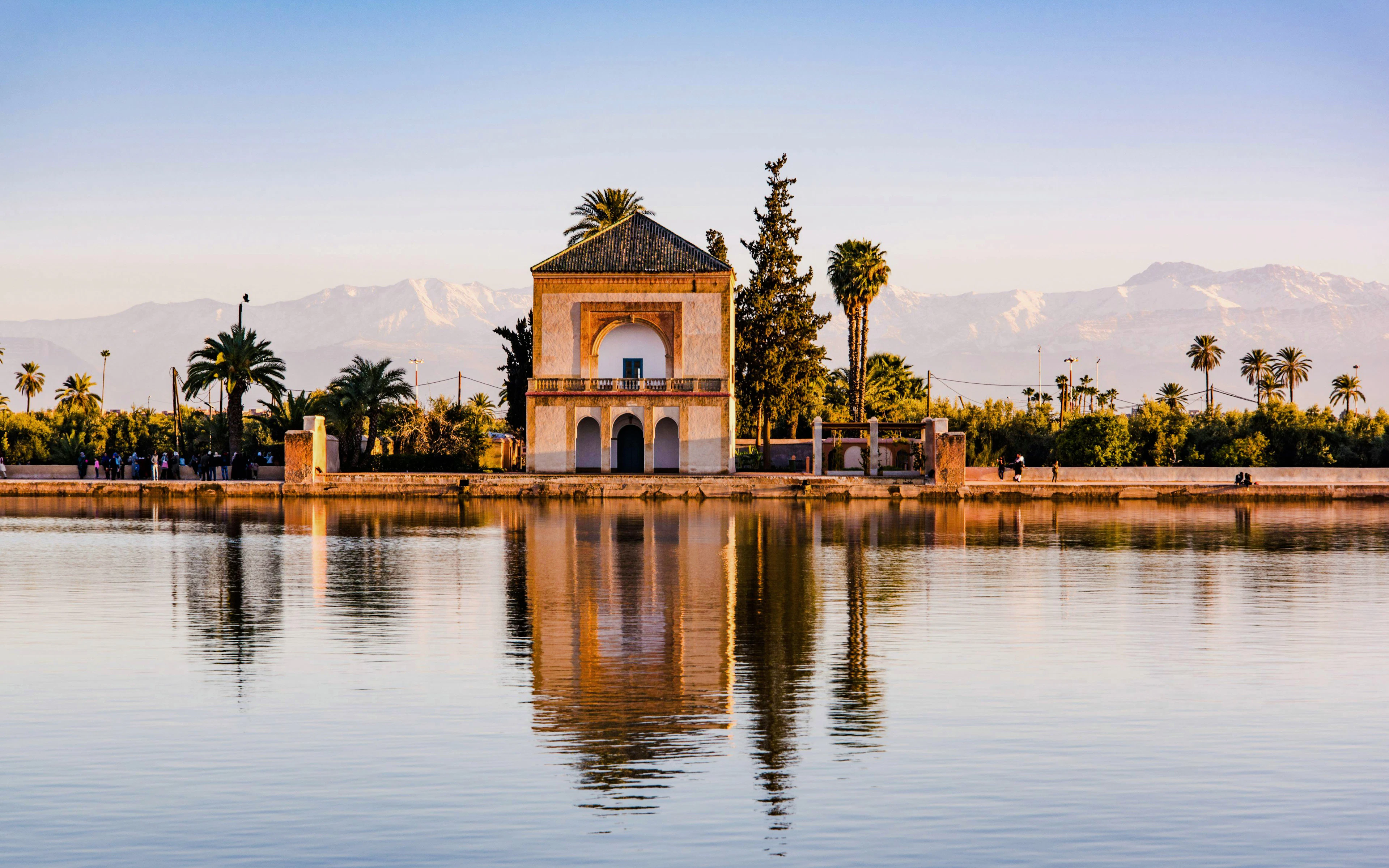
Visit early in the morning for cooler temperatures, softer light, and fewer visitors along the basin. Late afternoon and sunset offer beautiful reflections of the pavilion and, on clear days, the Atlas Mountains, making this the most popular photography period.
Quick overview
- Entry: Free. No ticket required.
- Ticket needed for Menara Pavilion: Yes. The historic pavilion requires a separate admission ticket
- Visit duration: 30–60 mins
- Best time: Early morning or late afternoon
- Location: Southwest of Marrakesh's Medina, surrounding the Menara Pavilion
How to access Menara Gardens
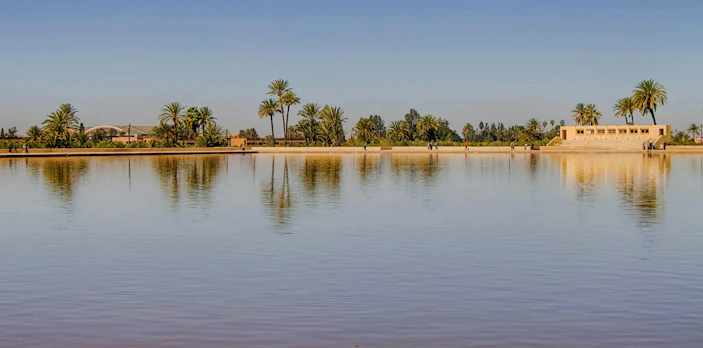
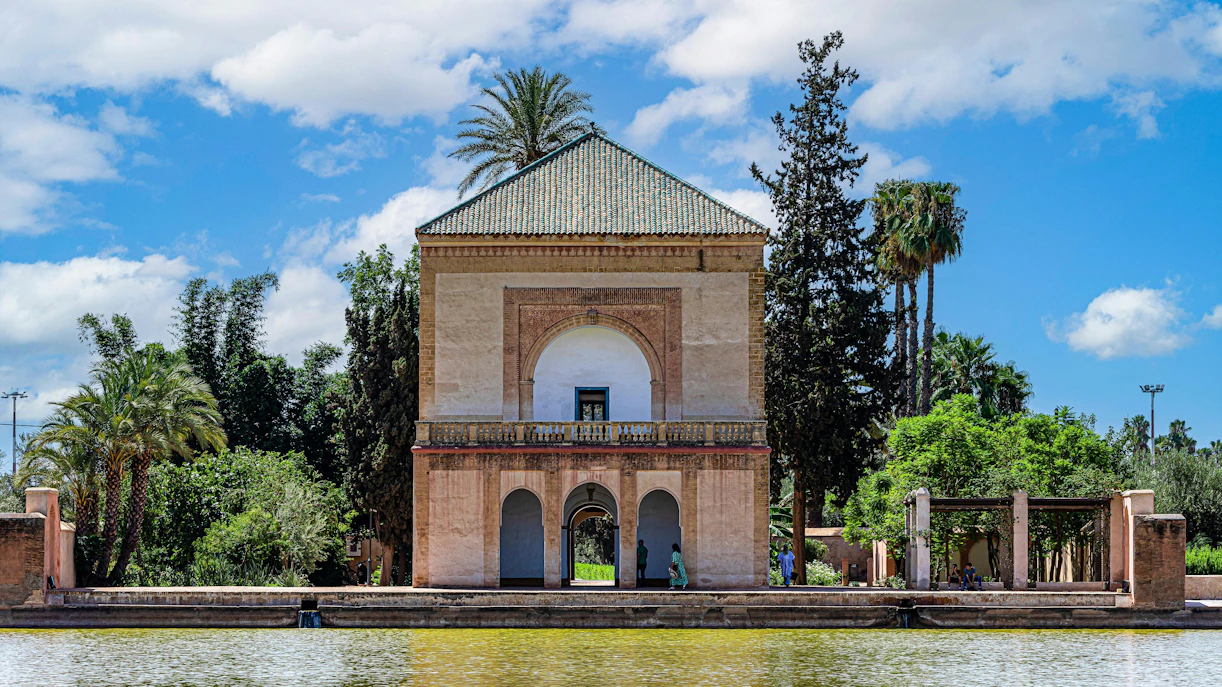
Menara Gardens is free to enter, and no ticket is required to explore its olive groves, reflecting basin, or walking paths. The historic Menara Pavilion sits within the gardens and requires a separate admission ticket if you wish to enter the building. Many visitors combine a walk through the gardens with a visit to the pavilion for its architecture and elevated views over the basin.
Book Menara Pavilion tickets
How to best experience Menara Gardens
Best time to visit
How long to spend
Allow 30–60 minutes to stroll through the olive groves, walk around the large reflecting basin, and admire the pavilion from different viewpoints. Visitors entering the pavilion may want to spend a little longer exploring the surrounding grounds.
Where it fits in your day
Menara Gardens makes an easy stop before or after exploring Marrakesh's Medina, Bahia Palace, or the Saadian Tombs. Its peaceful setting offers a relaxing break from the city's busy streets without requiring half a day.
Crowd patterns
The gardens remain relatively quiet during most mornings. Visitor numbers gradually increase through the afternoon, with the largest crowds arriving around sunset when photographers gather for reflections across the basin.
What to prioritise if time is short
Walk to the reflecting basin for the classic view of the pavilion, continue beneath the surrounding olive trees, and spend a few minutes enjoying the Atlas Mountain backdrop on a clear day.
Common mistakes to avoid
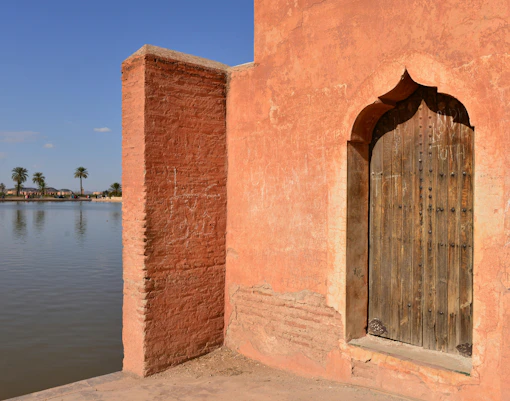
Many visitors only photograph the pavilion from the entrance path. Walking around the basin reveals quieter viewpoints and different angles of both the pavilion and mountain scenery.
Why it's worth seeing
1/3
The reflecting basin
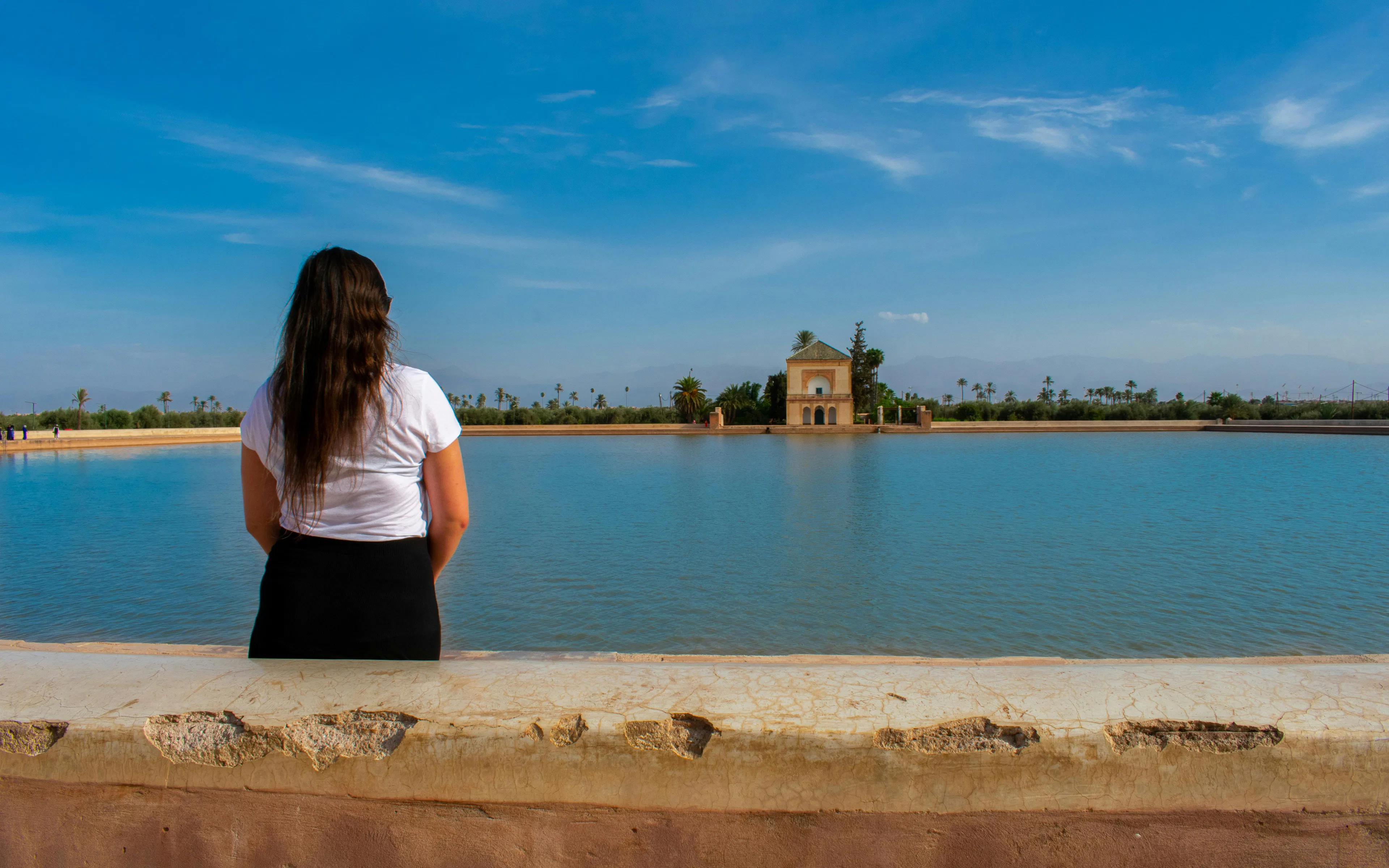
The large reservoir is the centrepiece of the gardens, mirroring the pavilion and, on clear days, the snow-capped Atlas Mountains. It's one of Marrakech's most photographed landmarks.
Historic olive groves
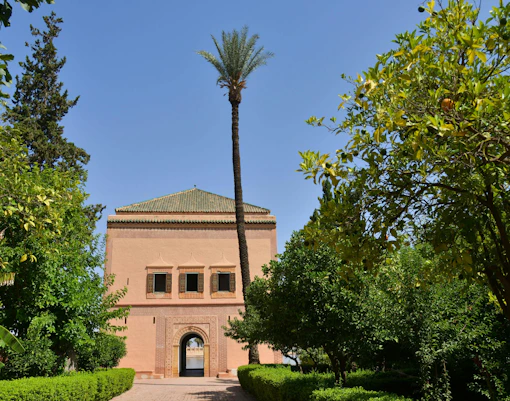
Thousands of olive trees stretch across the gardens, preserving the agricultural landscape established during the Almohad period. The groves continue to define the character of the site today.
Views of the Atlas Mountains
On clear mornings and after winter rainfall, the High Atlas Mountains form a dramatic backdrop behind the pavilion, creating one of Marrakech's most recognisable views.
Historical & cultural significance
Menara Gardens dates back to the 12th century, when Almohad ruler Abd al-Mu'min established a vast olive estate supplied by an advanced irrigation system that channels water from the Atlas Mountains. The historic pavilion was rebuilt in the 19th century, but the gardens have remained an important example of Morocco's traditional landscape design and agricultural engineering for more than 800 years.
Know before you go
- Opening hours: Daily, 10am–6pm.
- Visit duration: Most visitors spend 30–60 minutes exploring the gardens.
- Best time to visit: Arrive in the morning for a quieter experience or in the late afternoon for the best light and reflections across the basin.

- Located around 3 km southwest of Marrakech's Medina.
- Easily reached by taxi or private vehicle.
- Walking from Jemaa el-Fnaa takes around 35–45 minutes.

- Main pathways are wide and relatively flat.
- Some areas have gravel or uneven surfaces.
- Most outdoor areas are accessible for wheelchairs and strollers with assistance.

- Stay on designated paths and avoid entering planted or landscaped areas to help preserve the historic gardens.
- Do not climb on the reflecting basin, pavilion walls, or other historic structures.
- Dispose of litter responsibly and help keep the gardens clean.
- Keep noise to a minimum and respect other visitors enjoying the gardens.
- Commercial photography or filming may require prior permission from the relevant authorities.
Frequently asked questions about Menara Gardens
Yes. Menara Gardens is free to enter, and visitors can explore the grounds without purchasing a ticket.
No. A ticket is only required if you wish to enter the historic Menara Pavilion.
Most visitors spend between 30 and 60 minutes walking through the gardens and around the reflecting basin.
Early morning offers the quietest atmosphere, while late afternoon and sunset are best for photography and reflections.
Yes. The pavilion is located within Menara Gardens, but entry to the building requires a separate admission ticket.
Yes. The gardens are one of Marrakech's oldest public landscapes, known for their olive groves, reflecting basin, mountain views, and peaceful atmosphere.